Grenada grows fine-flavoured cocoa and has made rum since the plantation era, and both can be seen from tree to bottle or bar within a single day. The cocoa is grown, fermented and dried on estates in the north and east, then turned into chocolate by a small group of local makers. The rum ranges from a water-powered distillery that has hardly changed in two centuries to a modern industrial plant near the capital.
Rather than treating each visit separately, it makes sense to group them into a route. This guide sets out two practical days: a north-east route combining cocoa estates and River Antoine, and a shorter southern loop focused on rum. Tour arrangements, opening days and tasting fees change, and a few businesses run visits by appointment only, so confirm with each place or with your driver before you go. Grenada's chocolate makers and estates are covered in depth elsewhere; this piece is about planning the day.
Route one: the north-east cocoa and rum day
This is the classic combination and fills most of a day from the Grand Anse area. The drive north can go either up the west coast or over the mountains via Grand Etang; many drivers go one way and return the other. The key stops cluster in St Patrick and St Mark, close enough together that the driving between them is short once you are in the north.
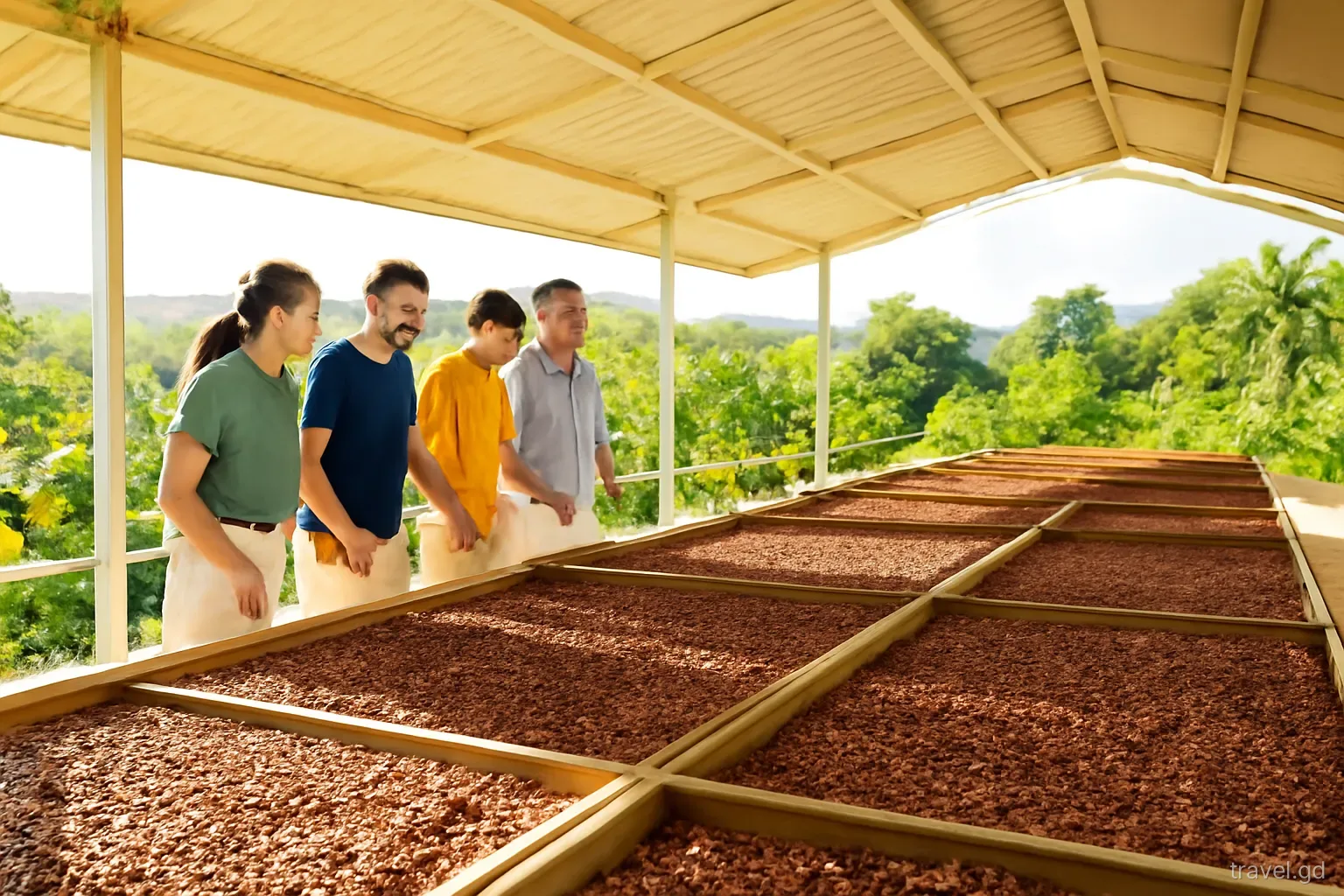
Belmont Estate, near Hermitage in St Patrick, is the anchor. It is a long-established estate where visitors can see cocoa beans fermenting and drying on large trays, walk the gardens and learn how the crop moves from pod to bean. It has a restaurant that serves Grenadian food, which makes it the natural lunch stop. Nearby, the Grenada Chocolate Company, the pioneering organic bean-to-bar maker founded in the late 1990s, has operated from Hermitage; visits have historically been limited, so check in advance rather than turning up. On the western side of the north, Jouvay Chocolate has been based at the Diamond Estate near Victoria in St Mark, with a factory and visitor area.
River Antoine Rum Distillery completes the day. Its water wheel, driven by the river, crushes the cane, and the juice is boiled and fermented before distillation. The guided walk takes well under an hour and ends with a tasting. Allow roughly eight hours for the whole route, including lunch. If the day allows only two stops, Belmont and River Antoine together give the clearest picture of both crops, and they are only a short drive apart. Ask your driver to phone ahead on the morning to confirm both are receiving visitors.
What you are looking at: cocoa and rum in brief
A little background makes the estate visits far more rewarding. Cocoa pods grow directly on the trunks and branches of the cocoa tree, usually under shade in the hills. After harvest the pods are split, and the wet beans with their white pulp are piled in wooden boxes to ferment for several days, which develops the flavour that later becomes chocolate. The beans are then dried in the sun on large trays, traditionally on rolling roofs that can be pushed over them when rain arrives, and workers walk through the beans to turn them. Only then do they go to a chocolate maker for roasting, grinding and conching.
Rum-making follows a similar logic of raw material, fermentation and transformation. At River Antoine, cane is crushed to release juice, which is boiled and then fermented before distillation in traditional stills heated by fire. At a modern distillery such as Clarke's Court, molasses and column stills produce rum on a much larger scale, and ageing in barrels creates the darker expressions. Seeing both in a day makes the contrast clear: one is agricultural heritage still in use, the other a modern industry.
Route two: the southern rum loop
Clarke's Court. Grenada's largest distillery, operated by Grenada Distillers at Woodlands in St George, is a short drive from Grand Anse. It produces a wide range of rums, from white overproof to aged expressions, and has offered visitor tours with tastings. It suits a half-day trip or an afternoon after the beach.
Westerhall. Westerhall Estate in St David is one of the island's historic rum names, with estate buildings and a collection of old equipment that tells the story of rum-making on the south coast. Check current visitor arrangements before going.
Add the coast. The south-east coast between the two, including La Sagesse, has quieter beaches and bays where a swim fits between visits.
Timing. This loop takes about half a day, making it a good option for a rainy morning, a shorter stay or a day when the north feels too far. Because Clarke's Court is so close to the main hotel area, it also pairs well with an afternoon on the south-coast beaches or an early dinner around L'Anse aux Epines.
Tasting sensibly
Grenadian rum is strong, and tastings come at the end of tours throughout the day. A few habits keep the day enjoyable:
- Do not drive yourself on a rum-tasting day. Use a driver or a tour, or nominate a non-drinking driver. Grenada's roads are demanding even when sober.
- Take very small sips. River Antoine's rum is bottled at extremely high strength, well above the strength of standard rum, and is traditionally drunk with water or a chaser.
- Eat a proper breakfast and plan lunch before the distillery, not after.
- Drink plenty of water between stops, as heat and alcohol together dehydrate quickly.
- Taste chocolate before rum where possible. Fine chocolate needs a clean palate, and its flavour notes are much harder to pick up after strong spirits.
- If you are buying, consider strength and airline rules. Spirits above 70 per cent alcohol are generally not permitted on passenger aircraft, and between 24 and 70 per cent there are volume limits; check your airline and destination allowances.
What to buy and how to carry it
Chocolate bars. Locally made bars are sold at estates, supermarkets and gift shops. Keep them cool and out of direct sun; a bag in an air-conditioned car is better than a hot boot.
Cocoa balls. Balls of ground cocoa and spice used to make cocoa tea are cheap, light and authentically Grenadian. They are sold at markets and estates.
Rum. Aged rums from the larger distilleries travel better and are less restricted than the strongest overproof. Pack bottles in checked luggage, well wrapped, unless bought in the airport's departure area.
Spices. If you pass through Gouyave on the north-east route, buying nutmeg and mace there combines well with the cocoa day.
Do not overbuy. Weight, breakage and customs allowances all limit how much you can take home. Buy what you will use.
Mistakes to avoid
Turning up without checking. Smaller makers and some estates do not run tours every day, and some operate by appointment only. One message or call from your driver or hotel the day before avoids a wasted journey.
Sunday and holiday visits. Many processing operations are closed or reduced on Sundays and public holidays. Plan for a weekday.
Expecting a theme park. These are working agricultural and industrial sites. Equipment may be idle outside processing times, and River Antoine's pace depends on the cane harvest. The authenticity is the point.
Rushing. Squeezing both routes into one day means hours in the car. Choose one, or split them across two days.
Forgetting cash. Small fees, tastings and purchases at some sites are easier with EC cash.
Ignoring the heat on chocolate purchases. Bars bought in the morning and left in a hot car all afternoon can bloom or melt. Buy late in the day, or carry a cool bag.
Frequently asked questions
Can you visit chocolate factories in Grenada?
Yes. Cocoa estates such as Belmont welcome visitors, and several local chocolate makers offer tours or have visitor areas, though some only take visits by appointment or on certain days. Check current arrangements before travelling, ideally through your driver or accommodation.
Which rum distillery in Grenada is best to visit?
River Antoine is the most distinctive, with its water wheel and traditional methods, and fits a north-east day. Clarke's Court, near Grand Anse, is the easiest to reach and offers a modern contrast. Westerhall adds estate history. Many visitors choose based on the route rather than ranking them.
How long does a rum and chocolate tour take?
A north-east route combining a cocoa estate, a chocolate maker and River Antoine takes most of a day, around eight hours from the south-west hotels. A southern rum loop takes about half a day. Allow time for lunch and travel on slow roads.
Can you bring River Antoine rum home on a plane?
It depends on the strength of the bottle. Spirits above 70 per cent alcohol are generally banned on passenger flights, and lower-strength spirits are subject to volume limits. Check the label, your airline's rules and your home country's customs allowance before buying.
Is Grenadian chocolate different from regular chocolate?
Grenada grows fine-flavour cocoa, and local makers produce bean-to-bar chocolate on the island, often with high cocoa content and minimal additives. The flavour tends to be richer and less sweet than mass-market chocolate. Tasting several bars side by side is the best way to see the difference.
Do you need a tour to visit estates and distilleries?
Not necessarily. You can drive yourself and pay entry at each site, but a driver-guide handles navigation, knows which places are open and means nobody has to drive after tastings. For a rum day especially, a driver is the sensible option.