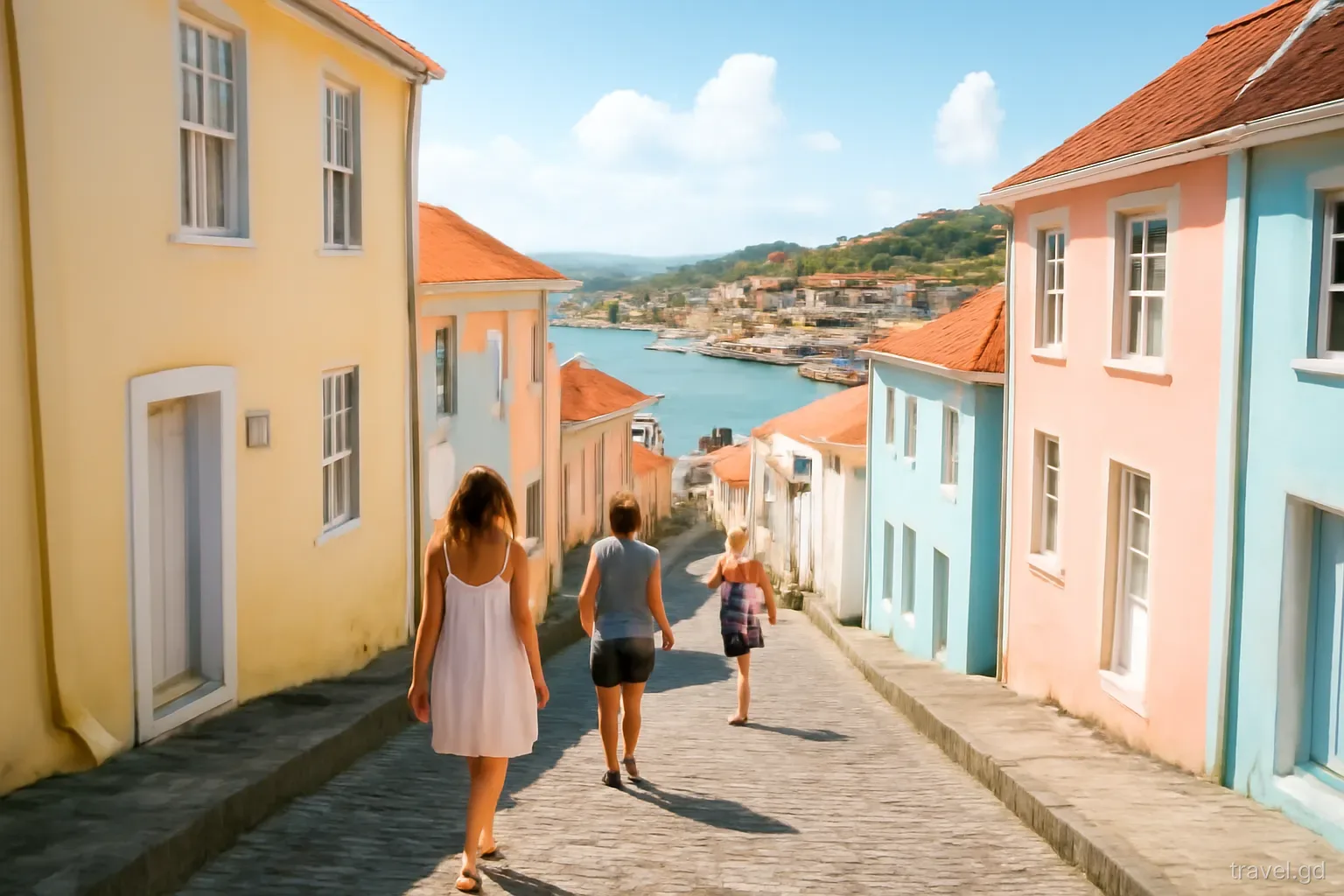
St George's is one of the most attractive small capitals in the Caribbean, and it is best seen on foot. The town wraps around a horseshoe-shaped harbour, the Carenage, and climbs steeply up the hills behind, with red-roofed buildings, Georgian stone warehouses, churches and forts. In two to three hours you can walk the waterfront, pass through a 19th-century tunnel, browse the market, climb to the churches and reach a fort with one of the best views on the island.
This self-guided route covers the main sights in a logical loop, with notes on each stop, how long to allow and the practical details that make the difference on a hot, hilly walk. Opening hours for museums and churches vary, and some buildings are still being repaired, so check what is open on the day. The route works for anyone staying in Grand Anse who takes a bus or taxi into town.
Before you start: timing and practicalities
St George's is compact but steep. Streets climb sharply from the waterfront, and some routes involve steps. Allow two to three hours for the full loop at a relaxed pace, including stops. Start early, ideally by 8 or 9am, before the midday heat, or in the late afternoon, when the light on the harbour is beautiful. On days when cruise ships are docked, the area around the cruise terminal and the Esplanade becomes busy, so an early start or a non-cruise day is quieter.
Wear comfortable shoes with grip, carry water and a hat, and use sunscreen. Pavements are narrow in places and traffic is heavy around the bus terminal and market, so take care when crossing. Most shops are closed on Sundays, the market is busiest on Saturday mornings and many museums and churches have limited hours. Getting there from Grand Anse is easy: route buses run into the town terminal on Melville Street, or a taxi will drop you at the Carenage.
Stage one: the Carenage and the museum
The Carenage. Start at the inner harbour, lined with old stone warehouses, cafés and the boats that once carried goods between the islands. Walk the waterfront slowly, look across to the stacked buildings on the hillside and watch fishing boats and water taxis come and go. The Carenage was historically where ships were careened, or turned on their sides for cleaning, which gives the harbour its name.
The Grenada National Museum. A short walk up from the Carenage, at the corner of Young Street and Monckton Street, the museum occupies a building dating from the early 1700s that served as French barracks and later a prison. It has been closed for long periods since 2020, so confirm it has reopened before planning a visit. Exhibits cover Amerindian history, the colonial period, slavery, the spice trade and modern Grenada. Check opening hours before planning around it.
Young Street. Climb Young Street to the ridge for views over both sides of the town: the Carenage on one side and the Esplanade and outer harbour on the other.
Stage two: the Sendall Tunnel, the Esplanade and the market
The Sendall Tunnel. Built in the 1890s and named after the governor of the time, this narrow tunnel cuts through the ridge between the Carenage and the Esplanade side of town. It carries both vehicles and pedestrians, so walk carefully, single file, and listen for traffic.
The Esplanade and Melville Street. On the far side, the waterfront area includes the cruise terminal, the main bus terminal and a busy fish market. It is one of the liveliest parts of town, especially on weekday mornings.
The Market Square. A short climb up from Melville Street, the Market Square has been the commercial heart of St George's for centuries. Stalls sell fruit, vegetables, spices, cocoa balls, crafts and snacks. Saturday morning is the busiest and most colourful time. Bargaining is light, prices are usually reasonable and small EC notes are useful.
Nearby streets. Granby Street, Halifax Street and Hillsborough Street around the market are lined with local shops, banks and older buildings with wrought-iron balconies.
Stage three: the churches on the hill
From the market, climb Church Street, which runs along the ridge and gives a sense of the town's older streetscape. This area holds several of St George's historic churches. The Anglican church of St George and the Roman Catholic Cathedral of the Immaculate Conception are the most prominent, with towers that dominate the skyline from the harbour. St Andrew's Presbyterian Church, often called the Scots Kirk, is another landmark.
Hurricane Ivan in 2004 caused severe damage to many of these buildings, ripping off roofs and wrecking interiors. Some have since been restored and are back in regular use; others still show the effects of the storm or have undergone long repair projects. Opening times for visitors vary, and services take priority, so be respectful: dress modestly, keep voices low and ask before taking photographs inside. York House, the old parliament building nearby, was also badly damaged by Ivan; Parliament now sits in a newer building outside the town centre.
Stage four: Fort George and the view
Finish at Fort George, on the headland at the mouth of the harbour, reached by continuing along Church Street and climbing to the point. Built by the French in the early 18th century and later held by the British, the fort has long served as the headquarters of the Royal Grenada Police Force. It is also the site of one of the most painful episodes in Grenada's modern history: on 19 October 1983, Prime Minister Maurice Bishop and several colleagues were executed there during the collapse of the revolutionary government, events that preceded the US-led intervention days later.
The view from the ramparts takes in the Carenage, the hillside town, the cruise terminal, the outer harbour and the coast stretching south towards Grand Anse. Access arrangements can change because of the police presence and restoration work, so check whether visitors are admitted on the day. From the fort, walk back down to the Carenage for lunch or a cold drink. Fort Frederick, higher up on Richmond Hill to the east, offers another sweeping view but is a steep climb or short taxi ride from town.
Common mistakes
Starting at midday. The combination of heat, humidity and steep streets makes midday walking hard work. Go early or late.
Wrong footwear. Flip-flops and smooth soles are uncomfortable and slippery on steep, uneven streets and steps.
Walking through the tunnel carelessly. The Sendall Tunnel is narrow and busy. Stay alert and keep to the side.
Expecting everything to be open. Museums, churches and the fort have variable hours, and some sites have been under repair. Have a backup plan.
Ignoring the bus. If the climb is too much, local buses and taxis can take you between the waterfront and the higher parts of town for a small cost.
Photographing people without asking. Vendors in the market and fishermen on the waterfront are working. A smile and a quick question before taking a close portrait is courteous, and many will happily agree.
Where to pause along the route
A two- to three-hour walk in tropical heat needs breaks, and St George's provides plenty of natural pauses. The Carenage has benches facing the water and a string of cafés and bars where you can sit with a cold drink and watch the boats. The market area is the place for a quick local snack: fresh fruit, coconut water, a pastry or a roti from one of the stalls or nearby shops. Churches, when open, offer a cool, quiet interior for a few minutes out of the sun.
For a longer lunch, the Carenage is the obvious choice, with restaurants and cook shops at a range of prices along the waterfront and in the streets just behind. Ending the walk there after Fort George means you can sit with a view of the harbour you have just walked around. Public toilets are limited, so use facilities when you stop at a café or restaurant. Carry small EC notes for snacks and the market, as many stalls do not take cards.
Frequently asked questions
How long does it take to walk around St George's?
The main loop through the Carenage, the Sendall Tunnel, the market, the churches and Fort George takes two to three hours at a relaxed pace with stops. The town is compact but steep, so allow extra time in hot weather and take breaks.
Is St George's walkable for visitors?
Yes, though it is hilly with steep streets and some steps. Wear comfortable shoes, carry water and avoid the midday heat. Visitors with limited mobility may prefer a taxi tour of the town with short stops at key viewpoints.
Can you visit Fort George in Grenada?
Fort George has long housed the Royal Grenada Police Force, and visitor access has varied with police use and restoration work. The view from the headland is excellent. Check locally whether the fort is open to visitors on the day you go.
When is the market in St George's busiest?
Saturday morning is the busiest and most colourful time at the Market Square, with farmers, spice sellers and food vendors in full swing. Weekday mornings are quieter but still active. Many stalls close or thin out on Sundays.
What is the Sendall Tunnel?
It is a narrow tunnel built in the 1890s through the ridge separating the Carenage from the Esplanade side of St George's. Named after a colonial governor, it is still used by vehicles and pedestrians. Walk through carefully, as it is narrow and busy.
Is St George's safe to walk around?
St George's is generally safe for visitors during the day. Use normal precautions: keep valuables out of sight, watch for traffic on narrow streets and take a taxi after dark if returning to Grand Anse, as buses thin out in the evening.