Grenada looks different from the water. From a boat off the west coast you see the green ridges dropping straight into the sea, small bays with no road access and the town of St George's stacked around its harbour. The sheltered Caribbean side, protected from the trade winds, usually has calm water ideal for day sails and snorkelling, which is why nearly every visitor considers at least one boat trip.
The choice is wide: full-day catamaran sails, short snorkel trips to the Underwater Sculpture Park, sunset cruises, glass-bottom boats, sport-fishing charters and private yacht hire. They differ a lot in price, length and what you actually do. This guide compares the main options, explains what to look for in an operator and highlights the details that decide whether a boat day is a highlight or a long, sunburnt slog. Prices are indicative, quoted in the US dollars most operators use, and should be confirmed when booking.
The Underwater Sculpture Park: the stop most trips include
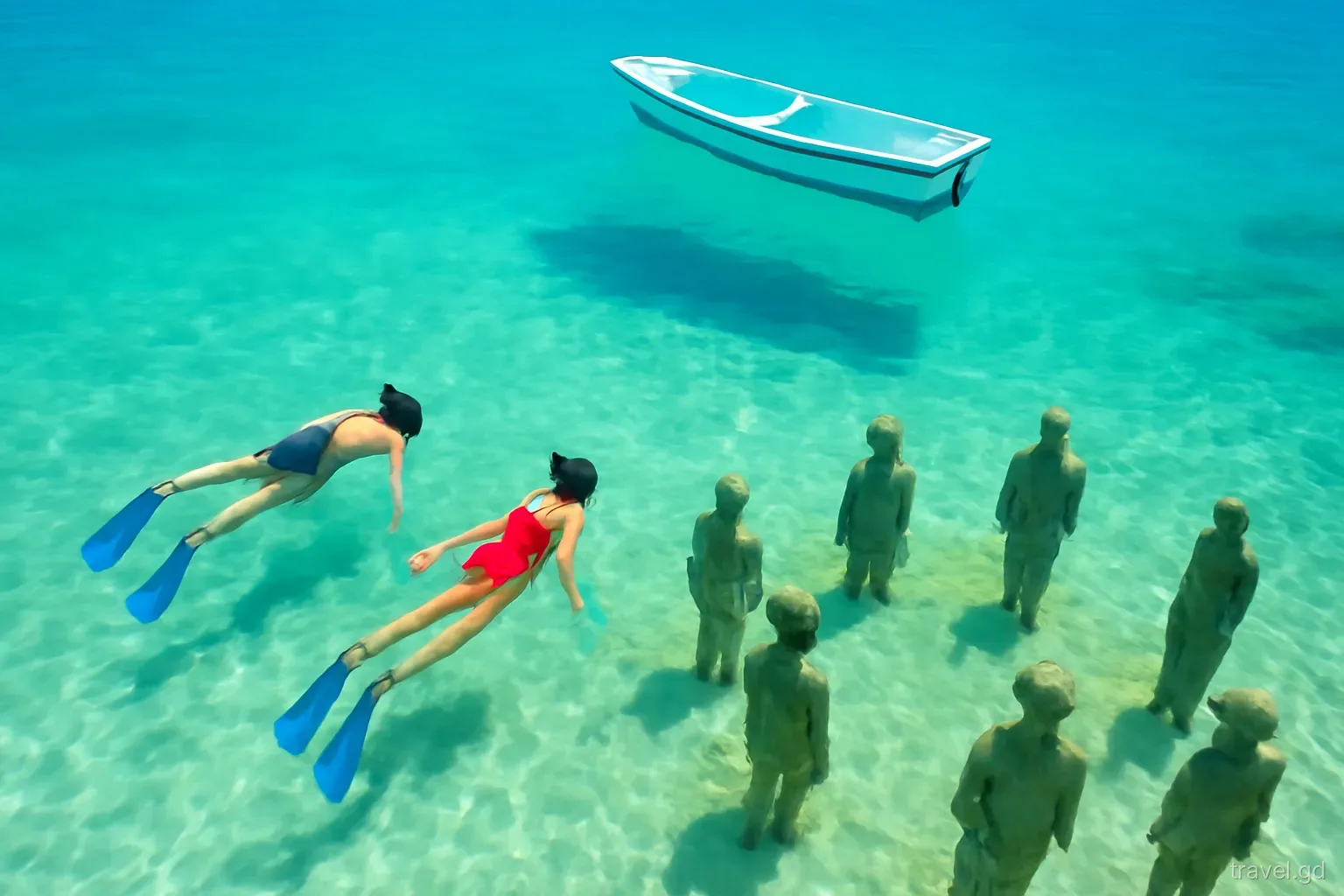
Many boat trips on the west coast are built around the Underwater Sculpture Park at Molinière Bay, a short distance north of St George's. British sculptor Jason deCaires Taylor installed the first works in 2006, and other artists have added pieces since. The best-known is a ring of figures of children holding hands, and other pieces include a man at a desk and various figures that have gradually become encrusted with coral, sponges and other marine life. The sculptures were designed partly to draw visitors away from natural reefs and to provide new surfaces for marine growth.
The site lies within the Molinière-Beauséjour Marine Protected Area, and a small user fee applies to snorkellers and divers, either included in the trip price or collected separately. Many figures sit in shallow enough water to be seen clearly by snorkellers on a calm day, while others are deeper and better suited to divers. Visibility depends on conditions; after heavy rain, runoff can cloud the water. Do not touch or stand on the sculptures, and avoid kicking up sand near them. Fins can damage the figures and the growth on them, so keep your legs high and move slowly when you are close.
The main options compared
Half-day snorkel trip. Usually two to three hours, visiting the sculpture park and one or two nearby reefs. The most efficient and affordable way to see the sculptures, typically around US$40 to US$80 per person. Good for confident swimmers and families with older children.
Full-day catamaran sail. Five to seven hours along the west coast, with snorkel stops, swimming, lunch and drinks on board. Typically around US$100 to US$150 per person or more. Best for groups who want a relaxed day where the boat is the experience.
Sunset cruise. Two to three hours in the late afternoon, often from the Grand Anse area or the marinas around St George's, with drinks and snacks. Usually US$50 to US$90 per person. Good for couples and non-swimmers.
Glass-bottom boat. Short trips over the reefs and sculptures for people who prefer not to get in the water. Ideal for young children and less confident swimmers.
Sport fishing. Half-day and full-day charters for wahoo, tuna, mahi-mahi and billfish, priced per boat. Expect several hundred US dollars for a half-day. Grenada has a long-running international billfish tournament each January.
Private charter. A whole boat for your group, with a flexible route. More expensive, but often reasonable value for larger groups or special occasions.
Which suits whom
For a first visit with limited time and budget, the half-day snorkel trip offers the best value: it covers the sculpture park, gets you back by early afternoon and leaves the rest of the day free. If you enjoy sailing, want a long relaxing day with food and drink included, and are travelling with friends or family, the full-day catamaran is the more memorable choice. Groups who are not interested in snorkelling should think about a sunset cruise, which gives the views and the atmosphere without spending hours in the sun.
Families should consider children's ages and swimming confidence. A long day on a boat can be tiring for small children; a short glass-bottom or snorkel trip is often better. People prone to seasickness should favour short trips on the calm west coast and avoid open-water crossings. Divers will want a dive operator rather than a snorkel boat, as the deeper sculptures, the reefs and the Bianca C wreck require proper dive trips. And anyone wanting to visit Carriacou by sea should note that the crossing is longer and rougher than west coast trips.
Departure points, pick-ups and timing
Most west-coast boat trips leave from a handful of places: the beach at Grand Anse, the marinas and docks around the St George's lagoon and Carenage, and the yacht harbours of the south coast such as Prickly Bay and the bays further east. Many operators include pick-ups from the main hotel areas, which saves taxi fares, but the collection window can start well before departure, so ask what time you will actually be picked up. On a beach departure, expect to wade out a short distance to the boat; wear clothes and shoes that can get wet and keep phones in a dry bag.
Snorkel trips usually run in the morning, when the sea is often flatter and the light in the water at its best, sometimes with a second departure in the early afternoon. Catamaran days start mid-morning and return in the late afternoon. Sunset cruises time their departure to the season, since sunset in Grenada shifts by roughly an hour over the year, earlier around December and later around June. Ask the operator to confirm times the day before, as plans can shift with the weather. If you are prone to seasickness, a morning trip on the calm west coast is the gentlest introduction.
What to check before booking
Boat operators vary widely in standards. A few questions separate the professional from the casual:
- How many passengers are on board? Smaller groups mean more space, shade and attention in the water.
- Are life jackets and snorkel gear provided, in a range of sizes, including for children?
- Is the marine park fee included, and are lunch and drinks included or extra?
- Is there shade on board, and a toilet on longer trips?
- Does a crew member enter the water with snorkellers or watch from the boat?
- What is the policy if the trip is cancelled for weather, and how much notice is given?
- Does the operator follow good reef practice, such as using moorings rather than anchoring on coral?
- Are there pick-ups from your hotel, or do you need to make your own way to the departure point?
Mistakes that spoil a boat day
Underestimating the sun. Reflection off the water intensifies UV exposure. Wear a hat, a rash vest or T-shirt in the water and reef-safe sunscreen, reapplying often.
Too much rum punch too early. Drinking heavily before snorkelling is dangerous. Swim first, celebrate later.
Ignoring seasickness. If you are susceptible, take medication beforehand and stay on deck looking at the horizon.
Overestimating swimming ability. Currents can be stronger than they look. Use a flotation aid if offered, and tell the crew if you are not confident.
Touching marine life. Coral, sea urchins and some fish can sting or cut, and touching damages fragile organisms. Look, do not touch.
Booking for the last day. Weather can postpone trips. Schedule boat days early in your stay to leave room for rebooking.
Bringing the wrong gear. A towel, a dry change of clothes, a light layer for the breezy ride back and a waterproof bag for phones matter more than a large beach bag full of things you will not use on a crowded deck.
Frequently asked questions
Can you snorkel the Underwater Sculpture Park without diving?
Yes. Many sculptures are in shallow enough water to be seen well from the surface on a calm day, and snorkel trips visit regularly. Some pieces lie deeper and are best seen by divers. Visibility varies with weather and runoff after rain.
How much does a catamaran trip in Grenada cost?
Full-day catamaran sails with lunch and drinks have typically been priced around US$100 to US$150 per person or more, depending on the operator and inclusions. Half-day snorkel trips cost less. Prices change, so confirm current rates and what is included.
Is the sea calm for boat trips in Grenada?
The west coast, on the sheltered Caribbean side, is usually calm, which suits day sails and snorkelling. Conditions vary with wind and swell, and operators may change routes or cancel on rough days. The Atlantic side and crossings to Carriacou are generally rougher.
Are boat trips in Grenada suitable for non-swimmers?
Many are. Sunset cruises and glass-bottom boats require no swimming, and catamaran trips allow guests to stay on board during snorkel stops. If you want to try snorkelling, ask for a flotation aid and tell the crew you are a beginner.
When is the best time for a boat trip in Grenada?
Boat trips run year-round. The drier months from January to May often bring clearer water and steady conditions. In the wetter months, trips still run, but heavy rain can reduce visibility and storms can force cancellations. Morning trips are often calmer.
Do you need to book boat trips in advance?
In peak season and on cruise-ship days, booking a few days ahead is wise, especially for popular catamaran trips. In quieter months, last-minute bookings are often possible. Booking early in your stay leaves flexibility if weather forces a change.