A full-day island tour is the single most efficient way to understand Grenada. In eight or nine hours a good driver can take you up the west coast through fishing villages and nutmeg country, round the wild northern tip, down the Atlantic side past cocoa estates and a water-powered rum distillery, and back over the mountains through the rainforest. You will see more of the country in one day than many visitors manage in a week of beach time.
The trick is to treat it as a route with choices rather than a checklist. There are far more possible stops than hours in the day, and the best tours are the ones that agree priorities in advance. This guide sets out the classic round-island circuit, the stops worth keeping, how long each section takes and what to settle with your driver before you set off. Opening arrangements at estates and attractions change, so ask your driver to confirm what is operating on the day.
The classic route in outline
Most round-island tours start from the Grand Anse and south-west hotel area and run in a loop. The usual direction is clockwise: north along the west coast road from St George's through Grand Roy, Gouyave and Victoria to Sauteurs; across the northern end to the River Antoine area and Belmont; south through Grenville; then back to the capital over the central mountains via Grand Etang. Some drivers reverse it, starting with the rainforest while the air is cool, which is a reasonable choice if mountain views are a priority, since cloud often builds over the interior as the day goes on.
The full loop is roughly 100 kilometres, but distance is misleading. Roads are narrow, winding and hilly, passing through villages where traffic slows to walking pace, and every stop adds time. Plan for a departure around 8 or 9am and a return in the late afternoon. Anything shorter means either fewer stops or a rushed day. If that feels too long, a half-day tour focusing on Grand Etang, Annandale Falls and St George's is the sensible alternative, leaving the north for another day.
West coast stops: St George's to Sauteurs
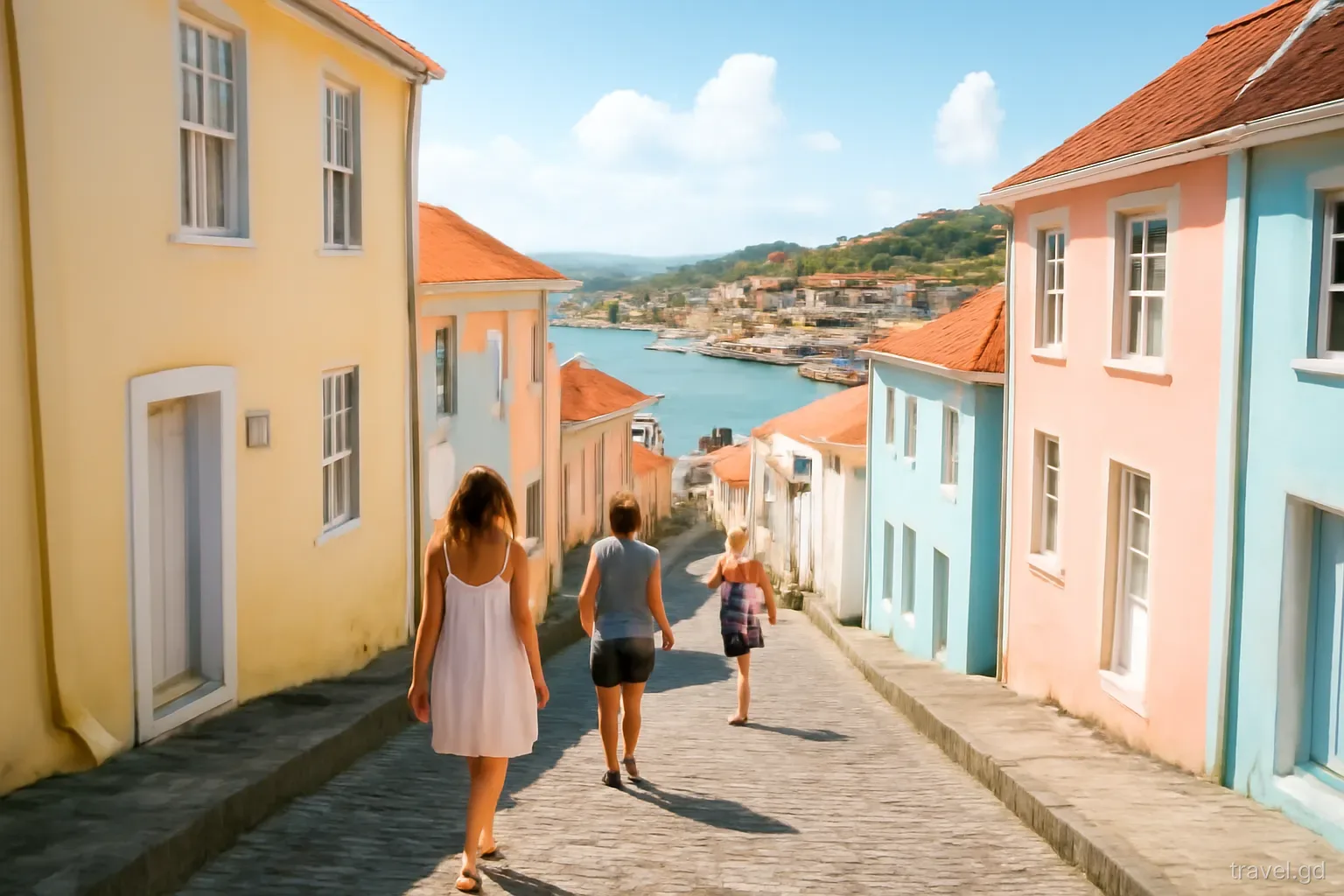
St George's viewpoints. A short stop above the Carenage, at Fort George or a lookout on the hills, gives the classic view of the horseshoe harbour and red-roofed town before the day's driving begins.
Concord Falls. Inland from the west coast road in St John, the first cascade is reachable by road and makes a quick, easy stop. The upper falls require a hike and are better as a separate outing.
Gouyave. Grenada's fishing capital and home of a nutmeg processing station run by the Grenada Co-operative Nutmeg Association, where visitors have been shown the sorting and drying process. Check with your driver whether tours are running on your day.
Dougaldston Estate. An old spice estate near Gouyave where cocoa and spices have been dried and processed. It shows the bones of plantation-era agriculture rather than a polished visitor attraction.
Victoria and the north-west. The road hugs the coast past black-sand bays and small villages in St Mark, the smallest parish, with Mount St Catherine rising inland.
The north and the Atlantic side
At Sauteurs, the main town of St Patrick, the stop is Leapers Hill, also called Caribs' Leap, beside the Roman Catholic church at the edge of town. In 1651, according to the standard account, the last Kalinago defenders of northern Grenada jumped from these cliffs rather than surrender to French colonists. It is a short stop, but one of the most significant sites in the country's history, and the view along the coast is striking.
From Sauteurs the road swings east. River Antoine Rum Distillery, near Lake Antoine in St Patrick, still crushes cane with a water wheel and distils its rum in a way that has changed little in more than two centuries; a short guided walk shows the whole process, and tastings of its very strong rum follow. Nearby, Belmont Estate is a working estate with a cocoa processing area, gardens and a restaurant that makes a natural lunch stop for tour groups. Depending on time, a driver may also show you Levera and the north-east beaches, Lake Antoine's crater, or the views over the offshore islets. Further south, Grenville, the main town of St Andrew, has a busy waterfront, and the old Pearls Airport, which served Grenada until the current international airport opened in 1984, sits just north of it.
Back over the mountains
Grand Etang. The Grand Etang road climbs into the forest reserve. The visitor centre and the crater lake sit at a height where the air feels noticeably cooler. Mona monkeys are sometimes seen around the visitor area, though sightings are not guaranteed.
Annandale Falls. On the descent towards St George's, a short path leads to a waterfall and pool surrounded by tropical gardens. Local divers often jump from the top for tips. It is easy to reach and suits all ages.
Spice gardens and roadside stops. Many drivers stop at a roadside garden to show nutmeg, cocoa, cinnamon and other plants growing. Vendors may offer spices; buy if you like, but you are under no obligation.
Timing the end of the day. Arriving back at the hotel around 4 or 5pm leaves time for a swim and sunset. If you are behind schedule, the mountain stops are the easiest to shorten.
What to agree with your driver before you start
Most misunderstandings on island tours come from things nobody discussed at the start. Settle these points when you book, and again briefly on the morning:
- The price, whether it is per vehicle or per person, and the currency. Full-day private tours have commonly been priced per vehicle in the region of US$150 to US$250; check current rates.
- Which entrance fees are included. Usually none are; Concord, Grand Etang, Annandale, River Antoine and Belmont tours each charge separately.
- Lunch: where, roughly what it costs, and whether it is included.
- The route and the must-see stops for you, so time is spent where you care most.
- Start and finish times, and what happens if the day runs over.
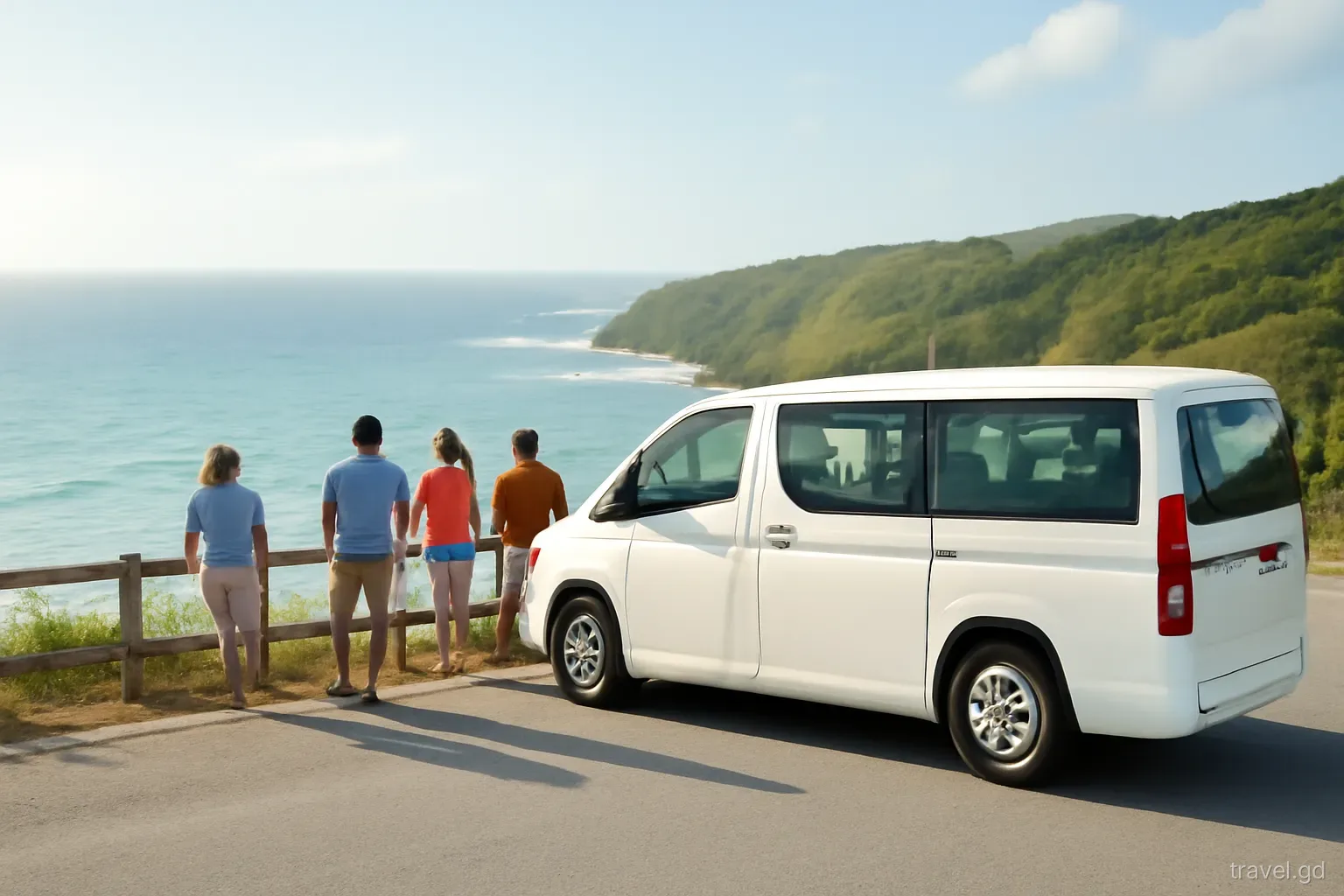
- Whether the vehicle has air conditioning and seat belts in all seats, especially for children.
- Payment method: cash in EC or US dollars, or card if available.
Mistakes that spoil a round-island day
Trying to see everything. A day with ten paid stops is exhausting and shallow. Pick four or five that matter and enjoy them.
Booking on a Sunday without checking. Some estates and attractions have reduced hours or are closed on Sundays and public holidays.
Skipping breakfast and water. Lunch may not come until well into the afternoon. Bring water, snacks and sunscreen.
Drinking heavily at the distillery. River Antoine's rum is very strong, and there is still half a day of winding roads to go.
Not tipping a good guide. Drivers who act as guides commonly receive a tip for a good day, often 10 to 15 per cent of the tour price.
Ignoring the weather. After a night of heavy rain, waterfall paths and the Grand Etang trails can be slippery and rivers high. Ask the driver to adjust rather than sticking rigidly to the plan; the north coast and the estates work in almost any weather.
Shorter variations if a full loop is too much
Not every visitor wants nine hours in a vehicle, and the round-island loop splits neatly into shorter tours. A west-coast and north tour runs up through Gouyave and Victoria to Sauteurs and back the same way, or returns over the mountains; it suits people most interested in fishing villages, the nutmeg story and Leapers Hill. An east-side tour crosses the mountains via Grand Etang to Grenville, the Pearls area and Belmont or River Antoine, with lunch in the north-east, and returns the same way.
A third option is to split the island over two half-days or two relaxed full days, with beach time in between. This costs more in total than a single loop, but the days are more enjoyable and you see each stop properly. Families with young children, older travellers and anyone prone to car sickness on winding roads often find two shorter days far better than one long one. Tell the driver your limits; good guides plan around them.
Frequently asked questions
How long does a round-island tour of Grenada take?
A full round-island tour usually takes eight to nine hours with stops, starting in the morning and returning in the late afternoon. The loop is about 100 kilometres, but slow, winding roads and village traffic mean driving time alone is several hours.
How much does an island tour of Grenada cost?
Private tours by taxi or tour driver are often priced per vehicle, and full-day rates have commonly fallen in the region of US$150 to US$250, with entrance fees and lunch extra. Group tours are priced per person. Rates change, so confirm before booking.
Which direction is best for a Grenada island tour?
Most tours go clockwise, up the west coast first. Going anticlockwise, starting at Grand Etang, can give clearer mountain views before cloud builds. Either works; agree with your driver based on your priorities and the weather that day.
Can you do a Grenada island tour with children?
Yes, though a full day can be long for young children. Choose stops with plenty of interest such as Annandale Falls and the estates, bring snacks and water, and check that the vehicle has suitable seat belts. A half-day tour may suit families with small children better.
Is it better to hire a car or take a guided island tour?
A guided tour removes the stress of steep, narrow roads and adds commentary on history, agriculture and culture. A hire car offers freedom but needs a temporary permit and confident driving. For a first visit, many people find a guided tour more rewarding.
What should you bring on a Grenada island tour?
Water, snacks, sunscreen, insect repellent, a light rain jacket for the mountains, comfortable shoes for short walks, swimwear if you want to swim at a waterfall, and cash in small notes for entrance fees, tips and roadside purchases.