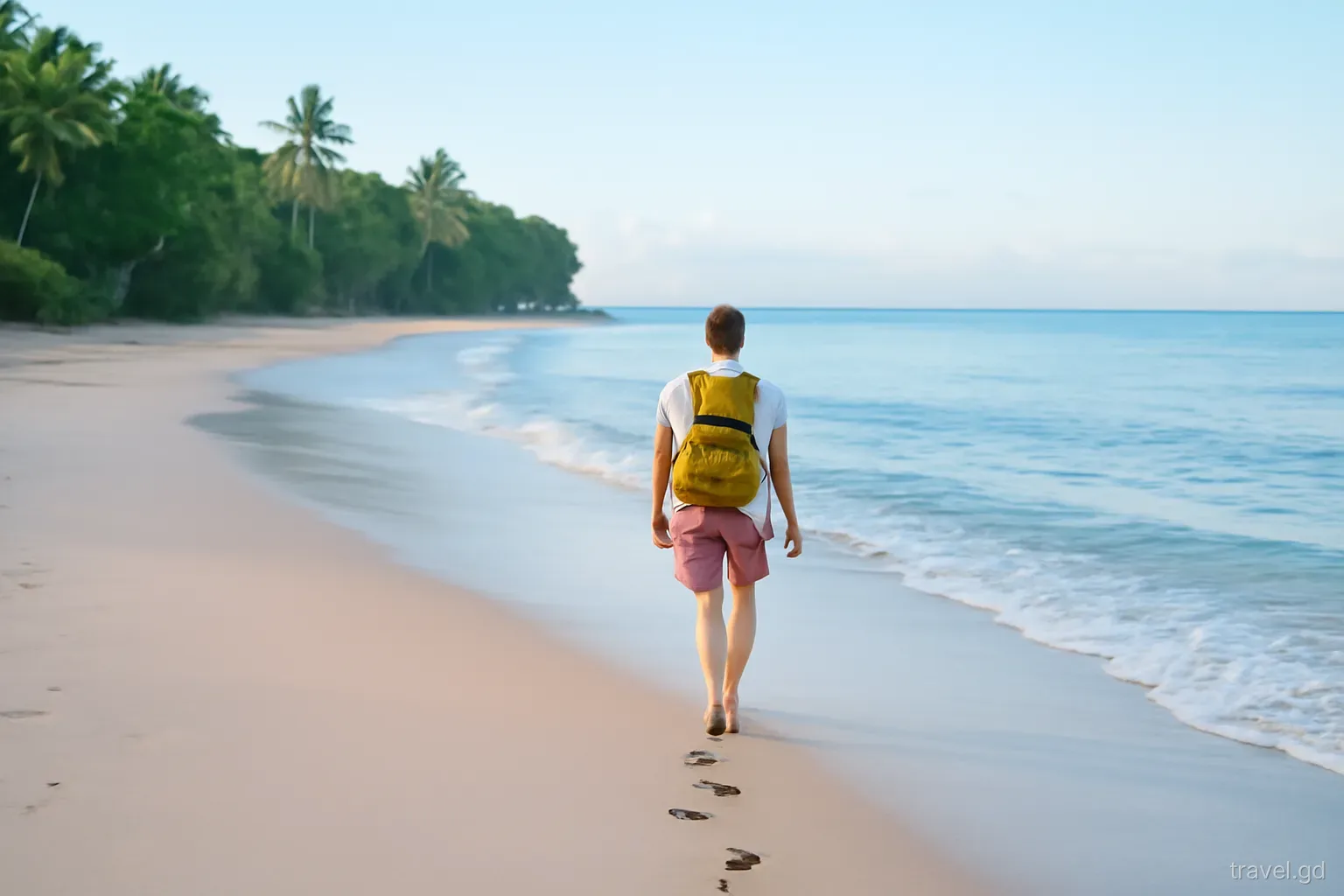
Grenada works well for a solo trip. It is small enough that you can reach most of the island in a day, English is spoken everywhere, people are approachable and the route bus network lets you get around cheaply without a car. The challenge for a solo traveller is not safety or language; it is that a lot of the island's tourism is built around couples and families, and that some of the best experiences, from island tours to boat trips, are priced per vehicle or per boat.
The answer is to choose the right base, to join shared tours and activities that bring people together, and to plan evenings with a bit more care than you would in daytime. This page sets out how to do all three.
Choosing a base: why the south-west makes sense
For most solo travellers, the strip between St George's and Lance aux Epines, taking in Grand Anse, Morne Rouge and True Blue, is the most practical base. Route buses run frequently along the main road into St George's during the day, many restaurants, supermarkets and bars are within walking distance or a short ride, and the airport is around fifteen minutes away. Grand Anse beach is long enough to walk every morning and busy enough to feel lively.
St George's itself is an alternative for travellers who like town life: guesthouses and small hotels around the Carenage and the hills above it put you close to Market Square, the forts, the bus terminal and the water taxis. The trade-off is steep streets and fewer beaches on the doorstep.
Further afield, the east coast around Grenville and the north around Sauteurs are quieter and more local, with fewer visitors and fewer evening options. Carriacou suits solo travellers who want a slower, more self-contained island, but services there are limited and still recovering from Hurricane Beryl in 2024, so check accommodation and transport carefully before booking.
Getting around alone without overspending
Route buses. Minibuses with route numbers cover the main roads, cost a few EC dollars per ride and are the best value for a solo traveller. They are frequent in the day around St George's and Grand Anse, thinner in rural areas, and much less frequent in the evening and on Sundays.
Taxis. Fares are per car, which makes them expensive for one person. Use them for night journeys, airport transfers and places buses do not reach. Agree the price, and the currency, before you get in.
Car hire. Driving yourself gives freedom for the north and east, but rental, a local driving permit and fuel add up for one person. A one- or two-day rental for a loop of the island is a good compromise.
Shared tours. Joining a scheduled group tour, rather than chartering a driver privately, spreads the cost and provides company. Ask your accommodation which operators run shared departures.
Water taxis. Small boats run between the Carenage and Grand Anse and along the coast, and are a pleasant, inexpensive way to travel in daytime when sea conditions are calm.
Ways to meet people
Solo travel in Grenada can be sociable if you seek it out. These are reliable ways to find company:
- Group activities: catamaran day trips, snorkelling tours to the Underwater Sculpture Park, and dive boats mix travellers naturally. Diving in particular builds a small community over a few days.
- Guided hikes: walks to the Seven Sisters falls, Mount Qua Qua or Concord Falls with a local guide are better done in company anyway, and guides can often add solo travellers to existing groups.
- The Hash: Grenada has a long-running Hash House Harriers group that organises walks and runs through the countryside, usually on Saturday afternoons, followed by food and drinks. Visitors are welcome; check the schedule locally.
- Fish Friday in Gouyave and other street food nights: communal, informal and good for conversation.
- Guesthouses and small hotels: shared breakfasts and verandas are where solo travellers get talking. Large resorts are less social for one person.
- Rum shops: greet the room, buy a drink, and the conversation often follows.
- Volunteering and classes: short cooking demonstrations, chocolate-making sessions and conservation activities such as beach clean-ups appear from time to time; ask locally what is running during your stay.
Costs: what being on your own changes
Accommodation is the biggest solo cost. Hotel rooms are usually priced per room, and some resorts add a single supplement or price packages per person based on two sharing. Guesthouses, small inns and self-catering apartments in Grand Anse, St George's and the True Blue area tend to offer better value. Prices vary widely by season, with the December to April period the most expensive; confirm current rates directly.
Food costs can be kept low by eating where Grenadians eat: roti shops, bakeries, street food stalls and supermarkets. A local lunch costs far less than a resort meal. Tours priced per vehicle, island drives and private boat charters are where a solo budget hurts; group departures and the route bus solve most of that.
Plan cash for buses and vendors, carry a card for larger bills, and remember that many small businesses do not take cards. Grenada uses the EC dollar, pegged at EC$2.70 to US$1.
One useful trick for solo travellers is to time paid experiences with others. Asking a dive shop or tour desk whether anyone else is booked for a particular day, and joining them, often means a shared boat or vehicle at a per-person rate. Hosts at smaller guesthouses frequently connect guests who want to share a driver for an island tour or an airport run.
A simple seven-day plan for one
A solo week works best with a mix of independent days and shared activities, so you have company without paying for private everything. One workable shape, based in Grand Anse:
- Day one: settle in, walk Grand Anse beach, buy a local SIM or eSIM and EC cash, and ask your hosts about trusted taxi drivers and shared tours.
- Day two: take a route bus into St George's. Walk the Carenage, Market Square and up to Fort George, then catch a water taxi back to Grand Anse if the sea is calm.
- Day three: join a group catamaran or snorkelling trip up the west coast to the Underwater Sculpture Park at Molinere Bay.
- Day four: book a guided hike to the Seven Sisters falls or around Grand Etang, ideally with others already booked.
- Day five: a slow beach day at Morne Rouge, followed on a Friday by a trip to Gouyave for Fish Friday, with a pre-arranged taxi back.
- Day six: a shared island tour north and east, taking in a nutmeg station, a chocolate estate and a rum distillery, or a Saturday Hash if the timing fits.
- Day seven: a last swim, a spice shopping stop and an early taxi to the airport.
Safety and common solo-travel mistakes
Walking roads after dark. Many roads have no pavements, street lighting is patchy and drivers go fast. Take a taxi at night rather than walking long distances, even between nearby areas.
Hiking alone. Interior trails can be muddy, confusing and out of phone signal. Hire a guide or go with a group, and tell someone where you are going.
Swimming alone on the east coast. The Atlantic side has stronger currents and surf. Stick to calmer west and south coast beaches when on your own.
Leaving belongings on the sand. With nobody to watch your bag, swim with minimal valuables or use a waterproof pouch.
Over-planning evenings. Buses thin out after dark. Arrange a trusted taxi in advance through your accommodation, and save the number of your guesthouse. In an emergency, dial 911.
Skipping travel insurance. Serious medical cases may need evacuation off the island, which is very expensive without cover.
Frequently asked questions
Is Grenada good for solo travellers?
Yes. Grenada is English-speaking, friendly and compact, and route buses make it affordable to get around alone. The main drawbacks are accommodation priced for two and tours priced per vehicle, both of which can be managed with guesthouses and group departures.
Is it safe to travel alone in Grenada?
Grenada is generally considered one of the safer Caribbean destinations, though petty theft and occasional crime occur. Use common sense: take taxis at night, keep valuables out of sight, hike with a guide and avoid isolated beaches alone. Dial 911 in an emergency.
Where should a solo traveller stay in Grenada?
Grand Anse and the surrounding south-west area is the most convenient base: walkable, well served by buses and close to beaches, restaurants and the airport. St George's suits those who prefer town life, while Carriacou offers a slower, quieter alternative.
How can solo travellers meet people in Grenada?
Join group catamaran and snorkelling trips, guided hikes, dive boats and the long-running Hash walks and runs. Stay in guesthouses rather than large resorts, and visit rum shops and street food nights such as Fish Friday in Gouyave.
Do solo travellers pay more in Grenada?
Often, yes. Rooms are priced per room, some packages include a single supplement, and taxis and private tours are priced per vehicle. Guesthouses, buses, local food and group tours bring costs down significantly.