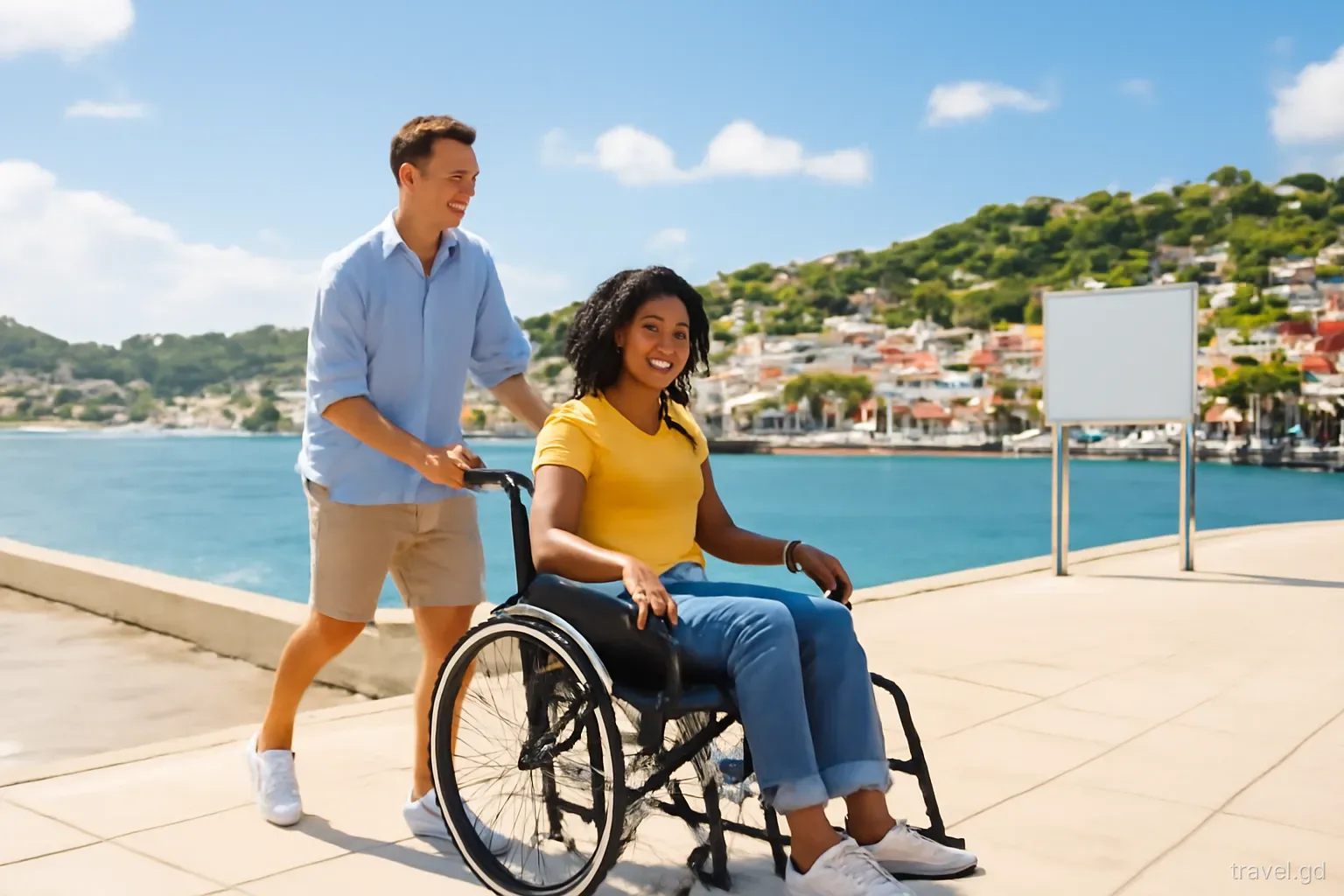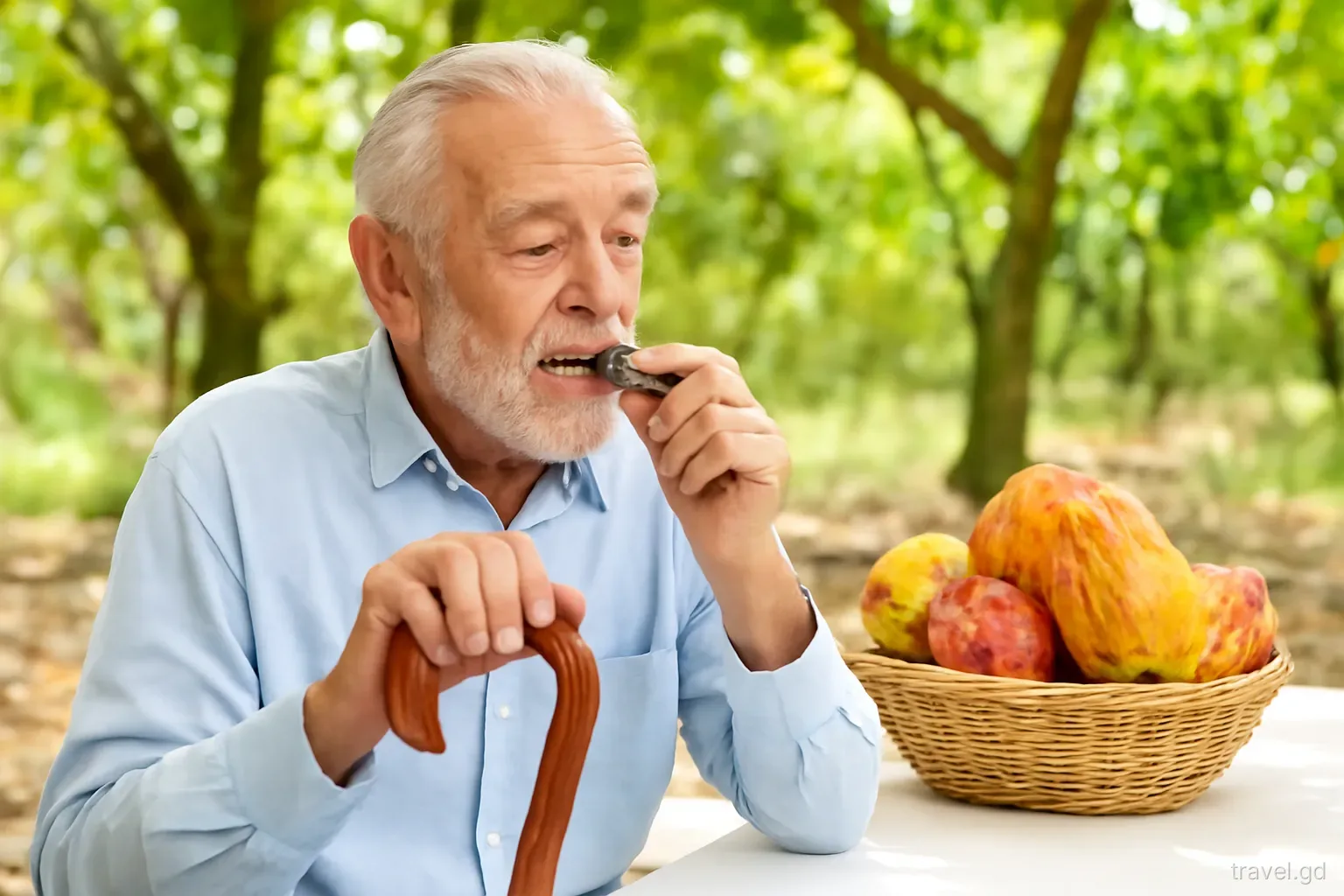
Many lists of things to do in Grenada assume you can scramble down to a waterfall, climb the ramparts of a fort or hike a rainforest trail. If walking is limited, whether through age, injury, a disability or simply low stamina in the heat, the island can look less inviting than it is. In fact, a large share of Grenada's character can be experienced from a vehicle, a boat, a shaded table or a short, level path.
This page focuses on activities that suit travellers who can walk short distances or use a wheelchair, and on how to check each one before you go. Access varies from place to place and changes over time, so treat the descriptions as a starting point for questions rather than guarantees.
Scenic drives: the island from the passenger seat
A driver-guide and a comfortable vehicle open up most of Grenada. The west coast road north from St George's runs past fishing villages, beaches and bays to Gouyave and Victoria, with regular glimpses of the Caribbean Sea. Heading inland, the road through Grand Etang climbs into the rainforest, with views of forested ridges and, near the forest visitor area, the old volcanic crater lake. Continuing around the north to Sauteurs and down the Atlantic coast to Grenville shows a very different, wilder side of the island.
At Sauteurs, the cliff known as Leapers' Hill, where Kalinago people are said to have jumped rather than surrender to the French in 1651, sits beside the town's church and cemetery and can be viewed with little walking. Along the way, a good guide will stop where you can see nutmeg, cocoa and banana growing from the roadside.
Choose a vehicle with an easy step height and air conditioning, and agree the itinerary, the number of stops and the total price in advance. A full loop of the island takes most of a day; a half-day route covering the west coast or Grand Etang is less tiring.
On the water
Catamaran day trips. Sailing up the west coast is one of the easiest ways to enjoy Grenada with limited mobility. The key question is boarding: some boats leave from a dock with a gangway or steps, others from the beach, which may involve wading. Ask the operator in advance and explain your needs; crews are often willing to help.
Snorkelling with support. Calm bays such as Molinere, home of the Underwater Sculpture Park, and the waters around Morne Rouge suit snorkellers who can float with a buoyancy vest or noodle. Getting in and out of a boat by ladder can be the hard part; ask how it is done.
Adaptive diving. Scuba diving can be accessible to some people with physical disabilities, because the water removes weight from the body. Ask dive centres whether they have instructors with adaptive diving training and experience before booking.
Water taxis and harbour views. Even a short boat ride across St George's harbour shows the Carenage, the forts and the town from the water. Boarding small boats requires a step down, so ask for a hand and choose calm days.
Chocolate, rum and spice experiences
Grenada's food heritage is among its strongest attractions, and much of it involves sitting, tasting and listening rather than walking. Cocoa estates and chocolate makers offer tours and tastings, often with seated sessions explaining how cocoa is grown, fermented, dried and turned into chocolate. Rum distilleries, from historic operations using a water wheel to larger modern producers, offer tours and tastings too.
Access varies a great deal. Working estates, spice processing stations and old distilleries were not designed for visitors with mobility needs, and may have steps, uneven stone floors and sloping yards. The tasting area is often the most accessible part. Ask whether a seated version of the tour is possible, or whether you can join just the tasting.
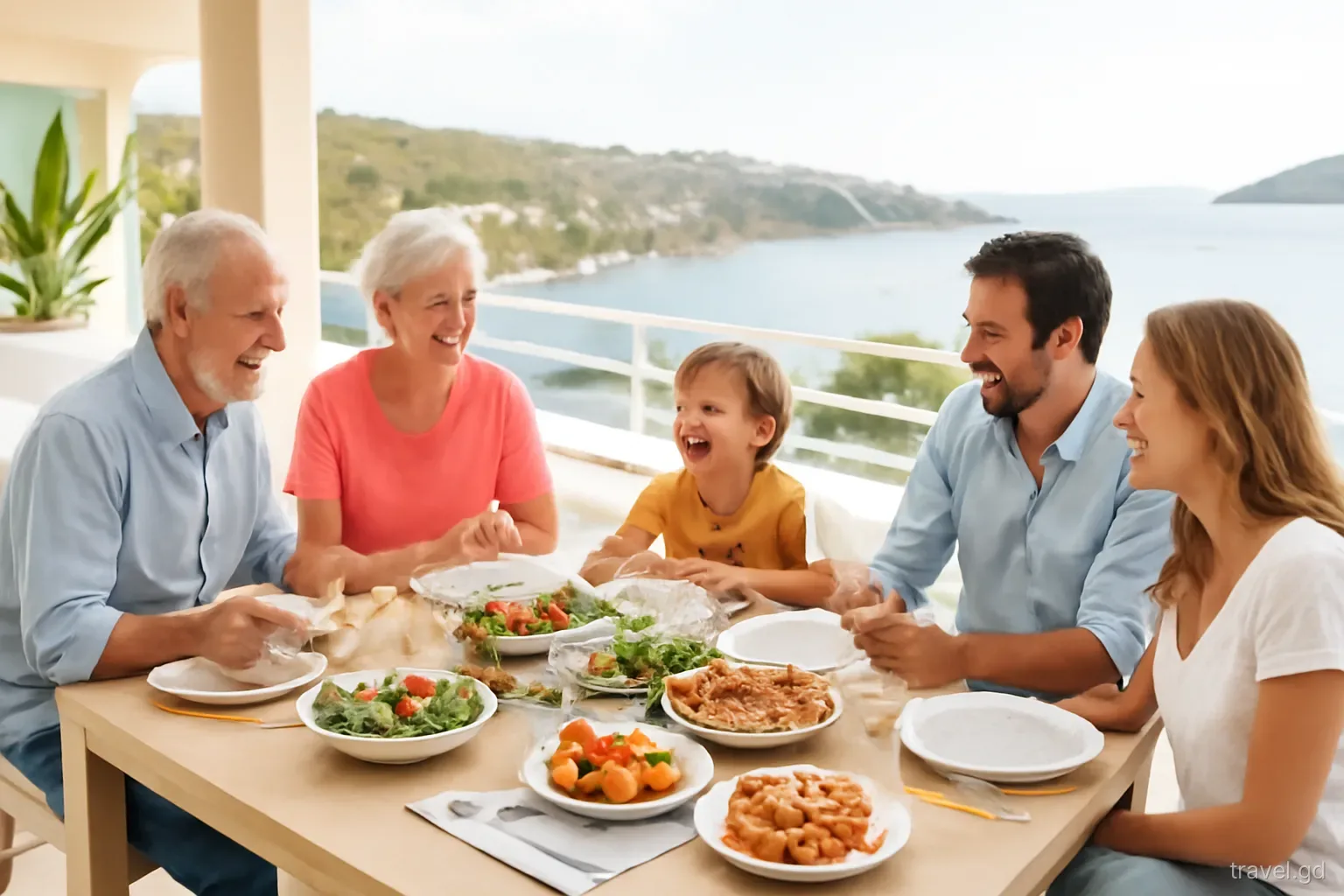
Cooking classes and spice demonstrations offered by some hotels, guesthouses and private cooks are another option, letting you learn to make dishes such as oil down or cocoa tea without leaving a comfortable kitchen or veranda. Ask your accommodation what is currently available.
Town, culture and community
Some of the most rewarding Grenadian experiences are social rather than scenic, and many involve short distances:
- The Carenage in St George's: the waterfront is the most level part of the town, with views of fishing boats, yachts and colourful buildings rising up the hills.
- The Grenada National Museum: housed in a historic building in St George's, covering the island's history; it has been closed for long periods since 2020, so check it has reopened and ask about access. Ask about steps at the entrance and inside.
- Market Square on a Saturday morning: busy, colourful and lively. Crowds and uneven surfaces make it easier with a companion; a drive-by or short visit may be enough.
- A Sunday church service: an uplifting experience of local community life, with hymns and choirs. Choose a church with easier access, and arrive early for a convenient seat.
- Fish Friday in Gouyave: street food and music in a small town. Crowded, but you can visit early in the evening, eat at a table and leave before the busiest time.
- Cricket at the National Cricket Stadium: if an international or regional match coincides with your visit, ask about accessible seating when buying tickets.
Nature without the trails
Grenada's greenery does not have to be earned on a muddy path. Gardens and spice gardens, some attached to estates and guesthouses, offer guided walks on garden paths where you can see nutmeg, cinnamon, cocoa, bay leaf and tropical flowers up close; ask about the surfaces and gradients, which range from paved to grassy slopes.
Birdwatching is another rewarding option from a fixed spot. Hummingbirds, bananaquits and other species are common around flowering gardens and hotel grounds, and a pair of binoculars on a shaded veranda can fill an afternoon. Around Grand Etang, the forest edge near the road and visitor area gives a taste of the rainforest, and the Mona monkeys are sometimes seen nearby.
For dramatic coastal scenery, viewpoints on the drive around the north and east, such as above Levera and along the Atlantic coast towards Grenville, show crashing surf, offshore islands and windswept headlands with little or no walking from the car.
Beaches with easier access
Grand Anse has the most developed facilities, with hotels, restaurants and paved areas close to the sand at several points. The water is generally calm and shelves gently, which helps people who walk slowly or need support getting in. Morne Rouge, next door, is also usually calm, though access from the road involves crossing some soft sand.
Soft sand is the main barrier for wheelchair users and people with walking aids. Beach wheelchairs and mats are not widely available in Grenada, so the best approach is a hotel or restaurant with a terrace right at the edge of the beach, where you can enjoy the view, the breeze and a swim with help, without a long crossing of sand.
Avoid the Atlantic beaches of the east and north for swimming if your balance or strength is limited; surf and currents there can be strong. They are better enjoyed from a viewpoint or a beachside restaurant.
Checking before you go: common mistakes
Relying on general descriptions. Words like "easy" and "accessible" are used loosely. Ask how many steps, how far from the car, what the surfaces are, and whether there are seats and toilets.
Booking group tours without warning. Large group tours move at the group's pace. A private or small-group tour, arranged in advance with a guide who knows your needs, is usually more enjoyable.
Forgetting toilets. Accessible toilets are uncommon outside larger hotels, malls and some restaurants. Plan stops accordingly.
Ignoring the heat. Low stamina in the heat is as limiting as steps. Go early in the day, take water and choose shaded venues.
Not checking current status. Attractions change hands, close for repair or reopen after storms. Confirm before travelling, especially on Carriacou and Petite Martinique after Hurricane Beryl in 2024.
Frequently asked questions
What can you do in Grenada if you cannot walk far?
Plenty. Scenic drives with a driver-guide, catamaran trips, chocolate and rum tastings, the Carenage waterfront, Sunday church services and beachside restaurants on Grand Anse all involve little walking. Check access details with each operator before booking.
Are Grenada's chocolate and rum tours accessible?
Partly. Tasting areas are usually the easiest part, but working estates and old distilleries often have steps, uneven floors and sloping ground. Ask operators whether a seated or shortened version of the tour is possible.
Can people with limited mobility go on catamaran trips in Grenada?
Often, yes. The main issue is boarding, which may be from a dock or from the beach. Contact operators in advance, explain your needs and ask how boarding and getting into the water for snorkelling are handled.
Is adaptive scuba diving available in Grenada?
It may be possible. Ask dive centres whether they have instructors with adaptive diving training and suitable equipment. Diving can suit some people with physical disabilities, but it requires medical clearance and careful planning with an experienced instructor.
Which Grenada beach is easiest for people with walking difficulties?
Grand Anse is usually easiest, with calm, gently shelving water and hotels and restaurants close to the sand. Soft sand is still a barrier, and beach wheelchairs are not widely available, so choose a venue right at the beach edge.