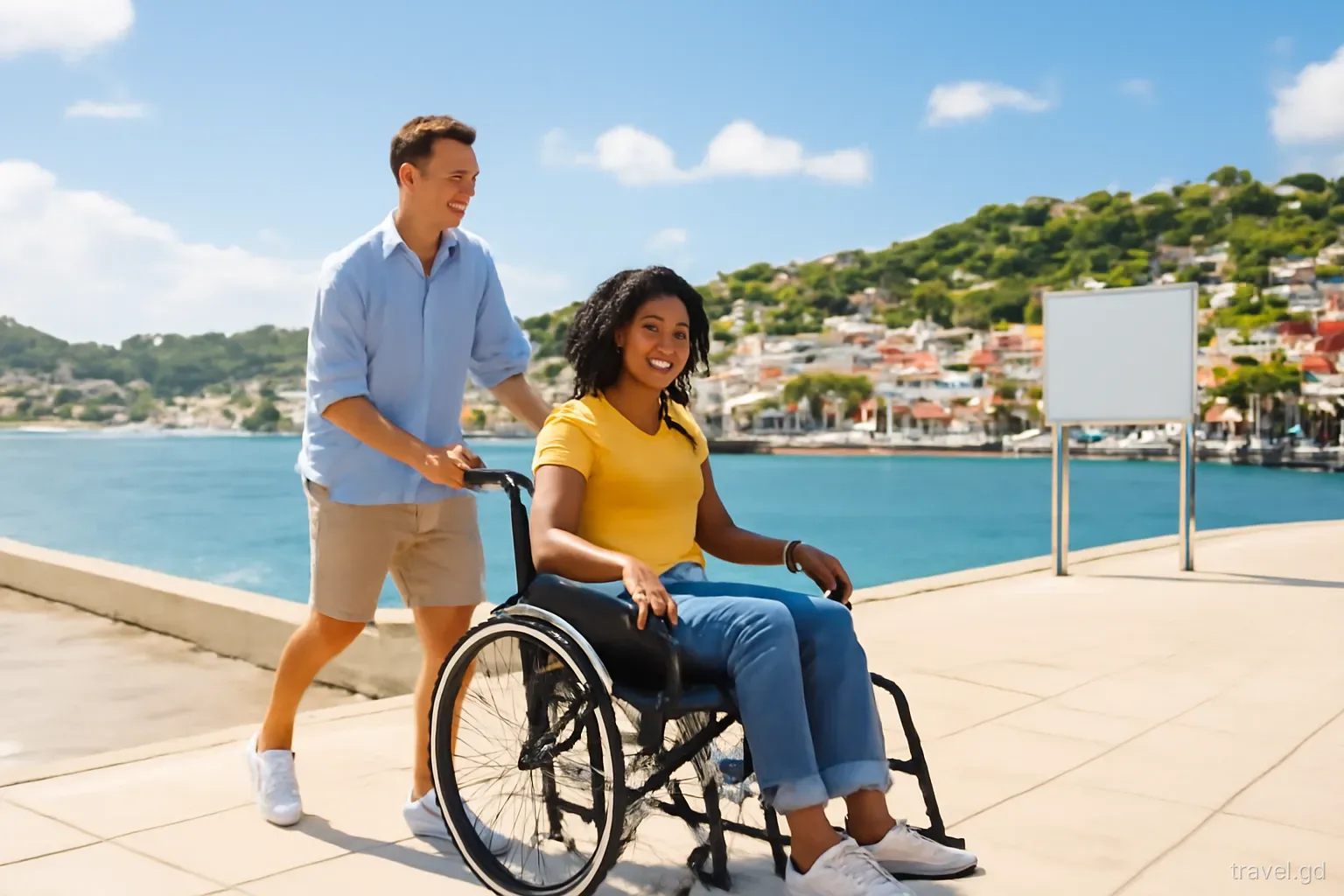
Grenada suits older travellers well. It is English-speaking, unhurried and compact, with warm sea water, good food and a strong culture of respect for elders that visitors notice quickly. Many people come back year after year, often for a month or more in the northern winter. The things that need thought are physical rather than cultural: steep hills, uneven pavements, heat and humidity, and a healthcare system that handles everyday problems well but may need to send serious cases off the island.
With the right base, a realistic pace and good insurance, those are easy to manage. This page covers where to stay, how to handle the climate and terrain, medical preparation, and the tours and outings that work without strenuous walking.
Choose a base that keeps daily life flat and close
The Grand Anse and Morne Rouge area is the most convenient base for most older travellers. The long, gently sloping beach is easy to walk along and enter, supermarkets, pharmacies, banks and restaurants are close by, taxis are plentiful, and both the airport and the hospitals in and around St George's are a short drive away. Many hotels here are built on fairly level ground near the beach.
Check the layout of any property in detail before booking. Grenada is hilly, and many villas and hotels have spectacular views precisely because they sit on steep slopes, with long staircases, sloping paths and steep driveways. Ask specifically about the number of steps from the car to the room, from the room to the restaurant, and from the property to the beach. A ground floor room or a lift can make a big difference.
St George's is beautiful but steep, with narrow streets, sharp climbs and uneven pavements. It is better visited by taxi or with a driver than used as a base if walking is difficult. Quieter areas such as Lance aux Epines and Westerhall are peaceful but generally require a car.
Heat, sun and the body
Hydrate before you feel thirsty. Heat and humidity cause dehydration quickly, particularly for people taking diuretics, blood pressure tablets or other medicines that affect fluid balance. Carry water at all times and drink regularly.
Respect the midday sun. From roughly 11am to 3pm the sun is intense. Plan outings for early morning and late afternoon, and rest in the shade or indoors in between.
Dress for the climate. Loose, light clothing, a wide-brimmed hat and sunglasses help. High-factor sunscreen is important, as are cool showers and air conditioning in the bedroom.
Watch for heat exhaustion. Dizziness, headache, nausea and heavy sweating are warning signs. Rest in a cool place, drink fluids and seek medical help if symptoms do not ease.
Footwear and balance. Wet tiles around pools, polished stone floors in hotels and slippery jetties catch many visitors out. Shoes with good grip, a walking stick or pole if you use one at home, and taking handrails where they exist reduce the risk of falls, which are among the most common reasons older visitors need medical care abroad.
Mind the sea. Calm west and south coast beaches are generally safe for swimming, but the Atlantic side can have strong currents. Water shoes help with stony entries and balance.
Medical care, medications and insurance
Grenada has public hospitals, including the General Hospital in St George's and Princess Alice Hospital in St Andrew's, plus private clinics and doctors, and well-stocked pharmacies in the main towns. Everyday problems, minor injuries and routine prescriptions are handled competently. Specialist care and some advanced treatment, however, may not be available locally, and serious cases can require evacuation to Barbados, Trinidad, the United States or elsewhere.
That makes travel insurance with medical evacuation cover essential, and it is where older travellers most often find gaps. Check that your policy covers pre-existing conditions you have declared, covers your full age bracket, and includes air ambulance evacuation. Many national health systems and some government schemes provide little or no cover abroad; check yours carefully.
Bring enough prescription medication for the whole trip plus extra days, in original packaging, with a copy of your prescriptions and a letter from your doctor listing conditions and medicines by their generic names. Keep medication in hand luggage. Specific brands may not be stocked locally.
Gentle outings and tours that work well
Many of Grenada's highlights can be enjoyed with little walking, especially with a private driver-guide who can stop at viewpoints and adjust the pace. Hiring the same driver for several outings has another advantage: they learn what suits you and plan stops accordingly. Good options include:
- A full or half-day island drive, with stops at a nutmeg processing station, a chocolate or cocoa estate, a rum distillery and coastal viewpoints. Tell the guide about mobility needs in advance.
- Grand Etang, where the crater lake and forest can be viewed close to the road and visitor area; some short paths are fairly level, though longer trails are steep and muddy.
- Fort Frederick and Fort George, reached by car, offering wide views over St George's and the harbour. Some uneven steps and ramparts are involved, so take it slowly.
- A catamaran trip along the west coast on a calm day, if boarding arrangements suit you. Ask whether boarding is from a dock or from the beach, which may mean wading.
- Market Square on a Saturday morning, the Carenage waterfront and the Grenada National Museum (check it has reopened), best combined with taxi rides between them.
- Long, slow mornings on Grand Anse beach, with a swim in calm water and lunch at a beach restaurant.
Pacing a trip and common mistakes
Overplanning. Two outings in a day are plenty in the heat. Alternate busy days with rest days by the pool or beach.
Underestimating steps. Forts, churches, restaurants and waterfalls often involve steps without handrails. Ask before you go, and accept help when offered.
Walking at night. Roads without pavements, deep drains and uneven ground are harder to see after dark. Take taxis in the evening even for short distances.
Booking long flights with tight connections. Many routes to Grenada connect through Miami, New York, London, Barbados or Trinidad. Build in generous connections and request assistance at airports if needed.
Skipping vaccinations advice. Consult a travel health clinic before the trip about routine vaccinations and current advice for the Caribbean.
Ignoring the season. From June to November, the rainy and hurricane season, it is hotter and more humid. December to April is drier and more comfortable for many older visitors, though also busier and more expensive.
Longer winter stays
Grenada is popular with retirees escaping northern winters for one to three months. Self-catering apartments and villas in Grand Anse, Lance aux Epines, True Blue and the south coast are common choices, often at lower monthly rates than nightly prices suggest. Visitors usually receive an initial period of stay on arrival, and extensions can be applied for through the immigration department; check current rules before planning a long visit.
For long stays, it is worth registering with a local doctor or clinic early, arranging regular prescription refills, and learning the bus routes or arranging a regular taxi. Many winter visitors join church congregations, walking groups, social clubs and community activities, and it is often these that make a long stay rewarding. Budget for a regular taxi or a long-term car rental if hills or distances make buses impractical, and confirm that your insurance covers the full length of the stay, since many annual policies limit single trips to 30 or 60 days.
Carriacou also attracts long-stay visitors, but medical facilities there are more limited, and the island is still recovering from Hurricane Beryl in 2024. Weigh that carefully if you have ongoing health needs, and check before you go.
Frequently asked questions
Is Grenada a good destination for seniors?
Yes, for most older travellers. It is English-speaking, friendly and relaxed, with calm beaches and good food. The challenges are hills, uneven pavements, heat and limited specialist medical care, all manageable with a level base, a gentle pace and good insurance.
Where should older travellers stay in Grenada?
Grand Anse and Morne Rouge offer flat access to a gently sloping beach, nearby shops and pharmacies, plentiful taxis and short drives to hospitals and the airport. Ask detailed questions about steps and slopes before booking any villa or hotel.
Do older visitors need special travel insurance for Grenada?
Insurance with medical evacuation cover is strongly advised, because serious cases may need to be flown to another country. Check that your policy covers your age, any declared pre-existing conditions and air ambulance costs, and that you understand any exclusions.
Are there good hospitals in Grenada?
Grenada has the General Hospital in St George's, Princess Alice Hospital in St Andrew's and Princess Royal Hospital on Carriacou, plus private clinics and doctors. They handle routine care, but some specialist treatment may require transfer abroad.
What is the most comfortable time of year for older travellers?
December to April is usually drier and less humid, which many older visitors find more comfortable. It is also the busiest and most expensive period. May and early June can be quieter, while summer and autumn are hotter and wetter.