Grenada is small enough to circle in a day but slow enough that trying to see everything leaves no time to eat. A well-planned food day does the opposite: it uses the island's geography to string together the places where food is grown, processed and cooked, with time to stop, taste and talk. The loop below runs from the south up the leeward coast to Gouyave, across the north to the cocoa and rum country of St Patrick, and back through the mountains past Grand Etang.
It works best with a hire car, an early start and a designated driver who will not be sampling the rum. Grenadian roads are narrow, winding and driven on the left, and several stops have opening hours that change, particularly since Hurricane Beryl in 2024 affected the north of the island. Treat the route as a framework, confirm the key stops before setting off and be ready to drop one if the day runs long.
Before you set off
Visitors need a local driving permit to drive in Grenada, issued on presentation of a valid home licence. Car hire companies usually arrange it when you collect the car, for a fee. Driving is on the left, and many roads are narrow with sharp bends, steep gradients and deep drains at the edges. Allow far longer than distances suggest: the whole loop is not long in kilometres, but it takes most of a day once stops are included.
Fill the tank before leaving the south; petrol stations are fewer in rural areas. Carry cash in EC dollars for small stops, entry fees and roadside purchases, plus water and a snack. Download an offline map, since signal can drop in the mountains and on the northern coast.
Contact Belmont Estate, River Antoine and any other key stops before the day to check opening hours and whether tours are running. Opening patterns differ by day of the week and season, and weekends can be different again. A short check the day before saves a long detour to a closed gate.
The route, stop by stop
Times assume an eight o'clock start from the Grand Anse area and a relaxed pace. Adjust to suit.
- Breakfast in St George's (8.00). Pick up bakes, saltfish or coconut bread from a bakery in town, or a cup of cocoa tea, and head north on the west coast road.
- Concord or a roadside stop (9.00). The road runs past fishing villages and small bays. A short detour inland to Concord Falls gives a chance to stretch your legs; vendors here sometimes sell fruit and spices.
- Gouyave (10.00). The fishing capital of the island. Visit the nutmeg processing station if tours are running to see how nutmeg and mace are graded and dried, then walk the waterfront when the boats are in.
- Early fish lunch (11.30). Small local eateries in Gouyave and nearby villages serve fresh fish with provisions at modest prices. Ask what came in that morning.
- Over the north to St Patrick (12.30). Continue round the northern tip through Sauteurs, with a pause at Leapers Hill for the view and the history.
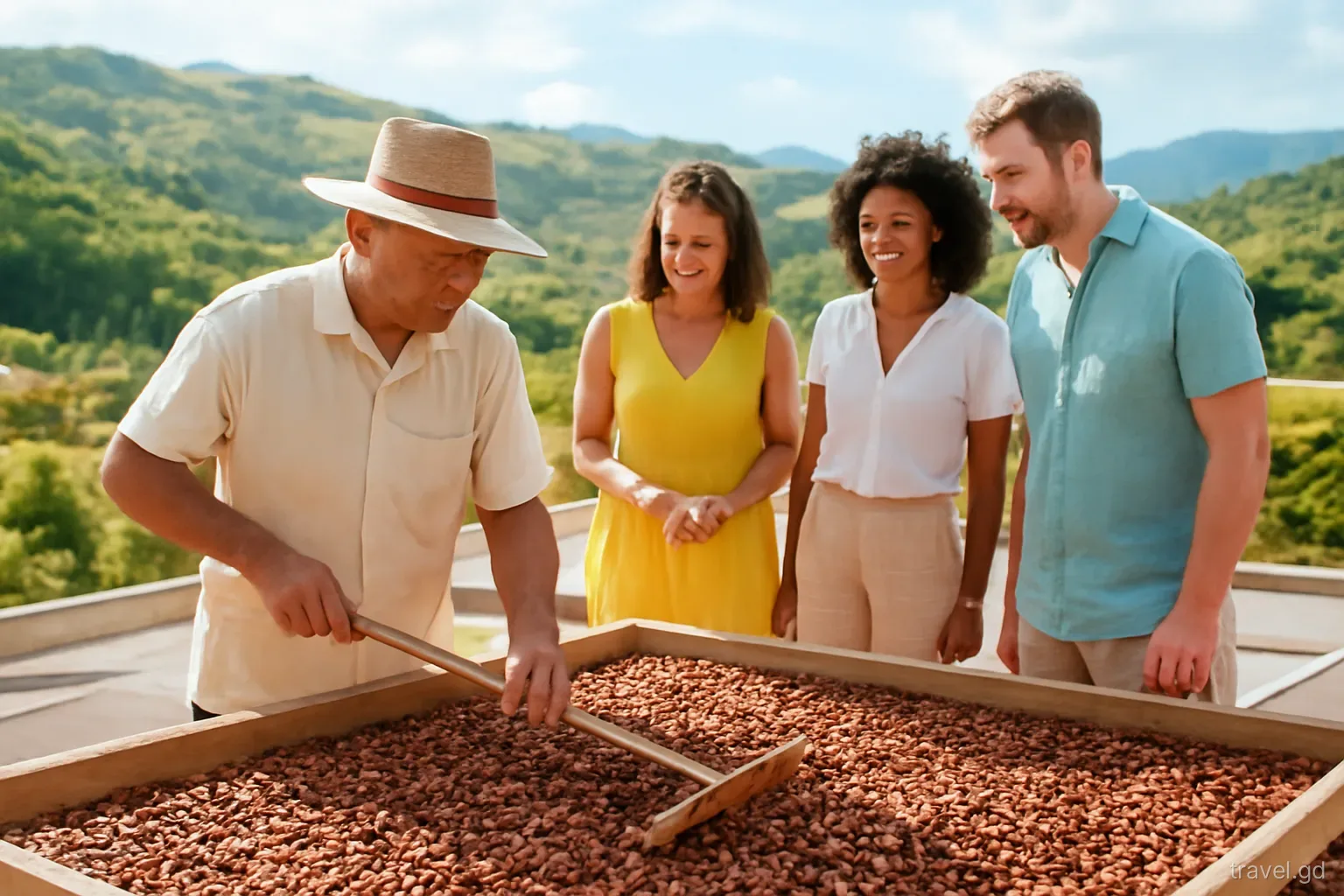
- Belmont Estate (13.30). A historic cocoa estate where visitors have long been able to see cocoa fermenting and drying, learn about the process and buy chocolate. Lunch has been served here too; if you want to eat at Belmont, skip the Gouyave lunch and book ahead.
- River Antoine (15.00). The distillery uses a water wheel to crush cane and produces strong rum. The tour is short; the driver should taste with care or not at all.
- Back via Grenville and Grand Etang (16.00). Drive south through Grenville, then climb through the rainforest past Grand Etang and down to St George's. Aim to be on the mountain road well before dark.
Food to look out for along the way
Fish on the west coast. Gouyave is the place to taste fish at its freshest, grilled, fried or in a broth. Tuna, kingfish and other catch come off the boats daily.
Nutmeg in every form. Along the west coast and in Gouyave, look for nutmeg syrup, jams and nutmeg ice cream, as well as whole nutmegs in mace.
Cocoa and chocolate. In St Patrick and the north, cocoa grows under the shade of taller trees. Belmont and other producers sell bars made on the island.
Fruit stands. Roadside stalls in the north and east sell bananas, mangoes in season, golden apples and coconuts. Buy a coconut to drink on the spot.
Grenville snacks. If you stop in Grenville, the market area and nearby shops offer local snacks, juices and baked goods.
Rum. River Antoine's rum is very strong; a small taste goes a long way. Buy a bottle to drink later, not during the drive.
Mistakes to avoid on a food drive
Most problems on this route come from trying to do too much or forgetting how slow the roads are.
- Underestimating driving time. Winding roads and slow traffic stretch every leg. Leave buffers.
- Arriving late at lunch spots. Small eateries cook a set amount and may run out early in the afternoon.
- Assuming everything is open. Estates, distilleries and processing stations change hours and sometimes close for maintenance or after storms.
- Drinking and driving. Grenada's police enforce drink-driving laws, and mountain roads are unforgiving.
- Driving the Grand Etang road after dark. It is steep, winding and often misty. Plan to be off it by early evening.
- Forgetting cash. Roadside stalls and small eateries rarely take cards.
- Parking on narrow bends. Pull fully off the road where safe, and never block driveways or bus stops.
- Leaving purchases in the car. Chocolate melts within minutes in a parked car, and spices and rum are tempting to thieves. Carry them with you or keep them out of sight.
With children, non-drinkers or limited time
The route works for families with a few changes. Children usually enjoy the nutmeg station, the fishing boats at Gouyave, cocoa drying at Belmont and the water wheel at River Antoine, but long stretches in a car on winding roads can bring on motion sickness. Break the drive with short stops, keep windows open on the mountain roads and carry snacks and water. Nutmeg ice cream, coconut water and fresh fruit make good rewards along the way.
For non-drinkers, the rum stops are still interesting for the process and the machinery, and most distilleries and estates sell soft drinks or juices. Belmont and the chocolate stops are the natural highlight for anyone not tasting rum.
If your time is short, prioritise one strong stop on each side of the island rather than many quick ones. A morning at Gouyave and an afternoon at Belmont, with good food at both, makes a more satisfying day than six rushed stops. Food days in Grenada reward slowing down, asking questions and letting a conversation with a vendor or guide run on.
Shorter versions and alternatives
If a full loop feels too ambitious, split it in two. A west-coast morning, with breakfast in St George's, Concord, Gouyave and a fish lunch, then back by mid-afternoon, makes an easy half day. A separate north-east day can focus on Belmont, River Antoine and Lake Antoine, crossing the island both ways via Grand Etang.
For a southern food day closer to the main hotels, combine Clarke's Court distillery in Woodlands, the Laura Herb and Spice Garden in St David and a seafood lunch on the south coast. Driving distances are short, and it suits travellers who prefer not to tackle the mountain roads.
If you would rather not drive, hire a driver for the day. Many taxi drivers know the food stops well, can call ahead to check opening hours, and allow everyone in the group to taste the rum. The cost is higher than car hire, but the day is more relaxed and often richer in local knowledge.
Frequently asked questions
Do you need a permit to drive in Grenada?
Yes. Visitors need a local driving permit, issued on presentation of a valid home licence. Car hire companies usually arrange it when you collect the car, for a fee. Driving is on the left, and roads are narrow and winding.
How long does it take to drive around Grenada?
Driving the full loop without stopping takes several hours because roads are winding and slow. With stops for food, tours and photographs, a round-island food day easily fills eight to ten hours. Starting early is essential.
Can you visit Belmont Estate without a tour?
Belmont Estate has long welcomed independent visitors for tours, lunch and chocolate purchases, but opening hours and arrangements change. Contact the estate in advance to confirm, particularly if you want lunch, which may need booking.
Is the Gouyave nutmeg station open to visitors?
It has historically offered short tours showing how nutmeg and mace are processed, usually on weekdays. Opening can change, so check locally before you go. Even if tours are not running, Gouyave's waterfront and fish lunches are worth the stop.
Is it better to hire a driver for a food tour?
A driver removes the stress of winding roads, can phone ahead to check opening hours and allows everyone to taste rum safely. It costs more than car hire, but many visitors find the local knowledge and relaxed pace worth it.