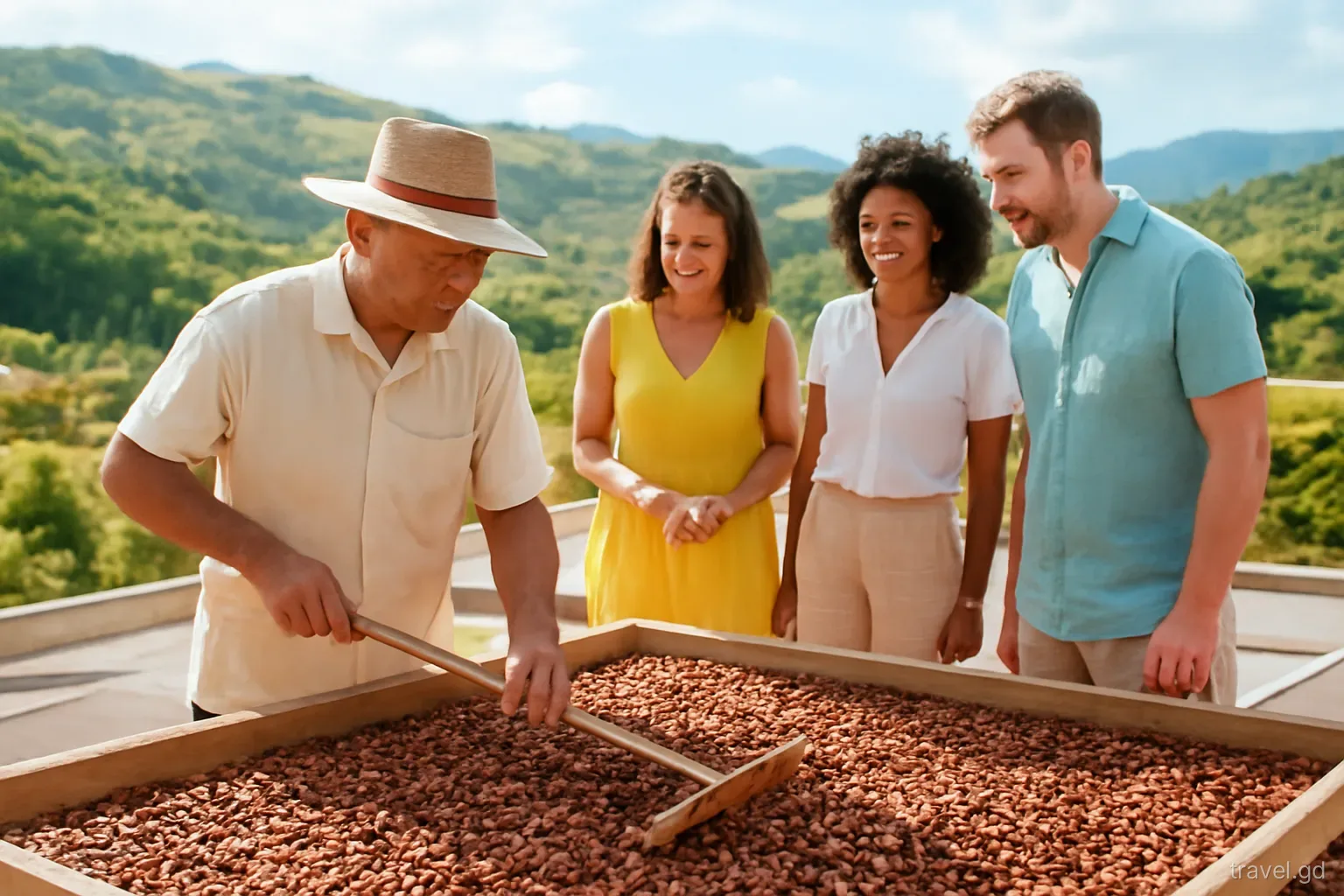
Most of the world's chocolate is made a long way from where its cocoa grows. Grenada is one of the places reversing that. Cocoa has been grown on the island for centuries, and since the late 1990s a handful of makers have turned Grenadian beans into finished bars on the island itself, an approach usually called tree-to-bar. For a visitor who cares about chocolate, that means you can walk through a cocoa grove in the morning, watch beans fermenting and drying at midday and taste a bar made from them in the afternoon.
This guide is for travellers who want to build a trip, or at least a few days of one, around chocolate. It covers where cocoa grows and how it is processed, which kinds of visits are possible, how to taste properly, the Grenada Chocolate Fest held each year in late May, and the practical points that stop a chocolate day turning into a long drive to a closed gate.
Where Grenadian cocoa grows and why it is special
Cocoa trees need shade, humidity and rich soil, and Grenada's volcanic hills provide all three. Most cocoa grows in the wetter parishes, especially St Patrick, St Andrew, St John and St Mark, where it is often planted under taller trees such as bananas, nutmeg and breadfruit. The island's cocoa has long been regarded as a fine-flavour origin, prized by chocolate makers for its fruity, complex character, and it is still largely grown on small farms and old estates.
The history is long and not always comfortable. Cocoa, like sugar and nutmeg, was a plantation crop worked by enslaved Africans and later by indentured and free labour, and many estates visitors see today have their roots in that era. Good guides talk about this openly, and it adds depth to the visit.
In recent decades, cocoa farming in Grenada has faced challenges, from hurricanes to ageing farmers and low world prices. Hurricane Ivan in 2004 destroyed many trees, and Hurricane Beryl in 2024 caused damage in the north. The rise of local chocolate making, and the festival that celebrates it, has given farmers new reasons to replant, and buying Grenadian-made bars is a direct way to support that recovery.
From pod to bar: what you will see on a visit
Tours at estates and makers usually walk through the same stages. Knowing them in advance helps you ask better questions.
- Harvesting. Ripe pods, yellow, orange or red depending on the variety, are cut from the trunk and branches with a knife or cutlass.
- Opening. Pods are split and the wet beans, coated in a sweet white pulp, are scooped out. Guides often let visitors taste the pulp, which is fruity and refreshing.
- Fermenting. Beans are piled into wooden boxes and covered, usually with banana leaves, for several days. Heat builds up and the pulp drains away, developing the flavour precursors that make good chocolate.
- Drying. Beans are spread on large wooden trays in the sun, often with sliding roofs that can be rolled over when it rains. Traditionally, workers walked through the beans to turn them, a practice known as dancing the cocoa.
- Roasting and winnowing. At chocolate makers, dried beans are roasted, cracked and the shells blown away to leave nibs.
- Grinding and conching. Nibs are ground into a paste, mixed with sugar and sometimes cocoa butter or milk, and refined for hours or days.
- Tempering and moulding. The chocolate is heated and cooled carefully so it sets with a snap and shine, then poured into moulds and wrapped.
Kinds of chocolate visits in Grenada
Historic cocoa estates. Belmont Estate in St Patrick is the best known, with a long history, tours covering fermentation and drying, a shop selling chocolate made from estate cocoa, and a restaurant that has served Grenadian lunches. It is the easiest place for a first-time visitor to see the whole process in one stop. Check opening hours and book lunch in advance.
Tree-to-bar makers. The Grenada Chocolate Company, founded in 1999 in Hermitage, St Patrick, helped start the island's tree-to-bar movement with organic, high-cocoa bars made in a small factory, and it became known for shipping chocolate to Europe by sailing ship. Other small makers in St Patrick and St Mark produce their own bars. Factory visits are not always open to walk-ins; contact makers ahead.
Organic cocoa farms. A few small farms offer tours and tastings that focus on growing cocoa organically and on the farm's ecology. These are intimate experiences, often by appointment only. Check whether they are operating after the 2024 hurricane damage.
Chocolate shops and cafés in St George's. Shops in the upper town sell bars from several Grenadian makers, and some offer tastings or hot chocolate. They are handy on a cruise day or a rainy afternoon.
Hands-on workshops. Some tours and the chocolate festival include sessions where you roast, grind or temper chocolate yourself. These are worth booking early.
The Grenada Chocolate Fest
The Grenada Chocolate Fest takes place each year in late May and has grown into one of the island's signature food events. In recent years it has run over about a week, with tours of cocoa farms and estates, chocolate-making workshops, tastings, talks by makers and farmers, food pairings with chocolate in savoury and sweet dishes, and wellness sessions. The 2025 edition was the twelfth, with a theme centred on resilience after Hurricane Beryl.
The festival is a good reason to time a trip, because it opens doors that are not always open the rest of the year. Small farms host visitors, makers explain their work in person and events take place across several parishes. Many activities are ticketed individually or as packages, and popular ones sell out.
Late May falls at the end of the dry season and the start of mango season, before the busiest part of the hurricane season. Accommodation is generally easier to find and cheaper than in the winter peak, though festival weekends can fill up. Check the official festival programme for dates, events and booking details, as the format changes from year to year.
How to taste Grenadian chocolate properly
Start at room temperature. Chocolate straight from a fridge or a cold air-conditioned room tastes muted. Let it warm a little first.
Look and listen. Good dark chocolate has an even shine and breaks with a clean snap.
Let it melt. Place a small piece on your tongue and let it melt slowly rather than chewing. Notice how the flavour changes: Grenadian chocolate often shows fruity, earthy and sometimes spicy notes.
Compare percentages. Many Grenadian bars are high in cocoa, from around sixty to over eighty per cent. Taste from lighter to darker, and from plain bars to those with nutmeg, ginger or sea salt.
Cleanse between bars. A sip of water or a plain cracker between samples keeps your palate fresh.
Try cocoa tea too. The traditional drink, made from a grated cocoa ball with spices and milk, shows another side of Grenadian cocoa.
Pitfalls and practical points
A chocolate trip needs more planning than a beach day, mostly because the best places are rural and small.
- Assuming walk-in visits. Many makers and farms work by appointment. Contact them well ahead.
- Underestimating the drive. Most cocoa country is in the north, an hour or more from the main hotels on winding roads. Plan one area per day.
- Buying imported chocolate by mistake. Check that the bar is made in Grenada, not just packaged with Grenadian imagery.
- Melting your purchases. Keep chocolate out of hot cars and direct sun, and carry an insulated bag.
- Missing the festival dates. Confirm the festival week before booking flights; dates are announced in advance.
- Forgetting post-hurricane changes. Some farms in the north were damaged in 2024. Check that places are open before planning around them.
Frequently asked questions
When is the Grenada Chocolate Fest?
The Grenada Chocolate Fest is held each year in late May, running for about a week with farm tours, workshops, tastings and food events. The 2025 festival ran from 22 to 27 May. Check the official programme for the current year's dates and bookings.
Can you visit a chocolate factory in Grenada?
Yes, with planning. Belmont Estate in St Patrick welcomes visitors for tours of cocoa processing and sells chocolate. Small tree-to-bar makers sometimes offer visits by appointment. Contact them in advance, as walk-in visits are not always possible.
What makes Grenadian chocolate different?
Grenada grows fine-flavour cocoa, and several makers produce bars on the island from local beans, known as tree-to-bar. The chocolate is often high in cocoa content, with fruity and earthy notes, and buying it supports Grenadian farmers directly.
Where can you buy Grenadian chocolate?
Shops in St George's, supermarkets, estate shops such as Belmont's, the cruise terminal area and some hotels sell bars from Grenadian makers. Check the label says made in Grenada, and keep the chocolate cool on the way home.
Is Belmont Estate worth visiting for chocolate?
For most chocolate lovers, yes. It shows fermentation and drying in one place, has a shop and has served Grenadian lunches. It is in St Patrick, about an hour or more from the south, so combine it with other northern stops.
What is dancing the cocoa?
It is the traditional way of turning cocoa beans as they dry in the sun on large wooden trays. Workers walked or shuffled barefoot through the beans to turn them evenly. Some estates still demonstrate it for visitors.