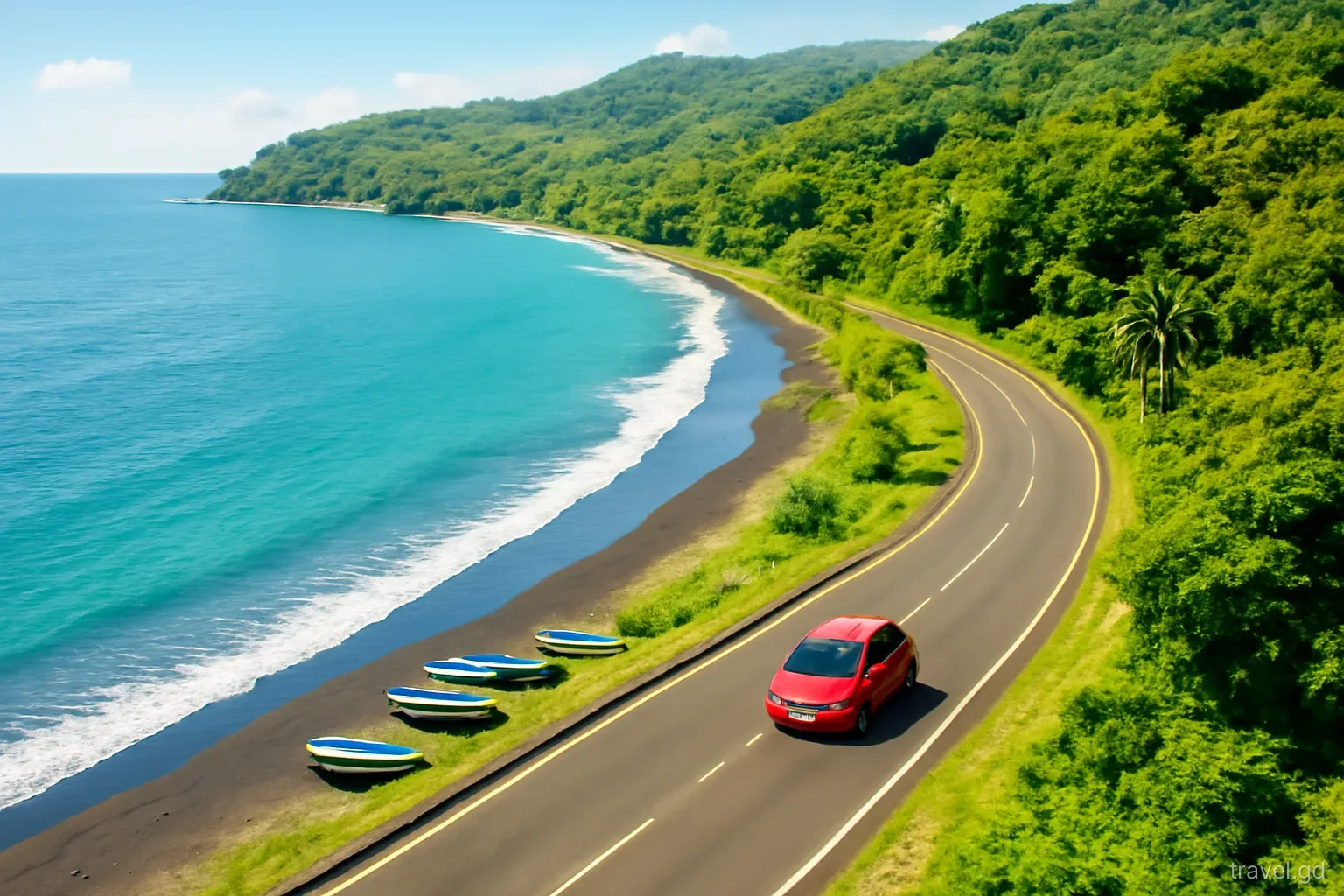
A hire car turns Grenada from a beach holiday into an island you can actually explore. The main island is only about 34 kilometres long, but the interesting places are spread across all six parishes: waterfalls in the rainforest around Grand Etang, fishing towns along the west coast, rum and cocoa estates in the north and east, and quiet bays in St David's. Taxis to all of them add up quickly.
Renting is straightforward, but a few local rules and habits are worth knowing before you book: the visitor driving permit, how insurance excess works, which kind of car suits steep, narrow roads, and what to check on the car before you leave the yard. This page covers all of it, with rough costs that should always be confirmed with the firm.
The visitor driving permit
Unless your licence was issued in a member state of the Organisation of Eastern Caribbean States, you need a Grenadian local permit to drive, in addition to your home licence. It is a short-term permit issued under the authority of the Royal Grenada Police Force, and most rental firms issue it at the counter as part of the paperwork. The fee has been around EC$60, roughly US$22, and the permit has typically been valid for a period of up to three months. Fees and terms are set by regulation and can change, so confirm when booking.
Bring your physical home licence. A photograph or scan on a phone is not a substitute. If your licence is not in English or not in the Roman alphabet, carry an International Driving Permit with it. If you are borrowing a friend's car rather than renting, the permit must be obtained from the police traffic department yourself, since there is no rental desk to arrange it.
Keep the permit with your licence whenever you drive. Police checkpoints do happen, particularly on the main roads in the south, and officers will ask to see both documents.
Choosing the car
A small SUV is the sensible default. Grenada's roads are steep, narrow and sometimes rough, with sharp bends and deep drains at the edges. A compact SUV or crossover with decent ground clearance handles hills, potholes and unpaved driveways to villas far better than a low saloon.
Four-wheel drive is rarely essential. For the main roads and most attractions, a two-wheel-drive vehicle with good clearance is enough. Four-wheel drive helps on some unpaved tracks to remote beaches or trailheads and on very steep private driveways after rain. Ask your accommodation what its access road is like before you choose.
Automatic or manual. Automatics are widely available and make sense for visitors used to driving on the right, because shifting gears with the left hand on steep hill starts adds to the workload. Ask for an automatic explicitly if you need one.
Right-hand drive. Grenada drives on the left, and many cars are right-hand drive, often imported from Japan. Some left-hand-drive vehicles are on the road too. A right-hand-drive car is easier for judging the edge of the road and overtaking.
Size against parking. In St George's, street parking is tight and the town is built on hills. A smaller car is far easier to park and turn than a large seven-seater, so only take a big vehicle if your group needs it.
Insurance, excess and what is usually excluded
Rental prices in Grenada usually include basic third-party cover. Collision damage waiver, which limits what you pay if the hire car is damaged, is normally offered as an extra or bundled into a higher rate. Even with it, there is typically an excess: the amount you remain liable for, which can be several hundred to a few thousand US dollars depending on the firm and the vehicle. Ask what the excess is in writing and whether a lower-excess option is available.
Read the exclusions carefully. Damage to tyres, wheels, windscreens and the underside of the car is commonly excluded, and those are exactly the parts most at risk on Grenadian roads, where potholes and deep drains catch out visitors. Driving on unpaved tracks may also void cover. Some credit cards and standalone policies offer rental car insurance, but check that they apply in Grenada and to the type of vehicle you are hiring before you decline the firm's cover.
A deposit is normally taken on a credit card at pick-up. Debit cards are not always accepted for the deposit, so confirm this in advance.
What it costs, roughly
Daily rates vary with season, vehicle and length of hire. As a broad guide, small cars and compact SUVs from local firms have commonly started somewhere around US$50 to US$70 a day, with larger SUVs and peak-season dates costing more. Weekly hires often come with a discount. International franchises at the airport may charge more than local companies but sometimes offer clearer insurance terms. Treat these numbers as a rough planning range and get written quotes, as prices change.
Add the cost of the visitor permit, any collision damage waiver, extra drivers, child seats and fuel. Fuel is more expensive than in the United States and roughly comparable to many European countries; stations are plentiful in the south-west and in the larger towns, but fewer in the far north and on the interior roads, so do not let the tank run low before a day in the north.
Many local firms deliver cars to hotels and villas and collect them at the end, often free in the south-west or for a small fee further away. That can be cheaper and more relaxing than collecting at the airport after a long flight.
Checks before you drive away
Ten minutes at pick-up prevents most disputes at the end of the hire. Do not let a busy desk rush you.
- Walk round the car with the agent and photograph or film every panel, the wheels and the windscreen, including existing scratches and dents. Make sure they are marked on the rental form.
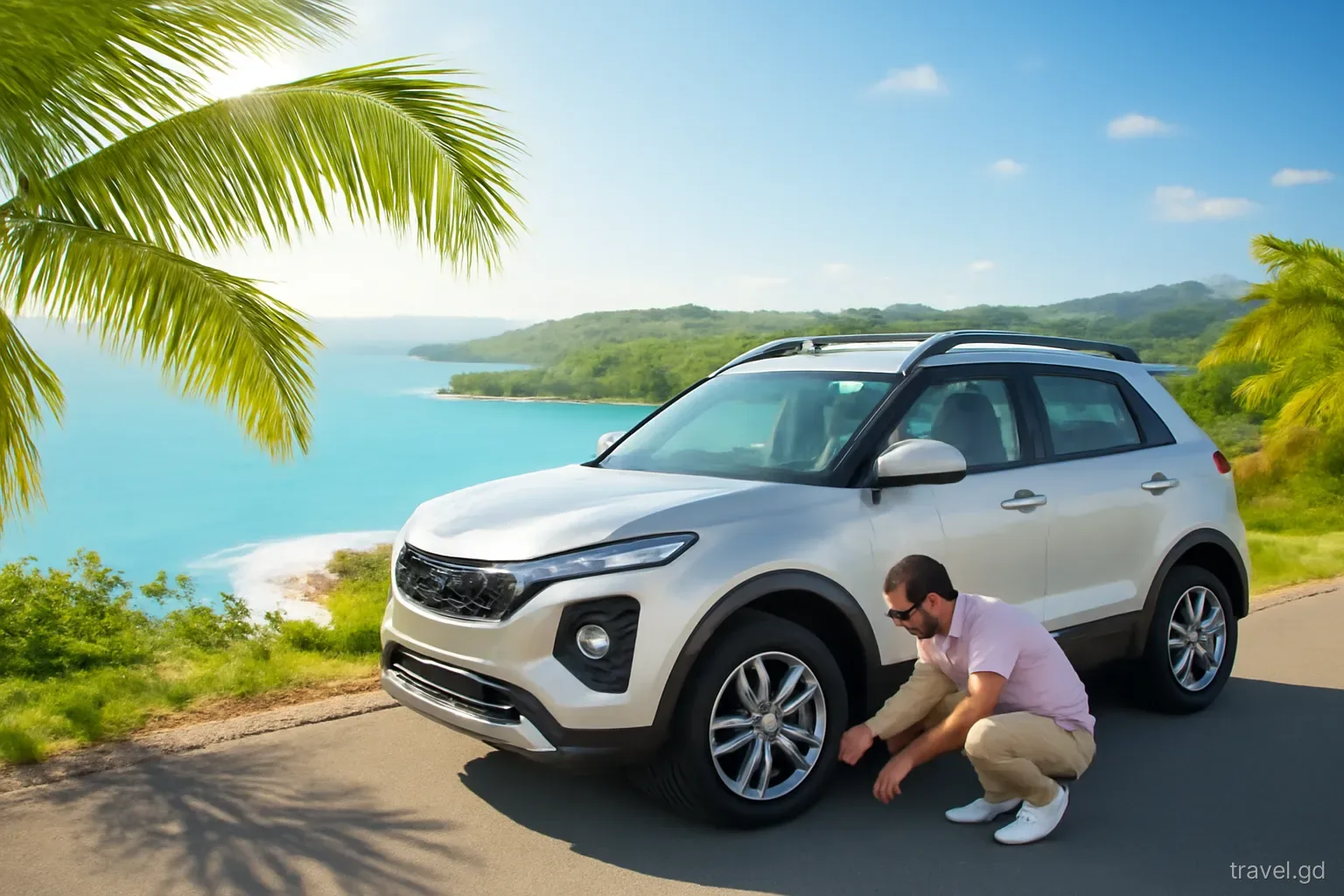
- Check all four tyres for tread and damage, and confirm there is a usable spare, a jack and a wheel brace. Punctures are common on rural roads.
- Test the air conditioning, lights, indicators, wipers and horn. You will use the horn on blind bends.
- Note the fuel level and the agreed return level.
- Ask for a contact for breakdowns and accidents, and what to do if you have a puncture far from the south-west.
- Confirm where and when to return the car, and whether airport returns are possible for your departure time.
Mistakes renters make
Booking late for the high season. Between mid-December and mid-April, and around Easter and Carnival, cars sell out. Book weeks or months ahead for those dates.
Declining cover without checking exclusions. Assuming a credit card covers you, then discovering it excludes the Caribbean or SUVs, is an expensive surprise.
Driving at night on day one. Collect the car in daylight, and keep the first drive short and local.
Ignoring the villa driveway. Some hillside properties have very steep concrete driveways. Ask the host whether a small car can manage it, especially after rain.
Returning the car with no time to spare. Allow time for inspection and paperwork at the airport before check-in, particularly on busy departure afternoons.
Forgetting the second driver. Everyone who will drive needs to be named on the rental agreement and hold their own local permit. An unnamed driver can void the insurance entirely.
Leaving valuables on show. Cars parked at beaches, trailheads and waterfalls are easy targets for opportunist theft. Take bags with you or lock them out of sight before you arrive, not in the car park.
Frequently asked questions
Do tourists need a special permit to drive in Grenada?
Yes, unless their licence was issued in an OECS country. Visitors need a Grenadian local permit, usually issued by the rental firm at the counter for a fee that has been around EC$60. Carry it with your physical home licence whenever you drive.
Which side of the road does Grenada drive on?
Grenada drives on the left. Many cars are right-hand drive, although some left-hand-drive vehicles are on the road. Visitors used to driving on the right should take extra care at junctions, roundabouts and when pulling out of car parks.
Is a four-wheel drive needed in Grenada?
Not usually. A two-wheel-drive car with good ground clearance, such as a compact SUV, handles the main roads and most attractions. Four-wheel drive helps on some unpaved tracks and very steep driveways, so ask your accommodation about its access road.
How much does it cost to hire a car in Grenada?
Rates vary by season and vehicle. Small cars and compact SUVs from local firms have commonly started around US$50 to US$70 a day, with more in peak season, plus the permit, insurance options and fuel. Always get written quotes, as prices change.
Can a hire car be delivered to a hotel in Grenada?
Yes, many local firms deliver to hotels and villas, often free in the south-west and for a fee further away. Delivery the morning after arrival is a good way to avoid driving straight after a long flight.
Does car hire insurance in Grenada cover tyres and windscreens?
Often not. Tyres, wheels, windscreens and the underside of the car are commonly excluded from collision damage waiver, even though they are most at risk on local roads. Read the exclusions and ask about the excess before signing.