Plenty of visitors spend a week or more in Grenada without ever hiring a car, and enjoy it more for not worrying about left-hand traffic, steep hills and parking. The trick is choosing the right base. Stay in the right place and the beach, restaurants, buses and tours are all within easy reach. Stay in the wrong place and every outing becomes a taxi fare.
This page looks at which areas work car-free, how to fill the gaps with buses, taxis, water taxis and tours that collect from hotels, and the places where going without a car becomes hard work. It assumes you are staying on the main island of Grenada; Carriacou and Petite Martinique have their own, simpler pattern.
The easiest base: Grand Anse and Morne Rouge
For car-free travellers, the Grand Anse and Morne Rouge area in St George parish is the obvious first choice. Grand Anse beach, a long curve of sand on the sheltered Caribbean side, has public access along its length, and many hotels, guesthouses and apartments are either on it or a short walk away. Morne Rouge, the smaller bay just to the south-west, is a walk or a very short taxi ride further on.
Daily needs are close. Supermarkets, pharmacies, banks with cash machines, shopping plazas and a wide range of restaurants and beach bars are concentrated around Grand Anse. Route 1 buses run along the main road into St George's every few minutes through the day, for a fare of a few EC dollars. Many tour operators and dive shops collect guests from hotels in this area as standard.
The airport is ten to fifteen minutes away by taxi. Walking along the main road is possible but not always pleasant, as pavements are intermittent and traffic is busy, so for short hops after dark a taxi is the better choice.
St George's: walkable, but hilly
Staying in St George's itself puts you within walking distance of the Carenage, the market square, the Esplanade, the bus terminal and the town's historic churches and forts. For visitors who like towns, enjoy walking and want local life on the doorstep, it works well without a car.
The catch is gradient. St George's is built on steep hills around its harbour, and many guesthouses and apartments sit high above the waterfront. A walk down to the Carenage is easy; the climb back in the midday heat is not. Choose accommodation with a short, manageable walk to the waterfront, or budget for taxis up the hill.
From the Melville Street terminal, buses leave for every part of the island, which makes St George's the best base for day trips by bus to Gouyave, Grenville or Sauteurs. The beach is a short bus ride away at Grand Anse, and water taxis have long run between the Carenage and Grand Anse.
Bases that need more planning
Lance aux Epines and True Blue. Quieter, upmarket residential peninsulas close to the airport with hotels, restaurants and marinas. Distances are walkable within each area, but bus service is thinner than on the main Grand Anse road. Expect to use taxis for St George's and evening outings, or walk to the main road for a bus.
St David's and the south-east bays. Beautiful and peaceful, but spread out. Accommodation is often up side roads, restaurants are a drive apart and buses run only on the main road. Car-free stays here work only if you plan to relax on site and use taxis for occasional trips.
The west coast and the north. Gouyave, Victoria and Sauteurs are on bus routes, but the journey to St George's is long and the last buses leave early. Fine for a quiet stay, harder for anyone wanting variety.
Hillside villas anywhere. Steep access roads, no pavements and no buses. Unless a car or driver is included, this is the hardest kind of property to manage without wheels.
Filling the gaps: tours, pickups and water taxis
Going car-free does not mean seeing less of the island. Many island tours, rainforest hikes, rum and chocolate estate visits and boat trips include pickup from hotels in the south-west, and dive operators routinely collect guests. Ask when booking whether pickup is included from your area and at what time.
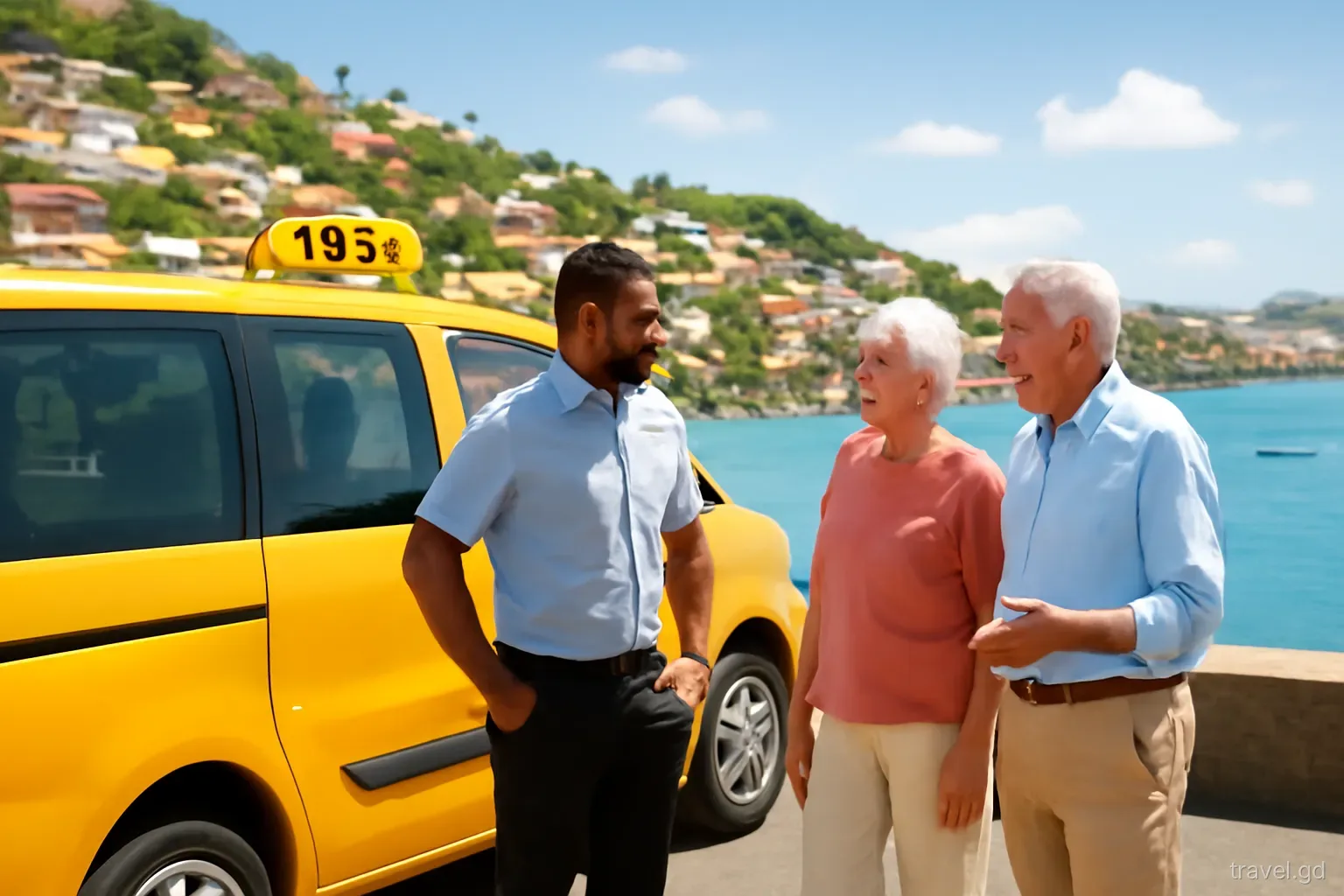
A private driver for a day is the other big tool. Hiring a taxi driver to cover the interior, the waterfalls and one coast lets you reach places the buses do not, with commentary along the way. For a couple or a family staying a week, one or two such days replace a car hire entirely.
Water taxis add a pleasant option along the south-west coast, most often between Grand Anse and the Carenage in St George's, avoiding traffic. Arrangements are informal and depend on the weather and the boatmen working that day, so agree the fare and any return time in advance and treat it as a bonus rather than a timetable.
Walking safely between places
Walking is the simplest way to get around within a base, but Grenadian roads were not built with pedestrians in mind. Many have no pavement, the edges drop into deep open drains, and traffic, including fast minibuses, comes close. Walk facing oncoming traffic where there is no pavement, keep well in, and take extra care on bends where drivers cannot see you.
Walk in daylight where possible. After dark, unlit roads, drains and passing vehicles make even short walks risky, and a short taxi ride is the safer choice. Carry water and sun protection for anything longer than a few minutes; midday heat and humidity tire people faster than they expect.
Beaches can sometimes serve as footpaths. At low swell, walking along the sand of Grand Anse is often the most pleasant way to move between hotels, bars and restaurants on the bay.
A sample car-free week from Grand Anse
This outline shows how the pieces fit together for a first-time visitor based in Grand Anse or Morne Rouge. Swap days around to suit the weather and your interests.
- Day 1: taxi from the airport, beach and sunset close to the hotel.
- Day 2: walk the beach, then a Route 1 bus into St George's for the Carenage, the market and Fort George; bus or water taxi back.
- Day 3: a snorkelling or dive trip with hotel pickup, or a boat trip along the south-west coast.
- Day 4: a full day with a private driver through the Grand Etang rainforest, a waterfall and the west coast to Gouyave, with lunch on the way.
- Day 5: a rest day on the beach, or a bus day trip from St George's to Grenville.
- Day 6: a rum or chocolate estate tour with pickup, or a second driver day to the north and east.
- Day 7: a final swim, late check-out and a taxi to the airport.
Car-free mistakes to avoid
Most problems come from choosing accommodation first and transport second. Check the location on a map against the bus route and the nearest shops before you book, and ask the host how guests without cars usually manage.
- Booking a hillside villa for its view, then discovering a steep walk to the nearest bus stop.
- Assuming buses run in the evening; plan dinner within walking distance or arrange a taxi both ways.
- Not checking whether a tour includes pickup from your area before booking.
- Relying on a water taxi for a fixed appointment, such as a flight or a dive departure.
- Walking along busy roads at night to save a taxi fare.
- Forgetting cash for buses, water taxis and small purchases, where cards are not taken.
- Leaving tour bookings until the last minute in high season, when the trips with hotel pickup fill first.
Frequently asked questions
Can Grenada be enjoyed without renting a car?
Yes. Visitors based around Grand Anse or St George's can use buses, taxis, water taxis and tours with hotel pickup to see most of the island. A hire car becomes more useful for stays in St David's, the north or hillside villas.
Which part of Grenada is most walkable?
Grand Anse and Morne Rouge are the most convenient for walking to beaches, shops and restaurants, with frequent buses into town. St George's is very walkable for sightseeing but hilly, so choose accommodation near the waterfront.
Do Grenada tours pick up from hotels?
Many island tours, estate visits, hikes, boat trips and dive operators collect guests from hotels in the south-west, particularly around Grand Anse, Morne Rouge, True Blue and Lance aux Epines. Ask when booking whether pickup is included for your area.
Is it safe to walk along the roads in Grenada?
In daylight, with care. Many roads have no pavement and deep drains at the edges, and traffic passes close. Walk facing oncoming traffic, keep well in on bends, and take a taxi after dark rather than walking on unlit roads.
How do car-free visitors get to dinner in the evening?
Choose restaurants within walking distance of your base, or arrange a taxi both ways in advance, as buses thin out after dark and taxis rarely cruise. Many restaurants will call a driver they know for the return trip.