Most visitors to Grenada spend a week, and the transport decision shapes that week more than almost anything else. A hire car gives freedom but means driving on the left on steep, narrow roads. Taxis are easy but expensive over several days. The minibuses are cheap and lively but stop at sunset and skip the places off the main roads. A private driver for a day sits somewhere in the middle.
There is no single right answer, but there is usually a right answer for your trip. It depends on where you are staying, who you are travelling with, how much of the island you want to see and how you feel about driving. This page compares the options honestly and then sets out a recommended plan for the most common kinds of trip.
The four options at a glance
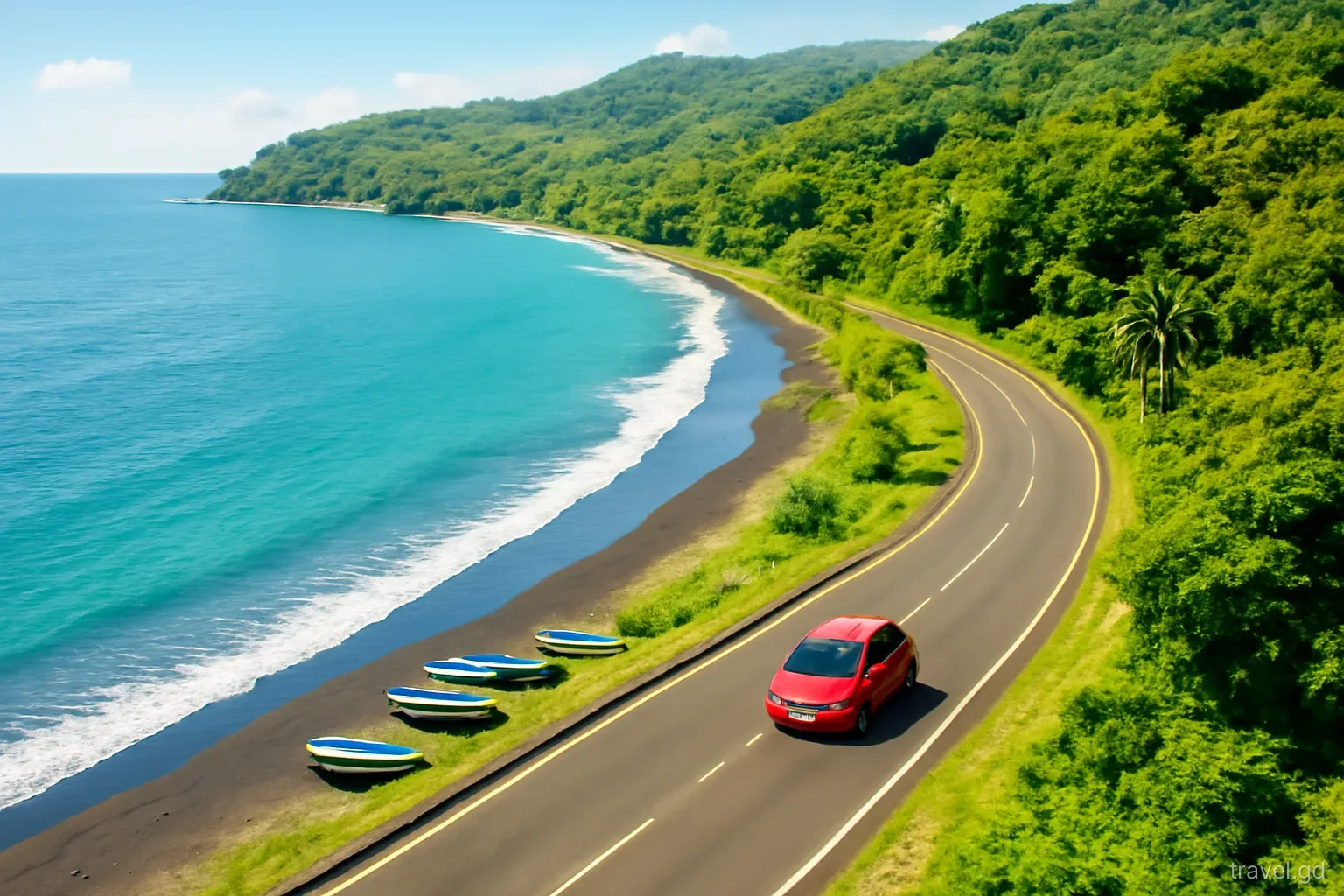
Hire car. Maximum freedom: early starts for hikes, late lunches on the east coast, beaches off the bus routes. Costs a daily rate plus the local permit, insurance and fuel. Requires confidence with left-hand traffic, hills and deep roadside drains, and parking in St George's is hard. Best value for families and groups staying outside the south-west.
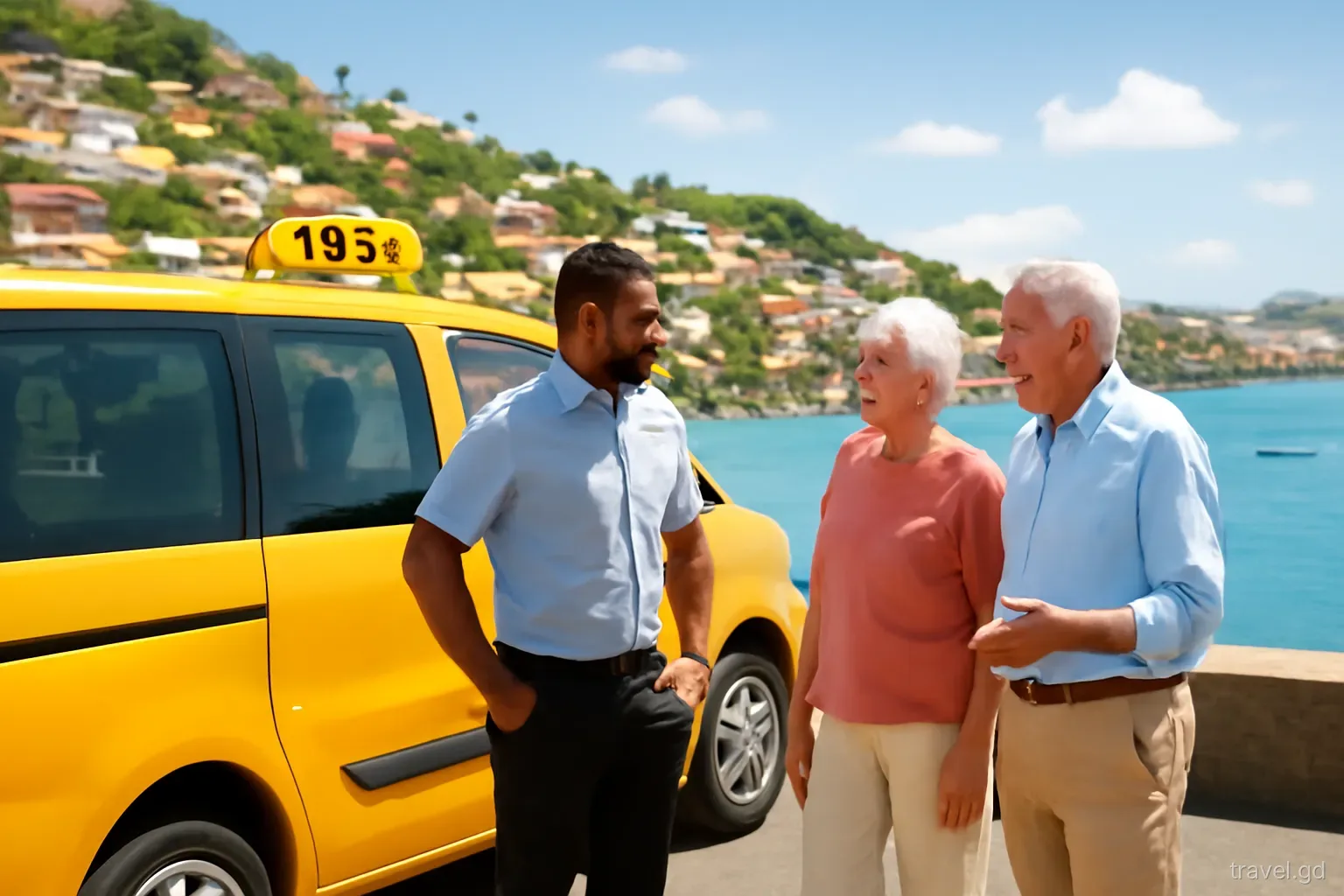
Taxis. No driving, no navigating, door to door. Fares are per car and agreed in advance; short hops in the south-west are reasonable, but longer journeys and daily use add up fast. Best for occasional trips, evenings out and airport transfers.
Minibuses. Very cheap, frequent on the main corridors, and a good window on island life. They run mainly in daylight, thin out on Sundays, have little room for luggage and do not reach many waterfalls, estates and remote beaches. Best for solo travellers, couples on a budget and short hops between Grand Anse and St George's.
Private driver for the day. A taxi driver hired by the hour or day for an island tour. Combines the reach of a car with local knowledge and no driving. Costs more than a hire car for one day, but shared between four or more people it can be good value. Best for one or two big sightseeing days.
What matters most: where you stay
Location decides more than budget. If you stay in the Grand Anse, Morne Rouge, True Blue or Lance aux Epines area, you are close to the airport, beaches, restaurants and the busiest bus route on the island. Many visitors here manage a whole week without a car, using buses into St George's, the occasional taxi for dinner and one or two days with a driver or a hire car for the rest of the island.
If you stay in St David's, on the west coast around Grand Roy or Gouyave, in the hills, or in the north and east, the picture changes. Buses still pass on the main roads, but villas and small hotels are often up side lanes, restaurants are spread out, and every evening meal becomes a taxi fare. A hire car for most of the stay is usually the most practical and economical choice.
Hillside villas deserve a special mention. Some are reached by steep, narrow concrete driveways that are awkward for nervous drivers and impossible for buses. Ask the owner about access before deciding on transport, and ask whether they recommend a car.
Comparing costs over a week
Exact prices change and vary by season, so use rough logic rather than precise sums. A hire car for seven days, with permit, insurance and fuel, typically costs a few hundred US dollars, often less per day than two or three medium-length taxi journeys. For a family making several trips a day, that comparison favours the car quickly.
Taxis are cheapest when used sparingly. A couple staying in Grand Anse who take a taxi only for the airport transfers, two evenings out and one day tour will spend less than a week's car hire, and avoid any driving. The same couple using taxis for every outing will spend far more.
Buses are dramatically cheaper than either: a few EC dollars a ride, under US$5 for many return trips. The trade-off is time and range. A bus day to the west coast is a pleasure; a bus trip to a waterfall up a side road may not be possible at all.
Private drivers cost more for a single day than a hire car, but there is no permit, insurance excess or fuel, and the driver's knowledge often means seeing more in the same hours.
Recommended plans for common trips
These are starting points. Adjust them for your own confidence, interests and budget.
- Couple, first visit, staying in Grand Anse: taxi from the airport; buses and walking for the first days; one full day with a private driver for the rainforest, waterfalls and west coast; a two- or three-day car hire, delivered to the hotel, if you want the north and east at your own pace.
- Family with young children in a villa in St David's or the hills: hire car for the whole stay, booked well ahead with child seats, plus a pre-booked driver for the airport transfers so nobody drives straight after the flight.
- Solo traveller on a budget: buses for almost everything, a shared or group tour for the interior, and taxis only after dark.
- Older travellers or anyone who prefers not to drive: stay in the south-west, use a regular taxi driver for outings, and hire that driver for two half-day tours rather than one long day.
- Divers and beach lovers: dive operators usually collect from hotels in the south-west, so a car is optional; a short hire for two days covers beaches further afield.
- Splitting the week with Carriacou: skip the car on the main island if staying in the south-west, and plan transport on Carriacou separately.
The split-week approach
The plan that suits most visitors is not one option for the whole week but a mix. Spend the first two or three days without a car, using taxis, buses and walking around your base while you recover from the journey and get a feel for the roads by watching them from a passenger seat. Then take a car for two or three days in the middle of the stay, delivered to your hotel, and use it for the longer drives to the interior, the west coast, the north and the east. Return it before the last day, when you only need the airport run.
The advantages add up. You avoid driving straight after a long flight, you pay for a car only on the days it earns its keep, and you skip the stress of parking a hire car in St George's on the days you want to wander town. Many local firms are happy with short hires and will deliver and collect at a hotel in the south-west.
If you do not want to drive at all, replace the car days with one or two days with a private driver. The structure stays the same: easy days near the base, then concentrated days of exploring.
Mistakes in choosing
Hiring a car for the whole week by default. If you are staying in Grand Anse and planning beach days, the car may sit unused for days. A shorter hire in the middle of the stay is often better value.
Relying on buses for a remote base. Staying up a hill in a rural area with no car and planning to use buses means long walks on roads without pavements and taxis every evening.
Driving on arrival day. Collect the car the next morning, or have it delivered. The first drive should be in daylight, rested.
Ignoring evenings. Buses thin out after dark. Whatever plan you choose, decide how you will get to and from dinner.
Underestimating distances in time. The island is small in kilometres but slow in hours. A round trip from Grand Anse to the far north and back, with stops, fills a day.
Frequently asked questions
Is a car necessary in Grenada?
Not always. Visitors staying in the south-west around Grand Anse can manage with buses, taxis and a day tour. Those staying in St David's, the hills, the north or the east usually find a hire car far more practical for meals, beaches and sightseeing.
Is it cheaper to rent a car or use taxis in Grenada?
For frequent journeys, renting is usually cheaper, especially for families and groups. For visitors making only a few trips, such as airport transfers, some dinners and one tour, taxis can cost less overall and avoid driving altogether.
Can tourists use public buses in Grenada?
Yes. Visitors use the minibuses freely. They are cheap and frequent on main routes, particularly between St George's and Grand Anse, though service drops after dark and on Sundays, and many attractions are off the main roads.
How much of Grenada can be seen in a day with a driver?
A full day with a private driver typically covers the interior rainforest and a waterfall or two, plus either the west coast or the east, with lunch. Seeing the whole island in one day is possible but rushed; two shorter days work better.
What is the best area to stay in Grenada without a car?
The Grand Anse and Morne Rouge area is the easiest base without a car, close to beaches, shops, restaurants and the busiest bus route into St George's. Lance aux Epines and True Blue are quieter but rely more on taxis.