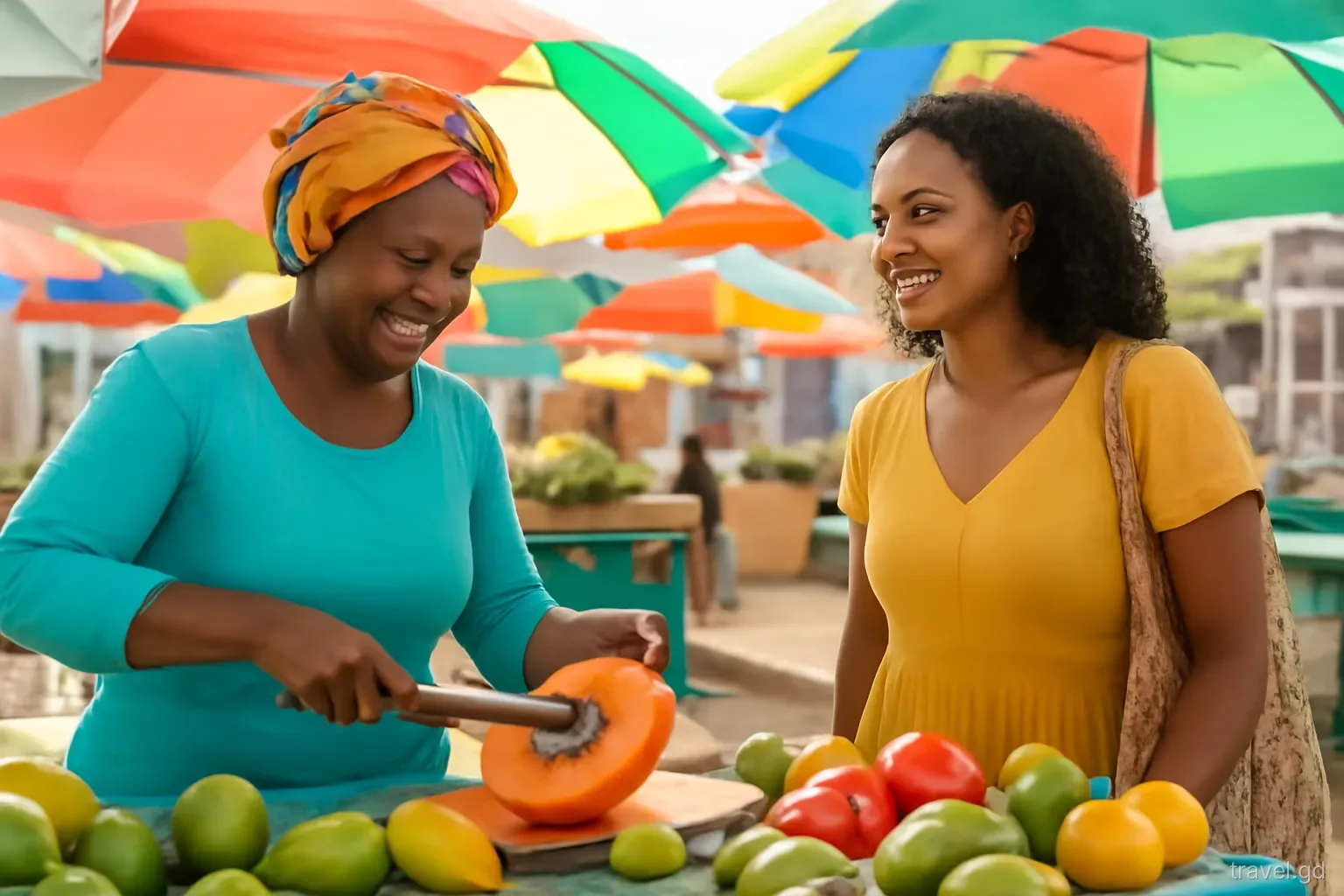
If you have one morning to understand how Grenadians eat, spend it at Market Square in St George's on a Saturday. From early in the day, farmers and vendors from across the island set out bananas, christophenes, dasheen, sweet peppers and herbs, stacks of fruit in season, baskets of nutmeg and cinnamon, and small bags of sugar cake and tamarind balls. Around them, people do the weekly shopping, catch up on news and buy breakfast on the go.
This is a working market, not a souvenir arcade, which is precisely why it is worth visiting. This guide explains when to go, what to eat and drink on the spot, how to buy fruit and spices you can actually use, and the small courtesies that make vendors glad to see you. It focuses on Saturday, but the market operates on other days too, on a smaller scale.
When to go and how to get there
Market Square sits in the upper part of St George's, a short but uphill walk from the Carenage or the cruise terminal. Saturday is the main market day, and the busiest, most colourful time is from early morning to late morning. By early afternoon, many vendors have sold what they brought and are packing up. Weekdays are quieter, with fewer stalls but plenty of fruit and vegetables.
Arriving by route bus is easy: many buses start or stop near the town centre, and conductors will let you off close to the market. If you are driving, parking in central St George's on a Saturday morning is difficult, so leave the car at your accommodation or in a car park near the Carenage and walk up. Taxis can drop you right by the square.
Wear comfortable shoes and bring a reusable bag. The square can be hot and crowded, and the surrounding streets are steep. An early start means cooler air, the best choice of produce and the full market atmosphere.
What to eat and drink on the spot
Fresh fruit, cut to order. Vendors will often cut a ripe papaya, pineapple or mango for you to eat there. Ask what is ripest today; the answer is usually honest and reliable.
Coconut water. A green coconut opened with a cutlass is the classic market refreshment. Drink the water through a straw, then ask the vendor to split it so you can scoop out the soft jelly.
Juices in bottles. Homemade juices such as soursop, passion fruit, sorrel in season, golden apple and sea moss are sold in recycled bottles from coolers. They are usually sweet.
Breakfast from nearby stands. Bakes, fish cakes, bread with saltfish and other breakfast snacks are sold from stalls and small shops around the square. Arrive hungry and follow the local queue.
Sweets. Small bags of sugar cake, toolum, tamarind balls, peanut brittle and coconut drops make a good snack and are easy to carry.
Saturday specials. Saturday is traditionally the day for souse and black pudding in Grenada. Look for them at food stands and snackettes around the market area during the morning.
Fruit worth trying, by season
What you find depends on the time of year. Mango season peaks roughly from spring into summer, when many varieties appear, from the small fragrant Julie to larger, fibrous types best eaten over a sink. Golden apples, sour and crisp, are eaten green with salt or made into juice. Soursop, with its spiky green skin and creamy white flesh, is often sold for juice or ice cream.
Year-round staples include bananas of several kinds, pineapples, papaya and passion fruit. Look out for sapodilla, called sapote or naseberry elsewhere, with a soft brown flesh tasting of brown sugar; star apple in the early part of the year; and plums and cashew fruit in season. Around Christmas, sorrel, the red sepals of a hibiscus plant, appears in bundles for making the festive drink.
Vendors are happy to explain how to eat unfamiliar fruit and which are ready. Buying a few different items and sharing them is the best way to learn. Remember that fresh fruit cannot be taken back on board a cruise ship or into most home countries, so buy only what you can eat.
Beyond the square: fish, bread and the streets around it
Market Square is the heart of food shopping in St George's, but not the whole of it. Fish is sold separately, at the fish market on the Melville Street side of town near the waterfront, where boats land their catch and vendors clean and cut fish to order. Mornings are best, and what is available depends entirely on what the boats brought in. If you are self-catering, ask the vendor to scale and gut the fish, and say how you plan to cook it; they will suggest the right cut.
The streets around the square are lined with small shops selling bread, groceries, household goods and fabric. Bakeries nearby sell coconut bread, salt bread, rock cakes and currant rolls, which make a cheap picnic with some cheese and fruit. Supermarkets in town and on the Grand Anse side stock imported goods alongside local products such as hot sauces, jams, nutmeg syrup and Grenadian chocolate, if you want to compare prices with the market.
Buying spices and cocoa you will actually use
Spices at the market are often better value and fresher than souvenir packs near the cruise terminal. A few steps help you choose well.
- Look for whole nutmeg, ideally still with some red mace attached, rather than ground nutmeg, which loses flavour quickly.
- Buy cinnamon in sticks or curled bark, and check that cloves are plump and aromatic rather than dry and dusty.
- Ask about cocoa balls or cocoa sticks for making cocoa tea at home. Vendors can explain how to grate and spice them.
- Consider small packs over pretty baskets if you want quantity rather than presentation.
- Ask the vendor if the spices are grown in Grenada. Most are, and vendors are proud to say where.
- Pay in EC dollars in small notes if possible, and seal your purchases in a plastic bag before putting them in luggage.
Cooking with what you buy
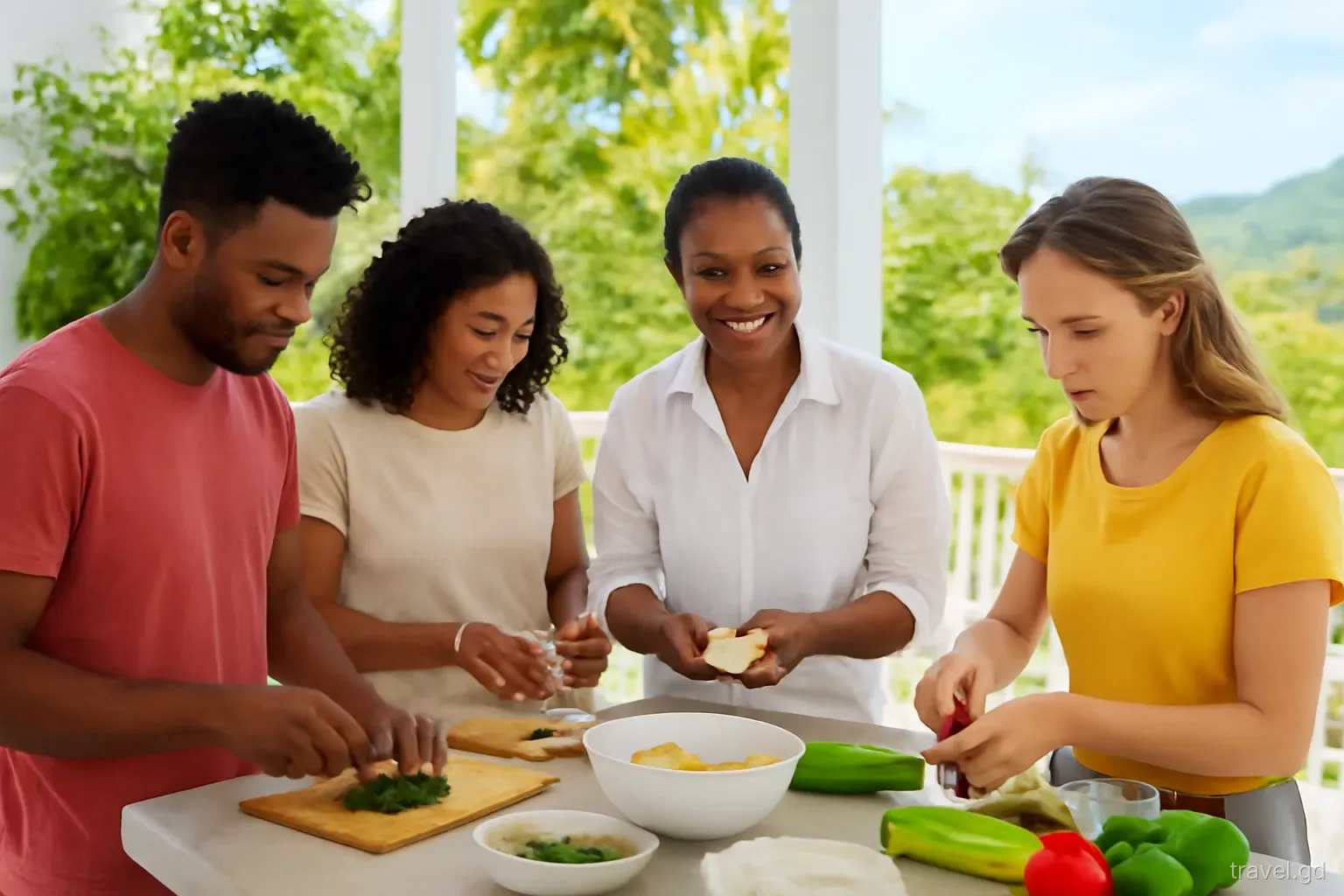
Visitors staying in apartments, villas or guesthouses with kitchens get the most from the market. A simple Grenadian-style lunch might be fried plantain, boiled green bananas or breadfruit with butter, a tomato and cucumber salad dressed with lime, and grilled fish seasoned with chives, thyme, garlic and a little hot pepper. Vendors sell bundles of fresh seasoning herbs, often called simply seasoning, that are the base of much local cooking.
Ask vendors how to prepare unfamiliar provisions. Dasheen and green bananas need peeling and boiling; breadfruit can be roasted whole over a flame or in the oven, or boiled. Callaloo leaves must be cooked thoroughly, as raw leaves can irritate the mouth. Christophene, a pale green squash, is good in soups or sautéed with butter and garlic. Most vendors enjoy explaining, and a few questions often lead to recipe tips you will not find in a book.
Etiquette and things to watch
Market Square is friendly to visitors who treat it as the community space it is.
- Greet before you buy. A 'good morning' before asking a price is normal courtesy in Grenada and makes a real difference.
- Ask before photographing vendors or their stalls. Most say yes if asked; some prefer not to be photographed.
- Do not squeeze fruit without asking. Let the vendor choose for you, or ask if you can pick.
- Bargain gently, if at all. Prices are usually fair, and haggling over small sums is not the custom.
- Keep valuables secure. As in any busy market, carry a small amount of cash and keep bags closed.
- Watch the traffic. Vehicles move slowly around the square, but streets are narrow and busy on Saturdays.
- Dress neatly. Swimwear is out of place in town; shorts and a T-shirt are fine.
Frequently asked questions
What day is the market in St George's?
Market Square operates on several days, but Saturday morning is the main market day, when the most vendors come in from around the island. Arrive early, from about seven, for the best choice; many stalls are packing up by early afternoon.
Can you eat breakfast at Market Square?
Yes. Stands and small shops around the square sell breakfast items such as bakes, saltfish, fish cakes, juices and coconut water. Cut fruit is often available from vendors. Saturday is also the traditional day for souse and black pudding.
Is Market Square good for buying spices?
Yes, it is one of the best places to buy Grenadian spices. Vendors sell whole nutmeg, mace, cinnamon, cloves, bay leaf and cocoa balls, usually at more modest prices than near the cruise terminal. Buy whole spices for the best flavour.
Is Market Square safe for tourists?
It is a busy, friendly working market. Normal precautions apply: carry a small amount of cash, keep bags closed and watch your belongings in crowds. Visitors are welcome, and vendors are used to questions about produce and spices.
What fruit is in season in Grenada?
It varies through the year. Bananas, papaya, pineapple and passion fruit are widely available year-round. Mangoes peak from spring into summer, star apples appear early in the year, and sorrel is sold around Christmas. Ask vendors what is ripest.