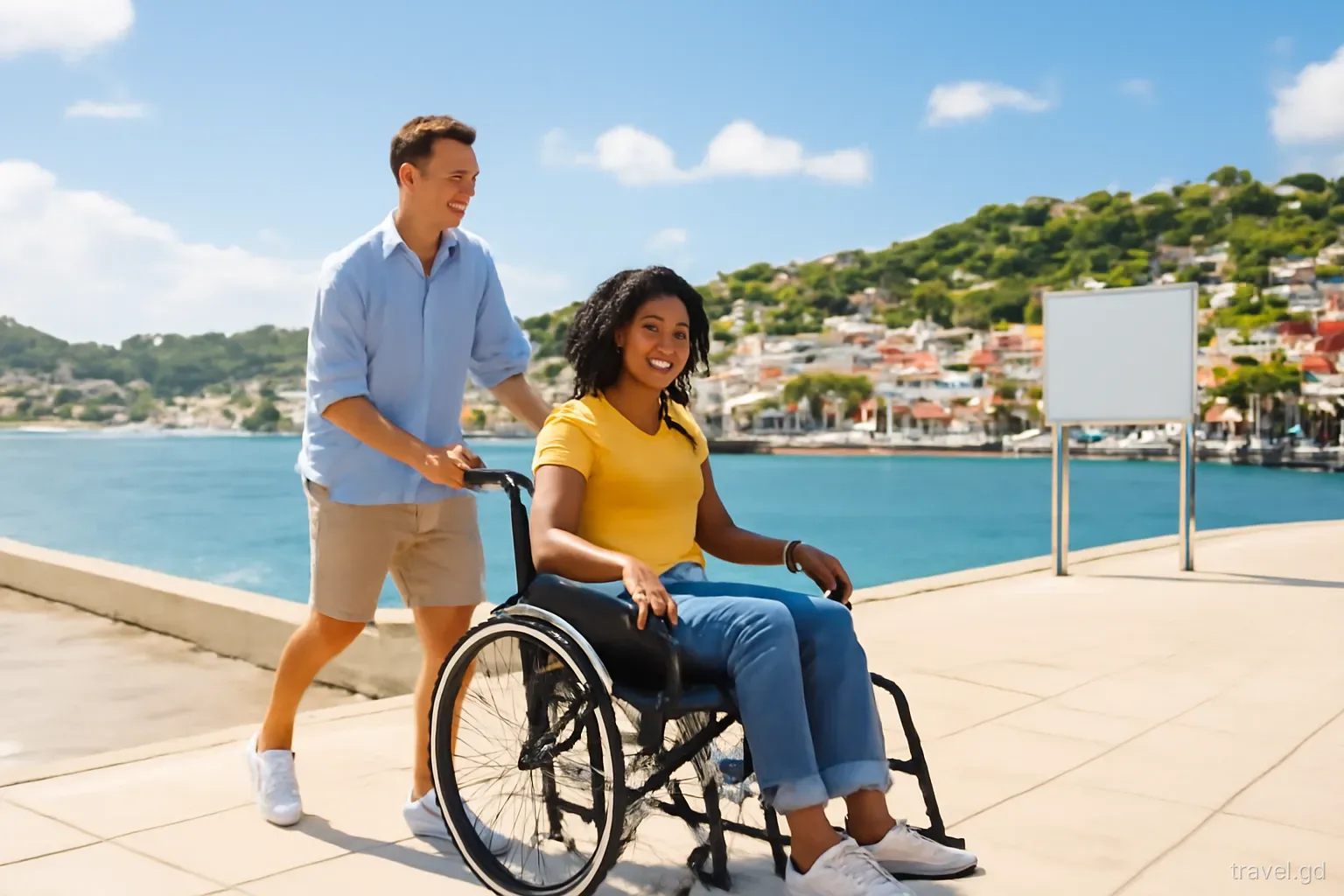
Moving around Grenada with children is mostly a question of three things: whether you can get a properly fitted car seat, how your children cope with steep, winding roads, and how much you want to rely on taxis versus driving yourself. The distances are short, but journey times are longer than maps suggest, and the island's roads are narrow, twisting and busy in places.
This page covers car hire and car seats, taxis and route buses with children, realistic driving times, boats and ferries, and the gear that makes it easier, with the common mistakes that turn a short trip into a long one.
Car seats: bring your own if you can
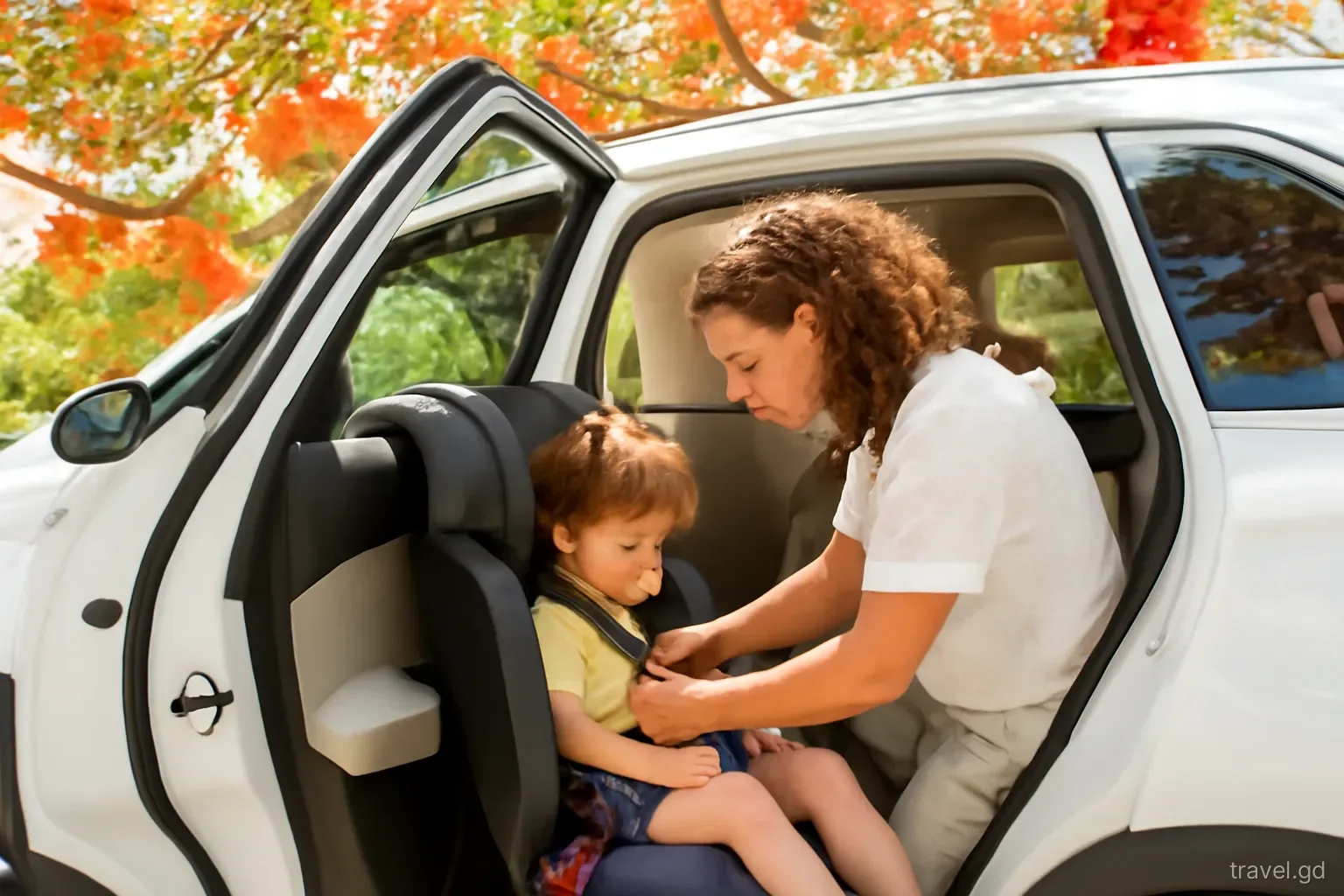
Car seat availability is the biggest practical issue for families. Some rental companies offer child and infant seats for an extra fee, but numbers are limited, models vary and condition can be unpredictable. Reserve in advance, confirm a few days before you arrive and check the seat carefully on pickup: straps, buckles, expiry date and whether it suits your child's weight and height.
Many families find it simpler to bring their own seat. Most airlines carry car seats and pushchairs free of charge for children travelling with them, though policies differ, so check with your airline. A lightweight travel car seat or a compact booster for older children is easiest.
Taxis rarely have child seats. If you plan to use taxis, bring your own seat and ask the driver if the vehicle has the right seat belts or anchor points. Whatever local rules require, a properly fitted seat is the safest way for children to travel on Grenadian roads.
Driving yourself: what parents should know
Driving is on the left. Drivers from North America and Europe need time to adjust. Hire an automatic if you are used to one, and drive in daylight during your first days.
You need a local permit. Visitors must obtain a temporary local driving permit, which rental companies can usually arrange when you collect the car, on presentation of your home licence. Confirm the current fee and requirements with your rental company.
Roads are narrow and winding. Many roads have tight bends, steep gradients, deep drains on the edges and limited pavements. Buses and trucks often drive fast and use the middle of the road on bends.
Allow extra time. Traffic around St George's, the Lagoon Road and Grand Anse can be slow at rush hour and after school. School runs bring heavy traffic in the early morning and mid-afternoon.
Choose a higher car. A small SUV with good ground clearance handles potholes, steep driveways and rough tracks to beaches better than a small car, and boot space for pushchairs and coolers helps.
Realistic journey times from Grand Anse
Grenada is only about 34 kilometres long, which tempts visitors to plan several sights in one day. In practice, average speeds are low because of bends, hills, villages and traffic. The times below are approximate, assume normal traffic, and depend heavily on weather, road works and the time of day. Add more time with children for snack, toilet and car-sickness stops:
- St George's town centre: about 15 to 25 minutes.
- Maurice Bishop International Airport: about 10 to 15 minutes.
- Grand Etang rainforest and lake: about 30 to 45 minutes, up a steep, winding road.
- Annandale Falls: about 30 minutes.
- Gouyave on the west coast: about 40 to 50 minutes along a coastal road with many bends.
- Grenville on the east coast: about an hour, via the interior or the south-east.
- Sauteurs and Levera in the north: around 75 to 90 minutes.
- Plan big days early, aim to be back before dark, and include a break halfway.
Car sickness on mountain roads and boats
The road over the mountains through Grand Etang and many coastal roads are full of hairpin bends, and children who never get car-sick at home can suffer here. Prepare with motion-sickness remedies suitable for children, advice from a pharmacist or doctor before travel, light snacks, fresh air and frequent stops. Sit children where they can see out of the front windscreen.
Boats bring a similar problem. The ferry from St George's to Carriacou takes around two hours and can be rough, especially in winter trade winds. Seat children near the middle of the boat, on the lower deck, looking at the horizon. Small-aircraft flights to Carriacou's Lauriston Airport have been an alternative for families who dread the crossing; check what is currently operating.
Catamaran trips along the west coast are usually calmer, but sea conditions vary. Ask the operator about the forecast if your children are sensitive.
Planning days out around children's rhythms
The most successful family days in Grenada combine one main outing with a long, unhurried break. A morning trip to Grand Etang to see the crater lake and perhaps the Mona monkeys, followed by lunch and a swim back on the coast, works far better than trying to fit the rainforest, a waterfall, a chocolate estate and a beach into one day.
Start early. Roads are quieter, temperatures lower, and children are fresher. Aim to arrive at popular stops such as Annandale Falls or the forts before cruise ship passengers do on busy port days, typically from mid-morning, when tour buses and taxis converge on the same sights.
Pack for the car as if for a long journey even when the drive is short: water, snacks, wipes, a change of clothes, swimwear, towels, sun cream and any motion-sickness remedies. Public toilets are scarce outside attractions, restaurants and petrol stations, so build in stops at places with facilities. Keep the afternoon free for rest, a pool or the beach near your base.
Taxis, route buses and water taxis with children
Taxis. Convenient for airport transfers and evenings. Agree the fare and currency in advance, and mention that you are travelling with children so the driver can bring a suitable vehicle with space for luggage and pushchairs.
Route buses. Cheap and fun for older children in daytime, but often crowded, fast and loud, with fold-down seats in the aisle and limited seat belts. Avoid them with babies and toddlers, and keep children seated and close.
Water taxis. Small boats link the Carenage, Grand Anse and other points on the south-west coast. Ask for child-sized life jackets and only travel when the sea is calm.
Guided tours. A private driver-guide for a day is often the most relaxed way to explore with children: you set the pace, the driver knows the roads, and you can stop whenever needed. Ask about car seat arrangements when booking.
Airport transfers. Flights from Europe and North America often land in the afternoon or evening. Book a transfer in advance through your accommodation, confirm the vehicle size for luggage, car seats and pushchairs, and have small notes for the fare and a tip. Rental cars can also be collected at the airport, but driving an unfamiliar car on the left after a long flight, with tired children, is best avoided if arrival is after dark.
Gear and common mistakes
Leaving the carrier at home. Pushchairs struggle with steep, uneven pavements, steps and sand. A baby carrier or child backpack is far more useful for forts, waterfalls and town walks.
Assuming rental car seats are guaranteed. They are not always available. Reserve early, and have a back-up plan.
Underestimating sun exposure in the car. Window shades for rear seats and plenty of water help on long, hot drives.
Planning too much driving. Two or three longer drives in a week are plenty for most young children. Base days near the beach in between.
Driving after dark. Unfamiliar roads, deep drains and limited lighting make night driving harder. Aim to be back before sunset, which is around six to half past six in the evening all year.
Forgetting emergency details. Save your accommodation's number and your rental company's breakdown details. In an emergency, dial 911.
Frequently asked questions
Do car rental companies in Grenada provide child seats?
Some do for an extra charge, but supply is limited and quality varies. Reserve when booking, confirm before arrival and check the seat carefully at pickup. Many families bring their own travel car seat to be sure of fit and condition.
Is it safe to drive in Grenada with children?
It can be, with care. Roads are narrow, winding and steep, driving is on the left, and other drivers can be fast. Use properly fitted car seats, drive in daylight, allow extra time and avoid long drives when children are tired.
Can children use route buses in Grenada?
Older children can enjoy route buses in daytime with an adult. Buses are crowded, fast and lack proper seat belts in many seats, so they are not suitable for babies or toddlers. Taxis or a hire car are better for young children.
How long is the ferry to Carriacou, and is it suitable for kids?
The ferry takes around two hours and can be rough. Many children cope fine with preparation, but those prone to seasickness may struggle. Sit low and in the middle, and consider the short flight as an alternative.
Is a pushchair useful in Grenada?
Only in limited places such as hotel grounds, malls and some flat paths. Steep streets, uneven pavements, steps and sand make pushchairs hard work. A baby carrier or child backpack is far more practical for most outings.