Packing for Grenada is less about the weather, which is warm all year, and more about what your days will contain. A week split between Grand Anse beach, a muddy walk to the Seven Sisters waterfalls, a catamaran trip up the west coast and a dinner in a hillside restaurant needs four quite different outfits, and the island punishes the wrong shoes more than the wrong shirt.
Daytime temperatures sit around the high 20s to low 30s Celsius at sea level, humidity is high, and even the drier months from roughly January to May bring short showers. The interior around Grand Etang is noticeably cooler and wetter than the coast. Build your bag around that contrast and around the fact that some things, from good sunscreen to specialist medication, cost more locally or are hard to find outside St George's and Grand Anse.
The core layer: clothes that cope with heat and humidity
Most of what you wear will be light, loose and quick to dry. Cotton is comfortable but takes a long time to dry in humid air; linen and technical fabrics do better. For a seven-day trip, a sensible base looks like this:
- Four to six light tops, including at least one with sleeves for sun protection on boats and for town.
- Two pairs of shorts and one pair of light long trousers or a long skirt or dress, useful for church, the evening sandflies and air-conditioned restaurants.
- Two swimsuits, so one can dry while you wear the other; salt and damp mean a single suit rarely dries overnight.
- A cover-up, sarong or shirt to throw over swimwear when you leave the sand. Walking through town or into a supermarket in swimwear is frowned upon.
- One smarter outfit for dinner: collared shirt and trousers, or a sundress. Few places are formal, but resort restaurants expect more than beachwear.
- A thin waterproof jacket or packable poncho. Showers are frequent in the rainy season from about June to November and possible at any time in the rainforest.
- A light jumper or long-sleeved layer for flights, ferries and over-cooled rooms.
Footwear: the item visitors most often get wrong
Water shoes or reef sandals. Several beaches have rocky or pebbly entry points, and some snorkelling spots are reached over stones. Cheap water shoes also protect against sea urchins, which are common on rocky reefs.
Closed shoes with grip for the trails. The routes to Seven Sisters, Concord's upper falls and Mount Qua Qua are steep, rooty and slick after rain. Light trail shoes or old trainers you do not mind ruining are far safer than flip-flops. Expect them to come back muddy.
Comfortable walking sandals. St George's is built on steep hills with uneven pavements and open drains along some roadsides. Sandals with a back strap handle the Carenage, Market Square and the climb to Fort George better than slip-on flip-flops.
One pair for evenings. Simple sandals or loafers are enough. Heels are a poor match for gravel car parks and sloping restaurant paths.
Leave the rest at home. Three pairs, four at most, cover everything. Shoes are the heaviest thing in most cases and the least worn.
Sun, bugs and health: pack these before you leave
Pharmacies and supermarkets in St George's, Grand Anse and Grenville stock the basics, but imported brands carry island prices and choice is narrower. Bring enough of anything you rely on.
- Sunscreen in generous quantity, ideally a mineral (zinc or titanium) formula often sold as reef-friendly. The tropical sun burns faster than most visitors expect, even on overcast days.
- A wide-brimmed hat and sunglasses with UV protection, plus a rash vest or long-sleeved swim top for snorkelling trips.
- Insect repellent containing DEET, picaridin or a similar active ingredient. Mosquitoes carry dengue in the region, and sandflies bite at dusk on some beaches.
- Prescription medicines for the whole trip plus a few spare days, in original packaging, with a copy of the prescription.
- A small first-aid kit: plasters, antiseptic, antihistamine, rehydration sachets, after-sun and something for an upset stomach.
- A refillable water bottle. Staying hydrated in the heat matters more than most people plan for.
Gear for boat days, snorkelling and the rainforest
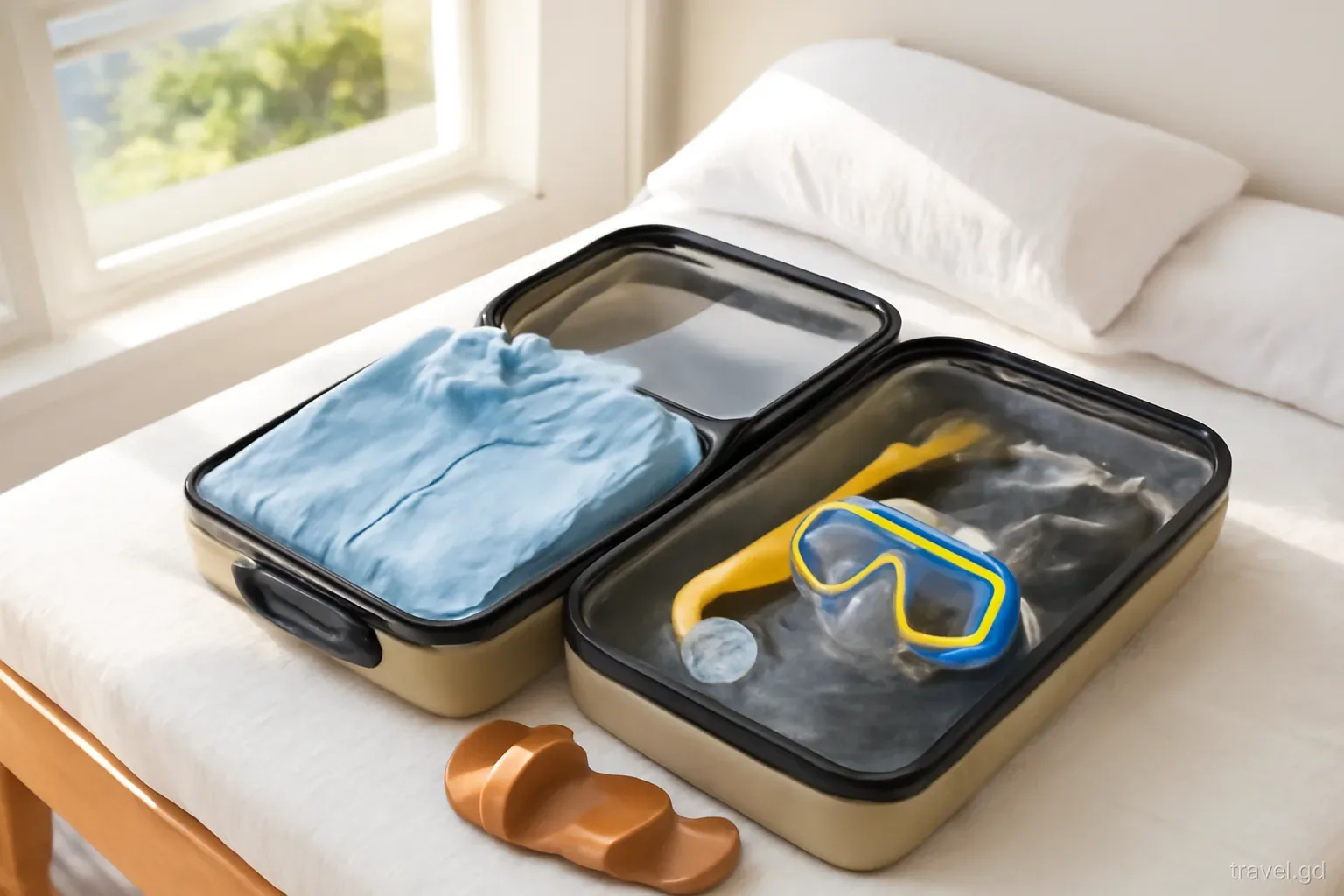
If snorkelling is a priority, a mask that fits your own face is worth the space. Tour boats and dive shops supply equipment, but shared masks often leak. Fins are bulky and usually provided; a snorkel and mask are small enough to carry. A dry bag of 10 to 20 litres keeps a phone, cash and a towel dry on a catamaran or water taxi, and doubles as a beach bag.
For the interior, add a small daypack, a plastic bag for wet clothes and a quick-dry towel. On waterfall hikes you may wade or swim, so wear swimwear underneath. A head torch is useful for early starts, power cuts and turtle-watching evenings on the north-east coast, where white light is discouraged near nesting beaches; a red-light setting is better.
Anglers, divers and sailors usually know their own needs. Everyone else can keep it simple: mask, dry bag, daypack, torch. Anything bigger can normally be rented or borrowed through your accommodation or tour operator. Golf clubs, kitesurfing kit and fishing rods are the exceptions worth confirming before you fly, since local rental stock is small.
Adjusting the list for season, island and trip length
The checklist above suits a typical week on the main island at any time of year, but a few adjustments help. From roughly June to November, the rainy and hurricane season, add a second quick-dry layer, a spare pair of shoes in case one pair stays wet, and a few zip-lock bags for documents and electronics. Downpours are often short and heavy, and clothes left on a balcony can stay damp for a day.
For Carriacou or Petite Martinique, pack more of what you need, because shops are smaller and stock is limited. The ferry crossing from St George's takes around two hours and can be rough, so keep motion-sickness tablets, a light layer and a bottle of water in a small bag you can hold on your lap. Hurricane Beryl hit the sister islands hard in July 2024, and some services there are still recovering, so check with your accommodation about what is available locally.
For trips of two weeks or longer, the list barely grows. Plan on a mid-trip wash rather than doubling clothes, and add only extra sunscreen, repellent and medication. Visitors on yacht charters should favour soft bags, which store far more easily on board than hard suitcases, and non-marking shoes for the deck.
Packing mistakes and what to check before you zip the bag
Packing for a beach-only trip. Even visitors who plan to lie on Grand Anse all week usually end up on a rainforest tour or a boat. Without closed shoes and a dry layer, those days become uncomfortable.
Forgetting the adapter. Grenada mainly uses the British three-pin plug at 230 volts. Many North American devices need an adapter, and a few need a converter. Check every charger's label.
Bringing too much clothing. Laundry services are available at many guesthouses and hotels, and light clothes can be washed in a sink and dried by morning in the sun. A carry-on-sized bag is realistic for a week.
Relying on buying sunscreen there. It is available, but often at a price that makes visitors wish they had packed it. The same goes for contact lens solution, specialist toiletries and baby products.
Packing camouflage clothing. Several Caribbean countries restrict civilians from wearing camouflage patterns, and it is a standard warning for travel in the region. Leave camo prints at home rather than risk a problem.
Not keeping essentials in hand luggage. Checked bags are occasionally delayed on connections through Miami, New York, London, Barbados or Trinidad. Keep medication, one change of clothes and a swimsuit in your carry-on.
Frequently asked questions
Do you need warm clothes for Grenada?
Not for the coast. Evenings rarely feel cold, but a light long-sleeved layer helps on flights, on ferries to Carriacou, in strongly air-conditioned rooms and at Grand Etang, which sits high in the interior and can feel cool and damp, especially when it rains.
Is a rain jacket necessary in the dry season?
It is not essential, but a packable jacket or poncho weighs little and earns its place. Short showers happen even between January and May, and the rainforest gets rain far more often than the beaches. It also works as a windbreak on boat trips.
Can you buy snorkelling gear in Grenada?
Basic masks and snorkels are sold in some shops and dive centres, and tours provide equipment. Choice and fit are limited, so people who snorkel a lot or wear prescription lenses usually bring their own mask from home.
Should visitors bring US dollars or Eastern Caribbean dollars?
Either works for arriving. US dollars are widely accepted at a fixed rate of about EC$2.70 to US$1, but change usually comes in EC dollars. ATMs in St George's, Grand Anse and Grenville dispense EC currency, so a small amount of cash plus a card is enough.
Is it acceptable to wear shorts in town?
Yes. Shorts and T-shirts are normal everywhere in daytime. What draws disapproval is swimwear, bare chests or very revealing outfits away from the beach. For church services or government offices, cover shoulders and knees.