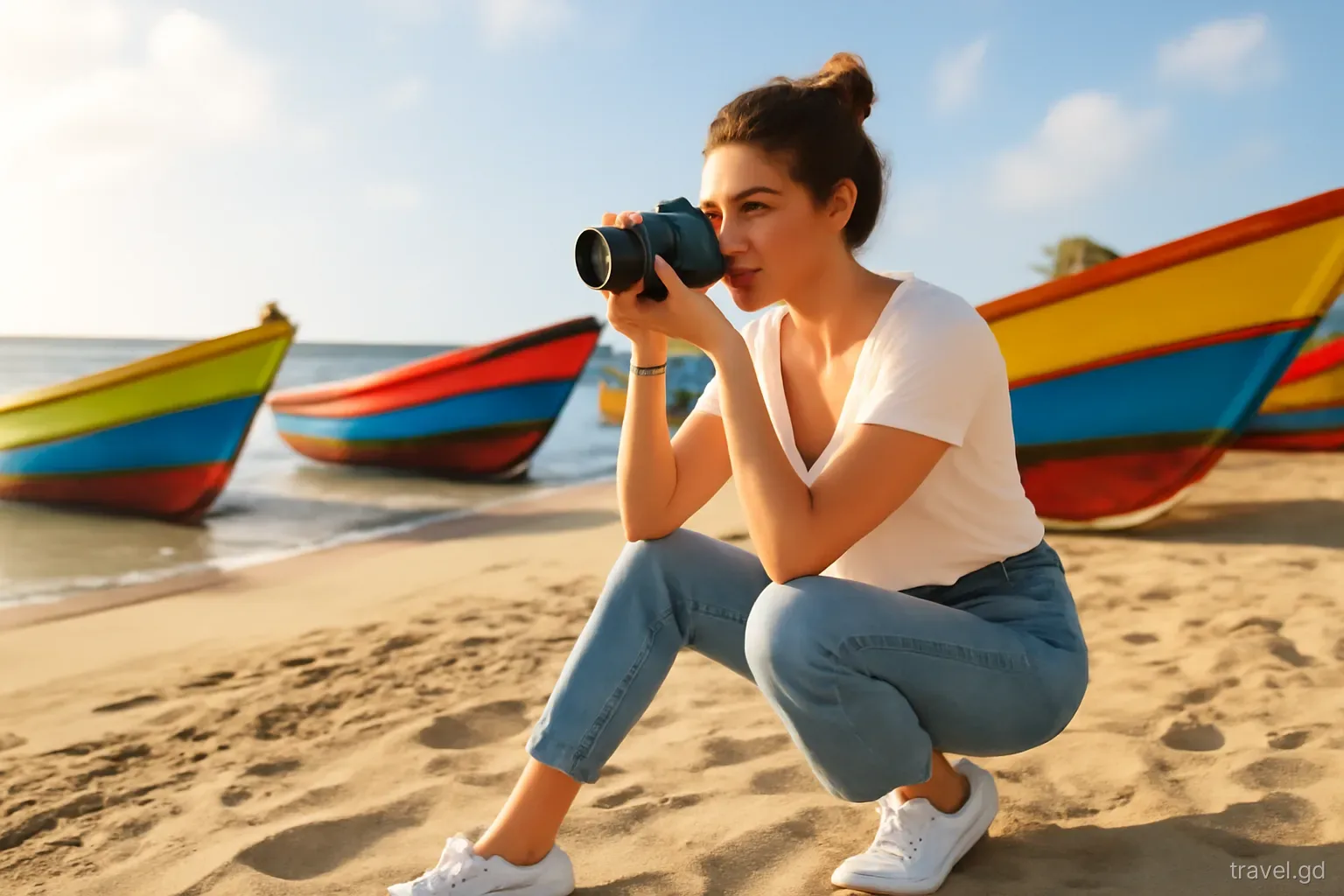
Grenada is easy to photograph and hard to photograph well without upsetting someone. The colours of the Carenage, the fishing boats on Gouyave beach, the produce piled up at Market Square and the oil-covered Jab Jabs of Spicemas all invite a camera. So do the people, and that is where most problems begin.
The general principle is simple: landscapes, buildings and public events are fair game; individuals deserve to be asked. Beyond that, a few places should not be photographed at all, a few situations call for tact, and drones are regulated in ways that catch many visitors out at the airport. This page sets out the practical rules.
Photographing people: ask first, every time
Most Grenadians are friendly, and many will happily agree to a photograph if asked with a greeting and a smile. Raising a camera or phone at someone without asking, particularly at close range, is a different matter. It treats people as scenery, and older Grenadians, vendors and fishermen in particular may object, sometimes loudly.
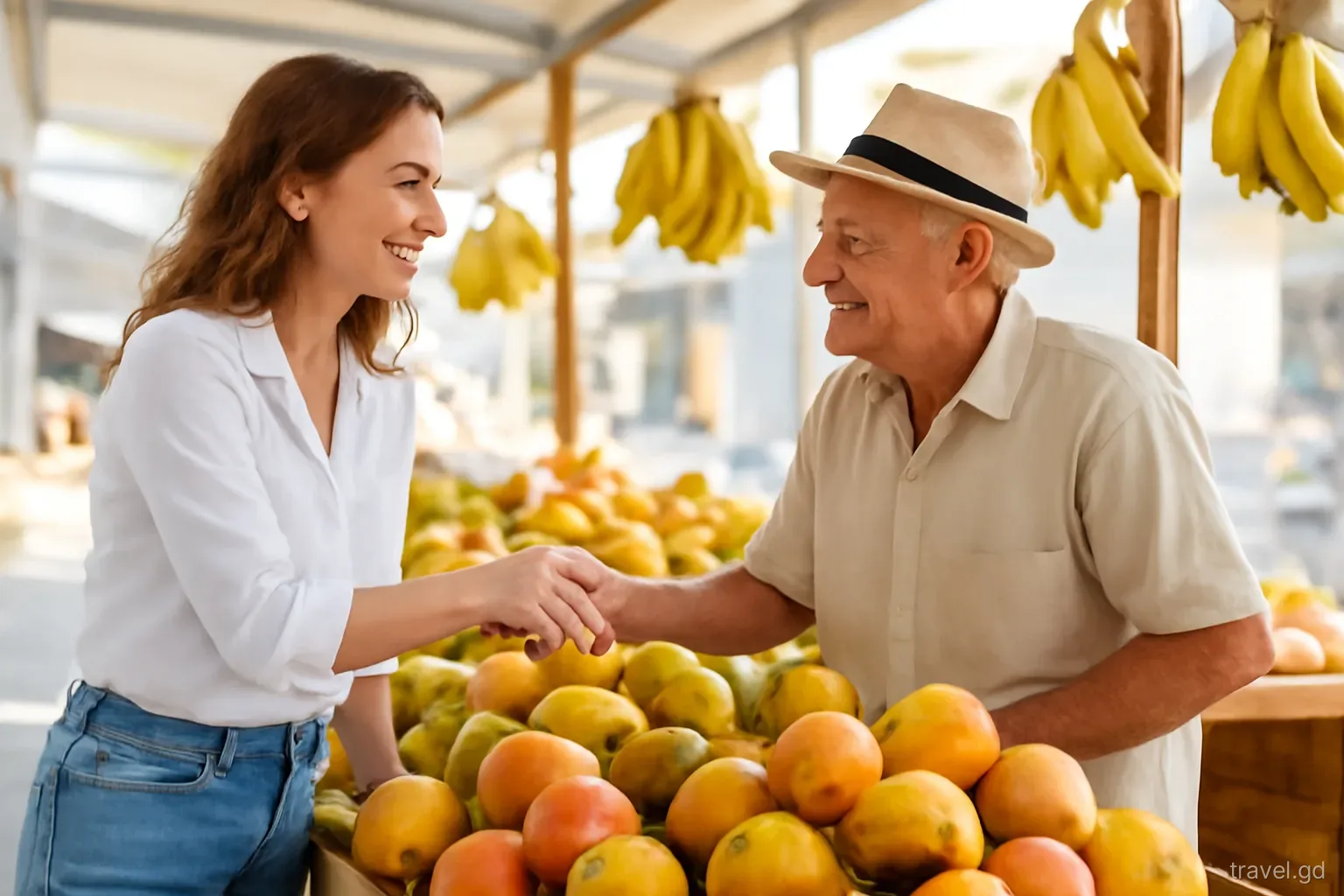
The courteous sequence is: greet, chat for a moment, ask whether you may take a photo, and accept no without argument. If you are photographing a vendor's stall, buying something first changes the tone completely. Some vendors and performers, including people offering photos with animals or costumed characters, will ask for a small payment. That is a reasonable request; agree on it before you shoot.
Children need extra care. Always ask a parent or guardian before photographing a child, and do not photograph schoolchildren in uniform without permission. Posting images of other people's children online without consent is a common source of upset. Street photography purists may disagree, but in a small island where people recognise each other, the courtesy matters more than the candid shot.
Beaches raise a related issue. Photographing your own group on Grand Anse is normal, but zooming in on strangers in swimwear, or filming people bathing, is not acceptable anywhere and can lead to a confrontation. Frame shots so that other beachgoers are distant or unrecognisable, or wait for them to move on.
Markets, churches, funerals and fishing beaches
Market Square and village markets. Wide shots of the market and its colours are generally fine. Close-ups of individual vendors should be asked for. Busy Saturday mornings are the most photogenic and the most crowded, so keep out of the way of people working. A vendor busy serving customers is not the moment to ask; wait for a quiet minute.
Churches. Many churches, including the restored cathedrals and parish churches of St George's, are open to visitors. Photography inside outside service times is usually tolerated, but ask if someone is present. During services, weddings and funerals, do not photograph without explicit permission.
Funerals. Funeral processions, sometimes with music, pass through towns and villages. Photographing them is intrusive. Stop, stand respectfully and let the procession pass.
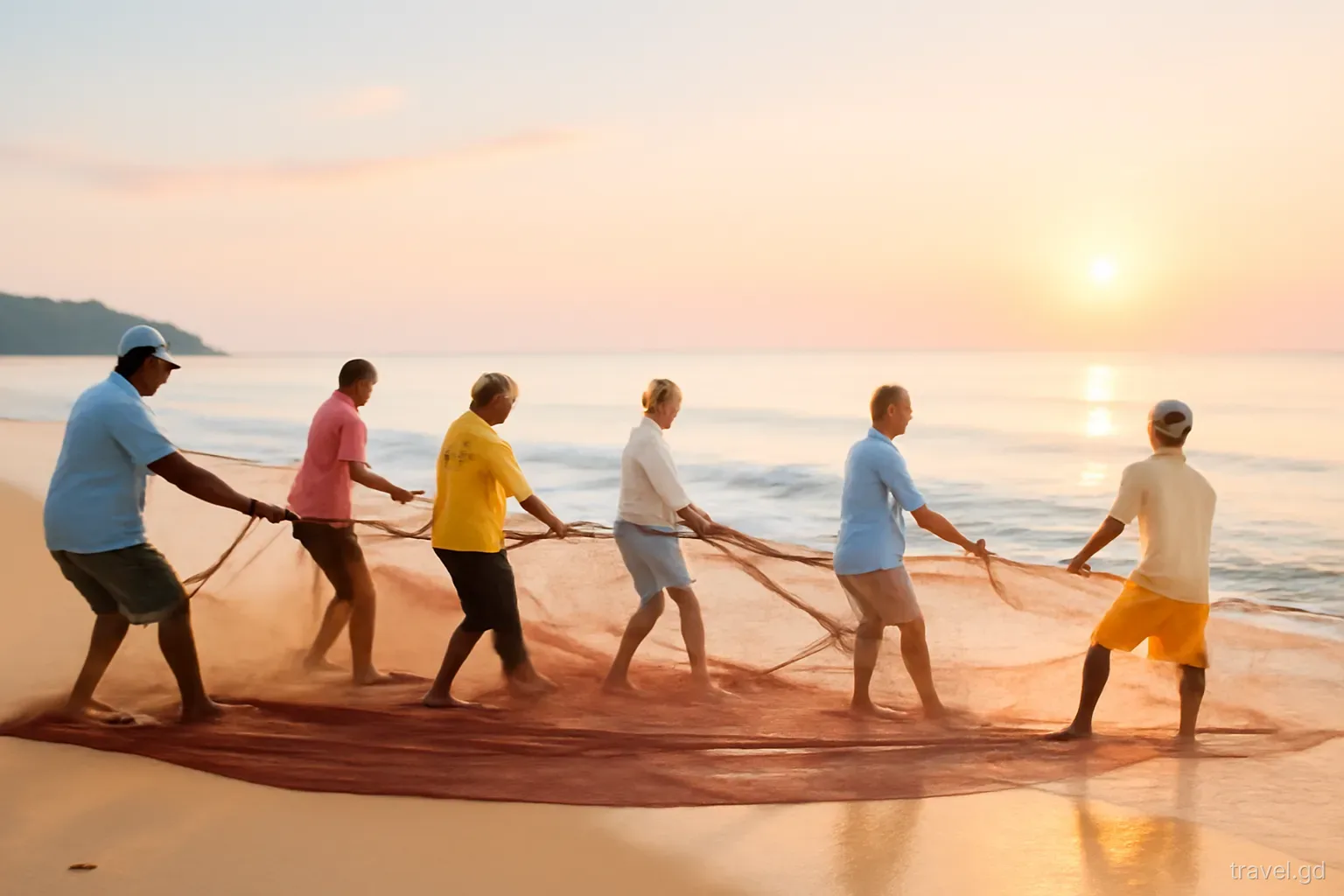
Fishing beaches. At Gouyave, Grenville, Victoria and other fishing communities, boats coming in and nets being pulled make great subjects, but the people are working. Ask before photographing faces, and stay clear of nets, ropes and engines.
Fish Friday and street food nights. Food stalls are photogenic, but photographing cooks or customers at close range without asking is still intrusive.
Places where the camera should stay down
Some locations are sensitive for security reasons. Do not photograph police officers on duty without permission, police stations, the coast guard base, military or security personnel and vehicles, or the security and airside areas at Maurice Bishop International Airport. Officers may ask you to delete images, and arguing is unwise.
The prison at Richmond Hill sits right next to Fort Frederick and Fort Matthew on the hill above St George's. Visitors photographing the views from the forts should avoid pointing cameras into the prison grounds or at inmates and staff.
Government buildings and courts are generally fine to photograph from the street, but not inside without permission. Private homes, yards and people on their porches deserve the same respect as anywhere else: a pretty chattel house with a family on the veranda is someone's home, not a prop. When in doubt, ask, or point the camera elsewhere.
Spicemas and festivals: special rules for a special event
Spicemas, Grenada's carnival, peaks in August and is a photographer's dream, but it has its own etiquette:
- At J'Ouvert, Jab Jabs coat themselves in oil, molasses or mud and do not hesitate to smear bystanders. Expensive cameras, white clothes and anything you want to keep clean are at risk. Use a waterproof case or an old phone.
- Some masqueraders and traditional characters such as Shortknee expect a small payment if you photograph them closely or pose with them. Have small EC notes ready.
- Pretty Mas bands on Carnival Tuesday are performing for an audience, and photographing them from the roadside is normal. Stepping into a band's path to get a shot is not.
- Crowds are dense on the parade routes through St George's and Grenville. Keep straps around wrists, and do not hold phones out at arm's length in tight crowds.
- Other events, including Carriacou Carnival, the Carriacou Regatta Festival and Fisherman's Birthday celebrations in Gouyave around late June, follow similar common sense. Check dates each year and any post-2024 changes on Carriacou.
Drones: rules to check before you pack one
Drones are regulated. Civil aviation in Grenada falls under the Eastern Caribbean Civil Aviation Authority, which covers several island states. Flying a drone generally requires prior authorisation, and local rules on where and when you may fly also apply, especially near the airport.
Customs may hold your drone. Drones arriving without the right paperwork can be detained by customs until departure. Contact the civil aviation authority and confirm current requirements with the Grenada Airports Authority or the relevant ministry well before travel.
Stay away from the airport and crowds. Maurice Bishop International Airport sits on the Point Salines peninsula close to Grand Anse, Morne Rouge, Lance aux Epines and many hotels. Much of the south-west is therefore near an active airport. Never fly over crowds, festivals or people's homes.
Respect privacy. Hovering over villas, hotels or beaches where people are sunbathing is intrusive even if legal. Hotels may forbid drone use on their grounds.
Wildlife. Avoid flying near nesting turtles, seabird colonies, and the Mona monkeys at Grand Etang.
Consider the alternatives. Photographers and videographers based in Grenada offer aerial work. For a one-off aerial shot of a wedding, a yacht or a villa, hiring someone who already holds authorisation and knows the local restrictions is often simpler and cheaper than arranging permission for your own drone.
Underwater photography and common mistakes
The Underwater Sculpture Park at Molinere Bay, created by Jason deCaires Taylor in 2006 and since added to, is one of the most photographed places in Grenada. It lies in a marine protected area. Do not touch, stand on or move sculptures, coral or marine life for a better angle, and keep fins clear of the bottom. Selfie sticks and large camera rigs make accidental contact more likely, so control them carefully. Marine park fees are usually collected through your tour or dive operator.
The most common photography mistakes are easy to avoid: shooting people without asking, using flash in churches or on nesting turtles, photographing security areas, and assuming a drone can simply be flown on arrival. Another is forgetting that photos of people go online. If you plan to publish images commercially, model releases from recognisable individuals are standard practice.
Finally, protect your gear. Humidity fogs lenses when you step from an air-conditioned room into the heat; let the camera acclimatise in a bag for a few minutes. Salt spray, sand and sudden showers are the biggest threats on boat trips and beaches.
Frequently asked questions
Is it rude to take photos of people in Grenada?
It is rude to photograph people without asking, especially up close. Most people agree if you greet them first and ask politely. Accept a refusal gracefully, and expect some vendors and costumed performers to ask for a small payment.
Can you fly a drone in Grenada as a tourist?
Drones are regulated and generally need prior authorisation through the Eastern Caribbean Civil Aviation Authority, with local restrictions near the airport. Drones without paperwork may be held by customs. Confirm current requirements with the authorities well before your trip.
Can you take photos at the Underwater Sculpture Park?
Yes, photography is one of the main reasons people visit. Snorkellers and divers must not touch or stand on the sculptures or coral, and the park sits within a marine protected area where fees apply, usually collected by tour operators.
Is photography allowed inside Grenadian churches?
Often yes outside service times, but ask anyone present first. During services, weddings and funerals, do not take photographs unless you have explicit permission. Turn off flash and keep noise to a minimum.
What is the best time of day for photos in Grenada?
Early morning and late afternoon give the softest light and the fewest crowds. The midday sun is harsh and flattens colours. Sunsets over the west coast, seen from Grand Anse, Morne Rouge or the forts, are reliably beautiful.