Grenada sits at about 12 degrees north, at the southern edge of the zone where Atlantic hurricanes usually track, and for decades that position earned it a reputation as "below the hurricane belt". The record says otherwise. Hurricane Janet in 1955, Ivan in September 2004, Emily in July 2005 and Beryl, which made landfall on Carriacou in July 2024, all caused serious damage. Direct hits are not frequent, but they happen.
That does not make a June-to-November trip a bad idea. It means the decision should be made deliberately, with a clear view of what you gain, what you risk and how much flexibility you have. This guide is about that decision. The practical steps for when a storm actually threatens, and the fine print of insurance policies, are separate subjects, though the essentials are covered here.
What the risk actually looks like
The official Atlantic hurricane season runs from 1 June to 30 November. Across the Atlantic basin as a whole, activity peaks from mid-August to mid-October, and that is the window in which Grenada's two most destructive modern storms, Janet and Ivan, struck. Early-season storms usually form further north or fizzle before reaching the southern Windward Islands, but Emily and Beryl were both July storms, and Beryl in particular was unusually strong for so early in the year.
In most years, the realistic disruption for a visitor is not a hurricane but a tropical wave or tropical storm bringing a day or two of heavy rain, gusty wind and rough seas. Boat trips get cancelled, waterfalls run brown and the Grand Etang road can be slow because of minor landslips. That is an inconvenience, not a danger, and it can happen in any wet-season week.
The serious scenario, a named storm heading directly for the islands, is uncommon in any given week but carries high consequences: the airport closes before the winds arrive, ferries to Carriacou stop earlier still, and power and water can be out for days afterwards in the worst cases.
The case for going anyway
Lower prices. Room rates outside carnival week are often well below the winter peak, and some resorts add extras such as free nights or meal credits to fill rooms. The saving on a week can be substantial.
Fewer people. Beaches, waterfalls and the Carenage are at their quietest, especially in September and October when cruise calls are sparse. Guides and boat operators have more time and more flexibility.
Warm, often calm sea. With the trade winds lighter, the Caribbean-side sea is frequently flat and clear, which suits snorkelling and diving on the west and south-west coasts.
A greener island. Rain turns the hills a deep green, rivers run full and the interior looks its most lush. Mango and other summer fruit are in season early in the period.
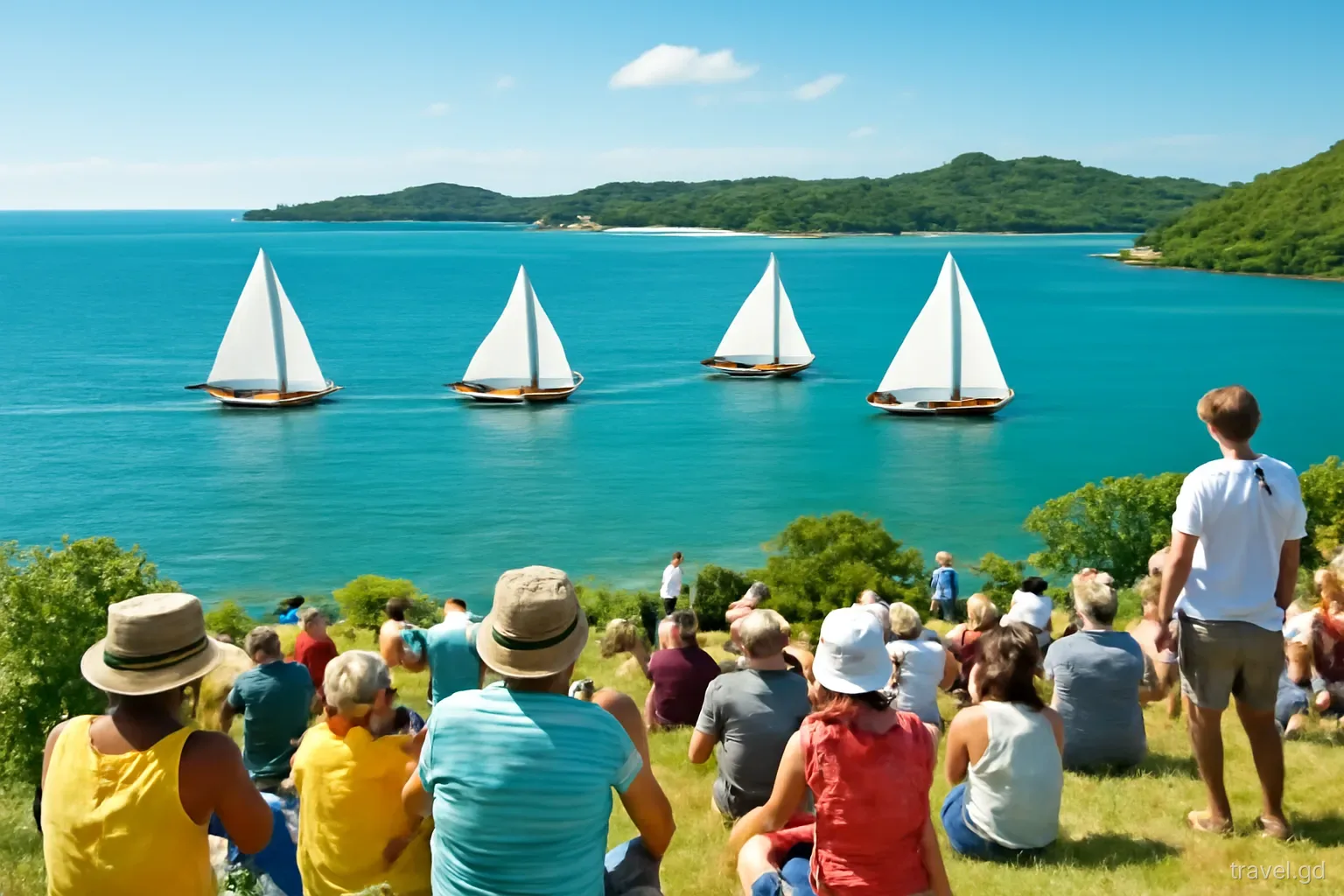
Events. Fisherman's Birthday in June, the Carriacou Regatta and Spicemas in August all fall inside hurricane season. For many visitors these are the reason to come.
Easier bookings. Popular small hotels, boat charters and restaurant tables that need weeks of notice in February can often be secured a few days ahead. That makes it realistic to plan loosely and decide on the island, which many repeat visitors prefer.
Longer stays for the same money. The price difference often means ten nights in low season cost about the same as a week in peak season, and a longer stay also gives more room to work around a wet day.
Who should go, and who should not
Good candidates. Travellers who can move dates at short notice, repeat visitors who know the island, divers and sailors who follow forecasts anyway, and anyone travelling primarily for carnival or the Regatta. Couples or friends with no fixed school calendar can pick a window and adjust.
Think twice. Families tied to school holidays with no room to rebook, guests planning a wedding with many people flying in, and anyone on a non-refundable package with no insurance. A missed or shortened trip hurts more when it cannot be moved.
Probably not. Travellers who would be anxious watching every forecast, people with medical needs that depend on reliable power or quick evacuation, and anyone set on staying in remote spots, including some parts of Carriacou and Petite Martinique where recovery from Beryl has been gradual.
The middle path. June, early July and November carry noticeably less statistical risk than late August to mid-October, while still offering most of the price advantage. For a first low-season trip, they are the sensible compromise.
How to book a low-season trip sensibly
If you decide to go, a few choices made at the booking stage reduce the downside considerably:
- Buy travel insurance when you book, not later. Most policies stop covering a storm once it has been named, so cover bought after a system appears on the forecast is usually useless for that storm.
- Read the policy wording for "hurricane", "named storm" and "natural disaster", and check whether it covers missed departures, extra nights and accommodation that becomes uninhabitable.
- Choose flexible or refundable room rates where the price difference is small, and ask hotels directly about their storm policy; many offer rebooking credit if a hurricane warning is issued.
- Prefer airlines that issue travel waivers for named storms, and keep your booking reference and the airline app to hand.
- Base yourself on the main island near the airport for at least part of the stay, rather than relying on a ferry connection on your last day.
- Register your trip with your government's travel service if it offers that option, and note the National Disaster Management Agency (NaDMA) as the local authority for warnings.
If a storm threatens during your stay
Storms rarely arrive without warning. Forecasters at the US National Hurricane Center track systems for days, and Grenada's Meteorological Service and NaDMA issue watches and warnings through radio, television and official social media. A tropical storm or hurricane watch means conditions are possible within about 48 hours; a warning means they are expected, usually within about 36 hours.
At the watch stage, talk to your airline and hotel immediately. Flights out fill quickly, and leaving a day early is often the best decision if your trip is near its end. If you stay, follow hotel instructions, keep phones charged, stock drinking water and snacks, and stay indoors until the all-clear, as the calm eye of a storm is not the end of it. Visitors are not expected to manage on their own: hotels in Grenada have storm procedures and staff who have been through this before.
What a typical low-season week feels like on the ground
For most visitors who travel between June and November, the week passes with no storm at all. A common pattern is bright, hot mornings, clouds building over the central mountains around midday, and a heavy shower somewhere on the island in the afternoon, sometimes over the coast, often only over the hills. Evenings are warm and still. A passing tropical wave might bring one grey, wet day in the middle of the week, when it makes sense to visit the Grenada National Museum if it has reopened, take a chocolate or rum tour, or simply stay by the pool.
The bigger differences are human rather than meteorological. There are fewer people at the airport, on the beaches and in restaurants. Some smaller places close for a few weeks, especially in September, so the choice of bars and restaurants in quieter areas narrows. Boat trips may need a minimum number of passengers and can be combined or rescheduled. Guides are easier to book at short notice.
Plan the trip with that in mind: put weather-dependent outings, such as a sail to Hog Island or a dive on the west coast, early in the stay so there is room to move them, and keep the final day light.
Frequently asked questions
Is Grenada really outside the hurricane belt?
Not entirely. Grenada lies at the southern edge of the usual hurricane tracks, so direct hits are less frequent than further north, but Janet in 1955, Ivan in 2004, Emily in 2005 and Beryl in 2024 all caused serious damage. Treat the risk as lower, not absent.
Which hurricane-season months are safest for a Grenada trip?
Historically, June, the first half of July and November carry less risk than the period from late August to mid-October, when Atlantic activity peaks. Beryl in July 2024 is a reminder that early storms can still be severe, so insurance and flexible bookings matter in every month.
Will flights be cancelled if a storm is forecast?
Airlines usually cancel or reschedule flights when a tropical storm or hurricane warning is in force and the airport is expected to close. Many issue waivers allowing free changes once a storm is named. Check your airline's policy and sign up for its alerts before you travel.
Does travel insurance cover hurricanes in Grenada?
Many policies do, but usually only if bought before the storm is named. Coverage for cancellation, delays, extra nights and evacuation varies widely between insurers. Read the wording before purchase and ask the insurer directly if anything about named storms is unclear.
Is it safe to visit Carriacou in hurricane season?
Carriacou and Petite Martinique took the full force of Hurricane Beryl in July 2024, and rebuilding has been gradual. A visit is possible, but services are more limited and the ferry stops early when a storm threatens. Check current conditions and keep the last night of your trip on the mainland.