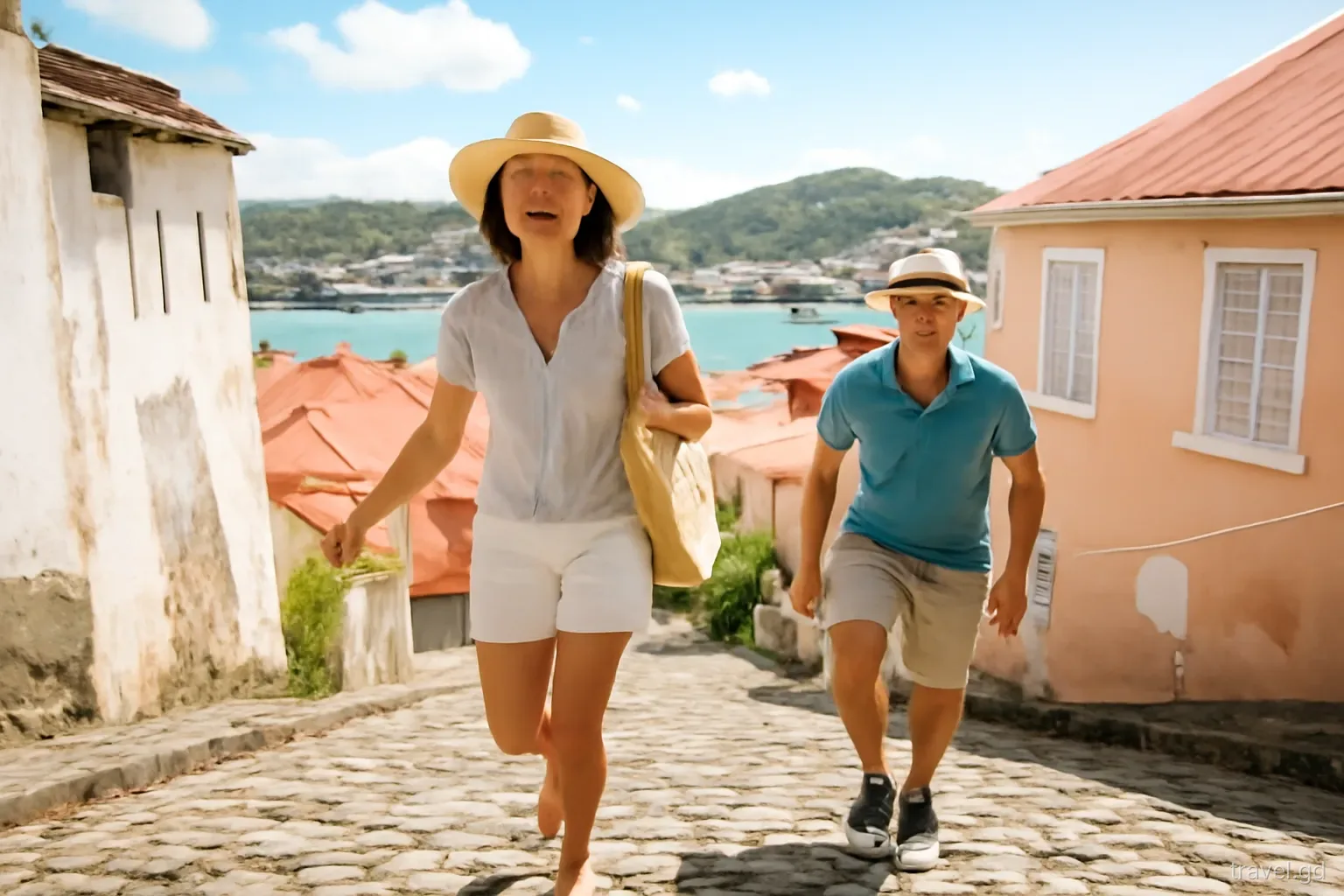
St George's is one of the few Caribbean capitals where a cruise passenger can see most of the town without a vehicle. The pier sits on the edge of the old centre, and within a radius of about a kilometre you have two harbours, an early eighteenth-century fort, a market square still used by farmers, a museum in a former French barracks and a ridge of church towers. The catch is the gradient: the town is built on the steep sides of an old volcanic crater, and the shortest route between two sights is often a staircase.
The loop below is designed for a relaxed three hours, including stops, and it can be cut short at almost any point because the cruise terminal is never more than fifteen minutes downhill. It runs clockwise so that the steepest climb comes early, while it is still cool, and the walk ends in the shade near the market rather than on an exposed hilltop at midday.
The loop, stop by stop
Allow roughly three hours with stops, or ninety minutes if you only walk and look. Distances are short; the time goes on hills, photographs and getting your bearings.
- Leave the terminal and turn towards the Esplanade. Walk past the bus terminal area on the Melville Street side and follow the shoreline road towards the harbour end of town. On a busy ship morning this stretch is crowded with drivers offering tours; a friendly 'not today, thanks' is all it takes.
- Walk through the Sendall Tunnel. The short single-lane tunnel, cut through the ridge in the 1890s, links the Esplanade side of town with the Carenage. Vehicles use it too, so keep to the edge in single file and let horns tell you when to pause.
- Follow the Carenage waterfront. Turn along the horseshoe-shaped inner harbour, past old stone warehouses, fishing boats and yachts. Halfway round, look for the bronze Christ of the Deeps statue, a reminder of the liner Bianca C, which caught fire in the harbour in 1961; her wreck now lies offshore and is a well-known deep dive.
- Climb to Fort George. Head back towards the headland and up to the fort above the harbour mouth. It was begun by the French in the early 1700s and still houses police offices, so parts are off limits, but the ramparts give the classic view over the Carenage, the cruise berth and the lagoon.
- Drop down to Church Street. From the fort, follow the ridge inland past St George's Anglican Church, the Roman Catholic cathedral and St Andrew's Presbyterian church, known locally as the Scots Kirk. Hurricane Ivan badly damaged roofs here in 2004 and restoration has moved at different speeds, so expect some scaffolding.
- Visit the Grenada National Museum. At the corner of Young Street and Monckton Street, the museum occupies an old building that has served as barracks and prison. It has been closed for long periods since 2020, so check whether it has reopened before building your walk around it. It is small, and you can see it in under an hour. Check opening times locally, since they can change.
- Finish at Market Square. Walk downhill to the square, buy a cold coconut or a cup of juice, and from there take the gentle streets back down to the terminal.
Reading the hills before you start
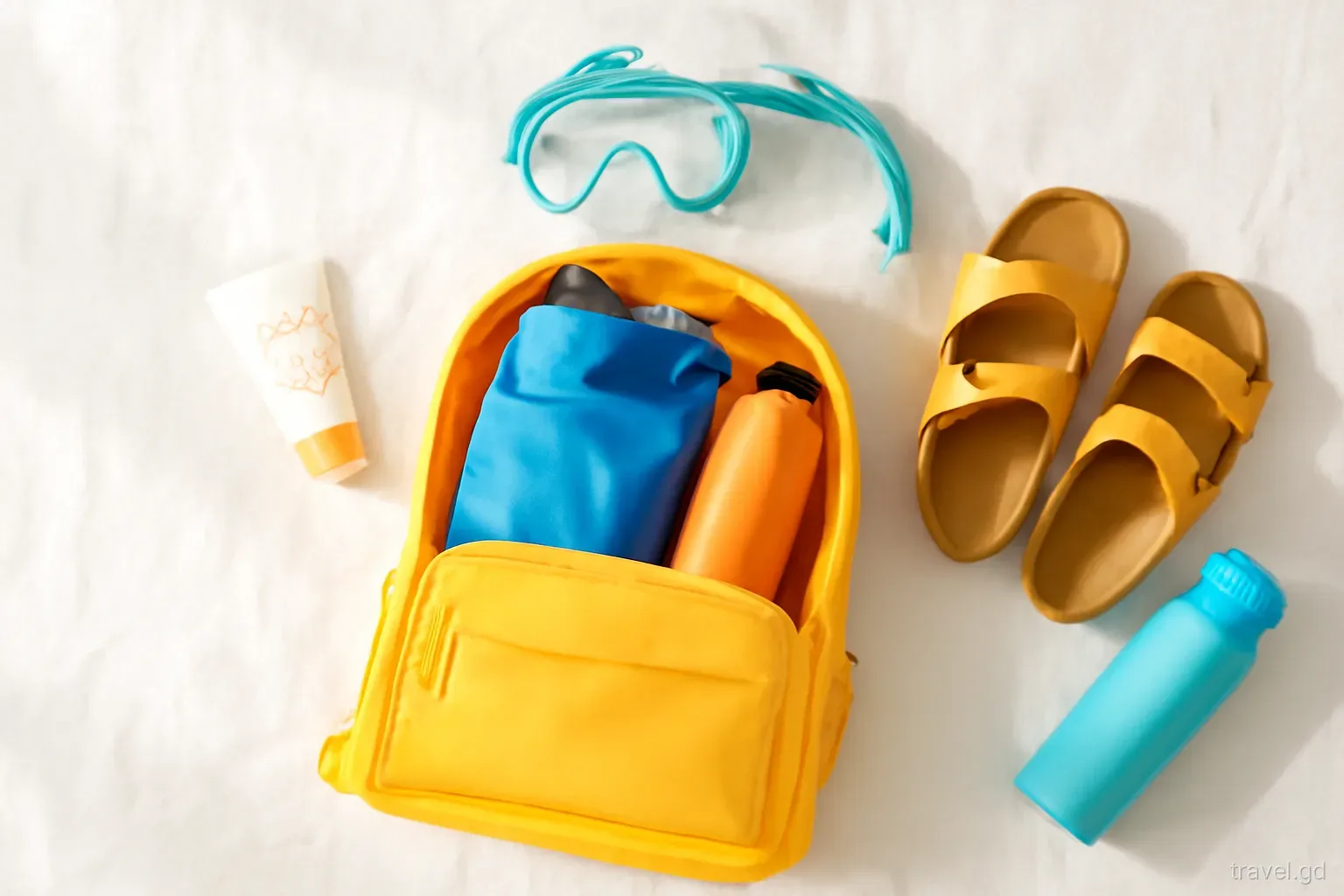
Most visitors underestimate St George's because, seen from a ship's deck, it looks compact. The distances really are short, but some streets climb at a gradient that would be unusual in most European or North American towns, and several shortcuts are stepped lanes rather than roads. Pavements are narrow or missing in places, and the older stone surfaces become slick after a shower. Good walking sandals with grip or light trainers make a far bigger difference than people expect.
The heat matters more on foot than on a tour bus. Between about eleven and three, the sun is high and the hillside streets reflect heat back at you. If you are walking with older relatives or children, treat the climb to Fort George as optional and do it first thing, then spend the warmer hours around the Carenage, where there is shade, a sea breeze and places to sit. Carry water from the start: kiosks and small shops are common, but not on every stretch of the loop.
If you want the views without the climb, a taxi to Fort George or up to Fort Frederick on Richmond Hill, followed by a walk back down, is a sensible compromise that drivers are used to arranging.
Detours worth adding if you have time
Fort Frederick. Higher and further than Fort George, on Richmond Hill to the east of town, this late eighteenth-century fort was built facing inland, which tells you a great deal about the wars between Britain and France over the island. The views across the south coast, the lagoon and the Grand Anse peninsula are the best around St George's. It is a long, hot walk up, so most people go by taxi.
The lagoon road. The Lagoon Road curves around the old crater lagoon south of the terminal, past the marina at Port Louis. It is flat, with harbour views, and makes an easy extra half hour if your legs are tired of hills.
Chocolate and spice shops. Several small shops in the upper town sell Grenadian chocolate bars, nutmeg products and spices. They are a useful excuse to step out of the sun, and buying a bar or two of locally made chocolate supports producers on the island.
Water taxi viewpoint. Water taxis gather on the Carenage. Even if you do not take one to Grand Anse, the boat ride across the harbour mouth gives you the town from the sea, which is the angle that shows how tightly St George's is packed around its two harbours.
Timing the walk around your ship
On days with a single ship, the loop is pleasant at any hour. On days with two or three large ships in port, the stretch between the terminal and the tunnel, and the Carenage itself, are busiest in the first hour after passengers are cleared to go ashore. Two simple fixes help. Either go ashore immediately and walk the loop in the opposite direction, starting with the market and the museum, or have a slow breakfast on board and set off about an hour later, once the first waves of organised tours have left by bus.
Leave a clear margin for the last leg. The walk from Market Square back to the terminal takes ten to fifteen minutes downhill, but browsing the shops near the Esplanade always takes longer than planned. Aim to be back at the pier at least an hour before all-aboard time; this is a walking day, so there is no traffic to blame if you cut it fine.
On a Sunday, the town is quiet: most shops and the market are closed, and church services fill the streets on Church Street in the morning. It is a lovely time to see the architecture without the bustle, but dress modestly and keep your voice and camera discreet near the churches while services are under way.
Mistakes walkers make in St George's
The town is generally relaxed and friendly to people on foot. The problems visitors run into are almost always about planning rather than safety.
- Walking the Sendall Tunnel two abreast. There is no proper pavement inside; keep in single file and close to the wall.
- Assuming the museum or churches will be open. Opening times change and some buildings are still under repair. Treat interiors as a bonus, not the centrepiece.
- Wearing beach flip-flops. Slick stone lanes and steep gradients are hard work in loose footwear.
- Swimwear in town. Grenadians dress neatly in the capital; walking the streets in swimwear draws stares. Cover up away from the beach.
- Photographing people without asking. Market vendors and fishermen are usually happy to be photographed if you ask first, and some will politely decline.
- Forgetting cash. Small purchases, coconuts and juices are paid in cash. US dollars work but small EC notes make life easier.
- Leaving the hardest climb until the hottest hour. Do Fort George early or take a taxi up.
Frequently asked questions
How long does it take to walk around St George's from the cruise ship?
A loop taking in the Sendall Tunnel, the Carenage, Fort George, the churches, the museum and Market Square takes about three hours at a relaxed pace with stops. Walking without stopping it is closer to ninety minutes, but the steep streets make it feel longer.
Is St George's hilly?
Yes, very. The town is built on the slopes of an old volcanic crater, so many streets climb steeply and some shortcuts are staircases. Comfortable shoes with grip, water and an early start make the walk far more pleasant.
Can you visit Fort George?
The fort is used as police offices, so some areas are closed, but visitors can usually reach the ramparts for the view over the Carenage and harbour. Access arrangements can change, so be prepared to enjoy the view from the outer walls.
What is the Christ of the Deeps statue on the Carenage?
It is a bronze statue on the Carenage waterfront commemorating the liner Bianca C, which caught fire in St George's harbour in 1961. Local people helped rescue passengers and crew, and the wreck now lies offshore as a well-known dive site.
Is the walk suitable for people with limited mobility?
Only partly. The Carenage and the Lagoon Road are fairly flat, but Fort George, the churches and the museum involve steep climbs. A taxi to the higher points with a walk along the waterfront is a better plan for anyone who finds hills difficult.