Grenada is one of the few cruise ports where the obvious souvenir is genuinely made on the island. Nutmeg and mace, cinnamon, cloves, cocoa and the chocolate made from it, local rum, hot sauces and nutmeg syrups all come from Grenadian farms, estates and small producers. Buy the right things and your purchases support the farming economy rather than a supply chain that ends in a factory overseas.
A cruise day adds its own rules, though. Chocolate melts on a hot walk back to the ship, cruise lines usually take rum into storage until the end of the voyage, and what you can bring home depends on the customs and agricultural rules of the country where your cruise ends. This guide covers where to shop near the pier, what is worth buying and how to get it home intact.
Where to shop within reach of the pier
Shopping in St George's for cruise visitors falls into three areas. The Esplanade Mall, attached to the cruise terminal, is the most convenient. It has duty-free shops selling jewellery, watches, perfume and liquor, plus craft and spice stalls and cafés, and it keeps hours tied to ship calls. It is easy, but prices for spices and crafts tend to reflect the location.
Market Square, a few minutes uphill in the centre of town, is where Grenadians buy fruit, vegetables and spices, and it is livelier on Saturday mornings. Spice vendors sell small woven baskets and bags of nutmeg, mace, cinnamon, bay leaf, cloves and turmeric, along with cocoa balls for making cocoa tea. Prices are usually more modest and you are buying directly from the vendor.
The craft and spice market at Grand Anse, near the northern end of the beach, works well if you are spending the day there. Stalls sell spices, jewellery, wood carvings, batik and T-shirts. The upper town of St George's also has small specialist shops selling local chocolate and spice products, which are a good place to find bars from Grenada's own tree-to-bar makers.
What is worth buying
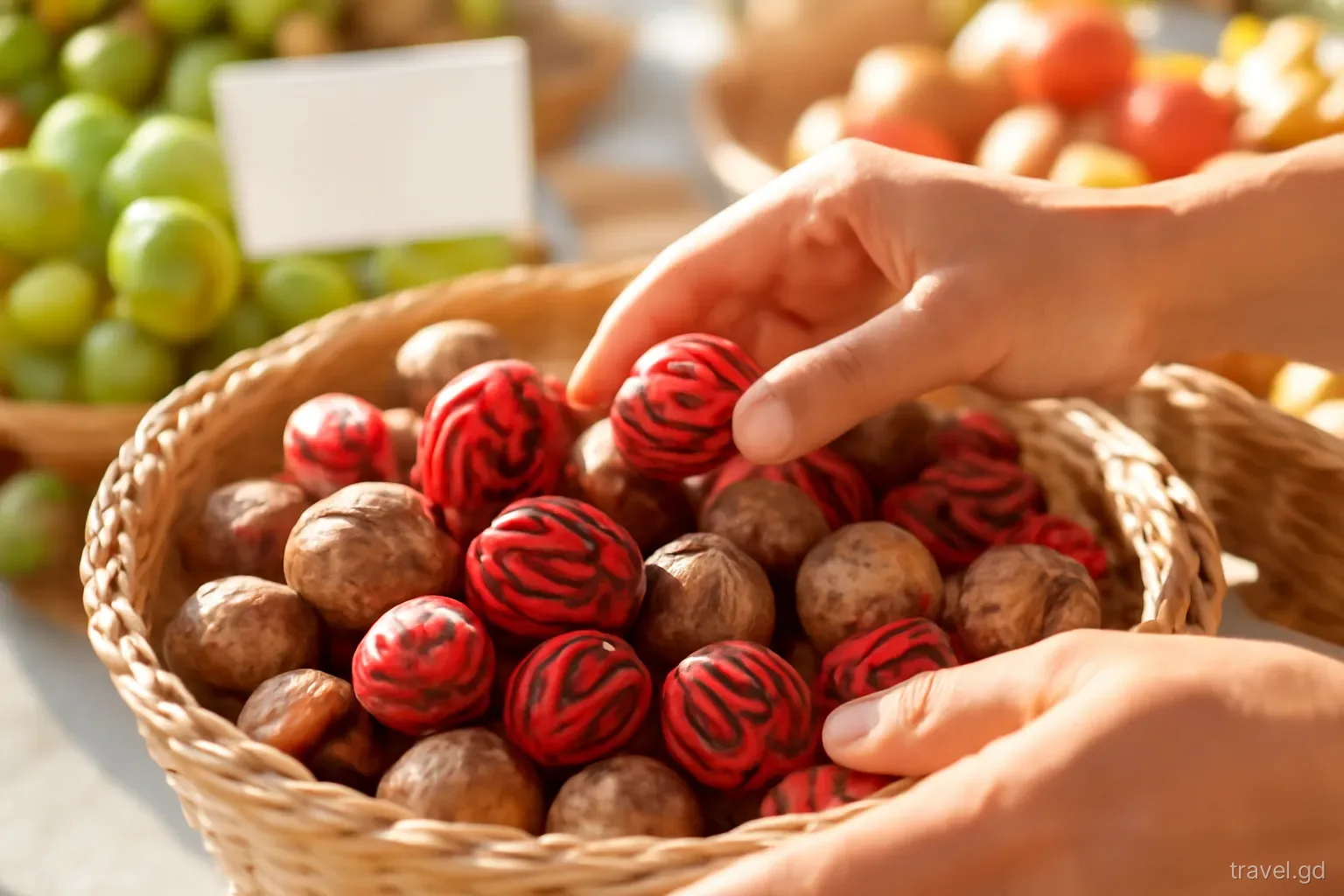
Whole nutmeg with mace. Grenada's emblem spice, sold whole, sometimes still wrapped in its red lacy mace. Whole nutmeg keeps for years and tastes far better grated fresh than any ground product. A small nutmeg grater makes a good companion purchase.
Locally made chocolate. Grenada has several tree-to-bar chocolate makers that grow or buy cocoa on the island and make the bars here, usually with a high cocoa content. Check the wrapper says made in Grenada; some souvenir chocolate is imported and repackaged.
Cocoa balls and cocoa sticks. Rolled balls of ground roasted cocoa, sometimes spiced, used to make the traditional breakfast drink cocoa tea. Cheap, light and very Grenadian.
Nutmeg products. Nutmeg syrup, jams and jellies, and the nutmeg-based rubs and ointments sold for aches and pains. Liquids need careful packing for the flight home.
Hot sauces and seasonings. Pepper sauces made on the island vary from fruity to fierce. Buy sealed bottles.
Crafts. Look for wood carvings, calabash work, batik and jewellery made in Grenada. Ask the vendor where an item was made; it is a normal question.
Rum. Clarke's Court, Westerhall and River Antoine are the island's distilleries. River Antoine's overproof rum is very strong, and airlines limit high-strength spirits, so read the next sections before buying.
Keeping chocolate and spices in good shape
Chocolate is the purchase most often ruined. A bar left in a bag on a beach or in a taxi in the midday sun softens within minutes and blooms white when it cools. Buy chocolate at the end of the day, on the way back to the ship, or carry it in an insulated bag. On board, keep it in the cabin fridge if there is one, or away from the window. Grenadian bars with a high cocoa content are less fragile than milk chocolate, but none survives a hot car.
Spices travel well but should be sealed. Spice baskets look lovely, but the woven bags let aromas leak into everything in your suitcase. Put them in a zip-lock bag or airtight container. Ground spices lose flavour faster than whole ones, so buy whole nutmeg, cinnamon sticks and cloves where possible.
Liquids such as syrups, sauces and rum need protection from breakage. Wrap bottles in clothing and put them in plastic bags in case of leaks. If you are flying home at the end of the cruise, remember that liquids over 100 millilitres must go in checked luggage, not your cabin bag.
Rum and the cruise ship rules
Most cruise lines restrict alcohol brought on board from ports. A common approach is that bottles bought ashore are collected at the gangway, stored and returned to you on the last night or on the morning you leave the ship. Some lines allow one bottle of wine per person; few allow spirits in cabins. Policies vary between lines and change, so read your line's rules before buying, and expect your bottle to be taken into storage.
Duty-free liquor bought at the Esplanade Mall is often delivered to the ship or stored under the same system. Keep the receipt, and label the bag with your name and cabin if the shop does not.
When you get home, your rum counts against your country's duty-free allowance. Airlines and aviation authorities also set limits on spirits above a certain strength, and some very high-proof rums cannot be carried on aircraft at all. Check with your airline before buying overproof rum such as River Antoine's, which is famously strong.
Prices, bargaining and paying
Grenada is not a hard-bargaining culture, and visitors who haggle aggressively over a bag of nutmeg often cause more offence than they save money. At the Esplanade Mall and in shops, prices are fixed. At market stalls and craft markets, prices are usually displayed or quoted, and a gentle request for a better price when buying several items is acceptable; pushing hard is not. Remember that the difference of a few EC dollars matters far more to a small vendor than to a cruise passenger.
Pay in EC dollars at the market if you can. Vendors accept US dollars, but change comes back in EC dollars at the fixed rate of EC$2.70 to US$1, and rounding on small sums can go either way. Carry small notes in both currencies, because large US bills are hard to change at a stall. Cards are taken in most shops at the mall and in town, less so at market stalls.
Value for money is better in town than near the terminal. A short walk up to Market Square or one of the specialist shops in the upper town usually means a wider choice and fairer prices for the same Grenadian products.
Customs: what usually passes and what does not
Rules depend on the country where your cruise ends, not on Grenada. The common pattern for the United States, Canada, the United Kingdom and the European Union is broadly similar, but always check the official guidance of your own border agency.
- Generally allowed for personal use: dried spices, commercially packaged chocolate, sealed sauces and jams, and roasted cocoa products, often subject to declaration.
- Usually prohibited or restricted: fresh fruit, fresh vegetables, plants, cuttings, soil and seeds intended for planting. Do not take a mango or soursop off the ship.
- Check first: raw cocoa beans, unprocessed plant material and anything homemade or unpackaged.
- Declare when in doubt. Declaring food items normally costs nothing; failing to declare a prohibited item can mean a fine.
- Alcohol and tobacco are limited by your country's allowances, and anything above them is subject to duty.
- Crafts made from protected species, such as black coral or turtle shell, should not be bought at all.
Frequently asked questions
What is the best souvenir to buy in Grenada?
Whole nutmeg with mace, locally made chocolate and cocoa balls are the most authentic, because they are grown and made on the island. Spices are light and keep well, and chocolate bars from Grenada's tree-to-bar makers make good gifts if kept cool.
Can you take rum bought in Grenada back on the cruise ship?
Usually yes, but most cruise lines collect alcohol bought ashore at the gangway and return it at the end of the cruise. Policies vary by line, so check yours. Duty-free purchases are often handled the same way.
Where can cruise passengers buy spices in Grenada?
At the Esplanade Mall next to the cruise terminal, at Market Square in the centre of St George's, and at the craft and spice market at Grand Anse beach. Market Square is usually the best value and is liveliest on Saturdays.
Can you bring nutmeg into the United States?
Dried spices such as whole nutmeg are generally allowed for personal use, but they may need to be declared. Fresh fruit, plants and soil are not allowed. Check the current guidance from US Customs and Border Protection before travelling.
How do you stop Grenadian chocolate melting?
Buy it late in the day, keep it out of the sun and away from car dashboards, and carry it in an insulated bag if possible. On board, store it in the cabin fridge or in a cool drawer away from windows.
Are spice baskets in Grenada good value?
They make pretty gifts, but you pay partly for the basket. For cooking, buying whole spices by the bag from a market vendor gives more spice for the money. Seal baskets in a plastic bag so the aroma does not fill your luggage.