Packing for a day in St George's looks simple until you are standing at the top of a steep street at noon with no water, a phone at ten per cent and a pocket full of large banknotes nobody can change. A port day in Grenada combines a hilly town, hot sun, the chance of a tropical shower and, for many people, a beach or a boat trip. The bag that covers all of that is small, but it needs thought.
The checklist below is organised by purpose, with notes on why each item matters in Grenada specifically. It also covers what to leave on the ship and how to handle money and phones, two areas where cruise passengers most often lose time or pay more than they need to.
Essentials you cannot go ashore without
These items deal with getting off, getting back and paying for things. Check them at the cabin door.
- Ship card. You need it to leave and re-board. Keep it in a zipped pocket or on a lanyard, not loose in a beach bag.
- Photo identification. Many cruise lines ask passengers to carry photo ID ashore. A copy of your passport photo page on your phone is a useful back-up, but follow your line's instructions on whether the original must be carried.
- Cash in small notes. US dollars are widely accepted at places used to visitors, but change usually comes back in Eastern Caribbean dollars at the fixed rate of EC$2.70 to US$1. Route buses, small vendors and many taxis are cash only.
- A payment card. Larger shops, the Esplanade Mall, restaurants and tour operators usually accept cards. Tell your bank you are travelling.
- The ship's port agent details and all-aboard time, written down or saved in your phone, in case you are delayed.
- Your phone, charged, with a small power bank if you plan to take many photos or use maps offline.
Sun, heat and water
Reef-safe sunscreen. Grenada sits at about twelve degrees north, and sunburn comes fast, even when it is cloudy. Mineral sunscreens based on zinc oxide or titanium dioxide are kinder to the reefs, which matters if you are swimming at Grand Anse, the sculpture park or anywhere over coral.
A hat and sunglasses. Walking St George's means long exposed stretches on hills. A wide-brimmed hat is better than a cap.
A refillable water bottle. Fill it on board. Water and drinks are easy to buy in town, but not on every stretch of a walk or at every waterfall.
Light, breathable clothing. Linen or quick-dry fabrics are far more comfortable than heavy cotton in the humidity. A long-sleeved layer protects shoulders on a boat.
A cover-up for town. Swimwear is for the beach. Put a shirt, dress or wrap on before getting into a bus, entering a shop or walking through St George's.
Footwear and terrain
Walking sandals or trainers with grip. St George's has steep streets, stone steps and occasional slippery surfaces after rain. Flip-flops are fine on the beach but hard work in town.
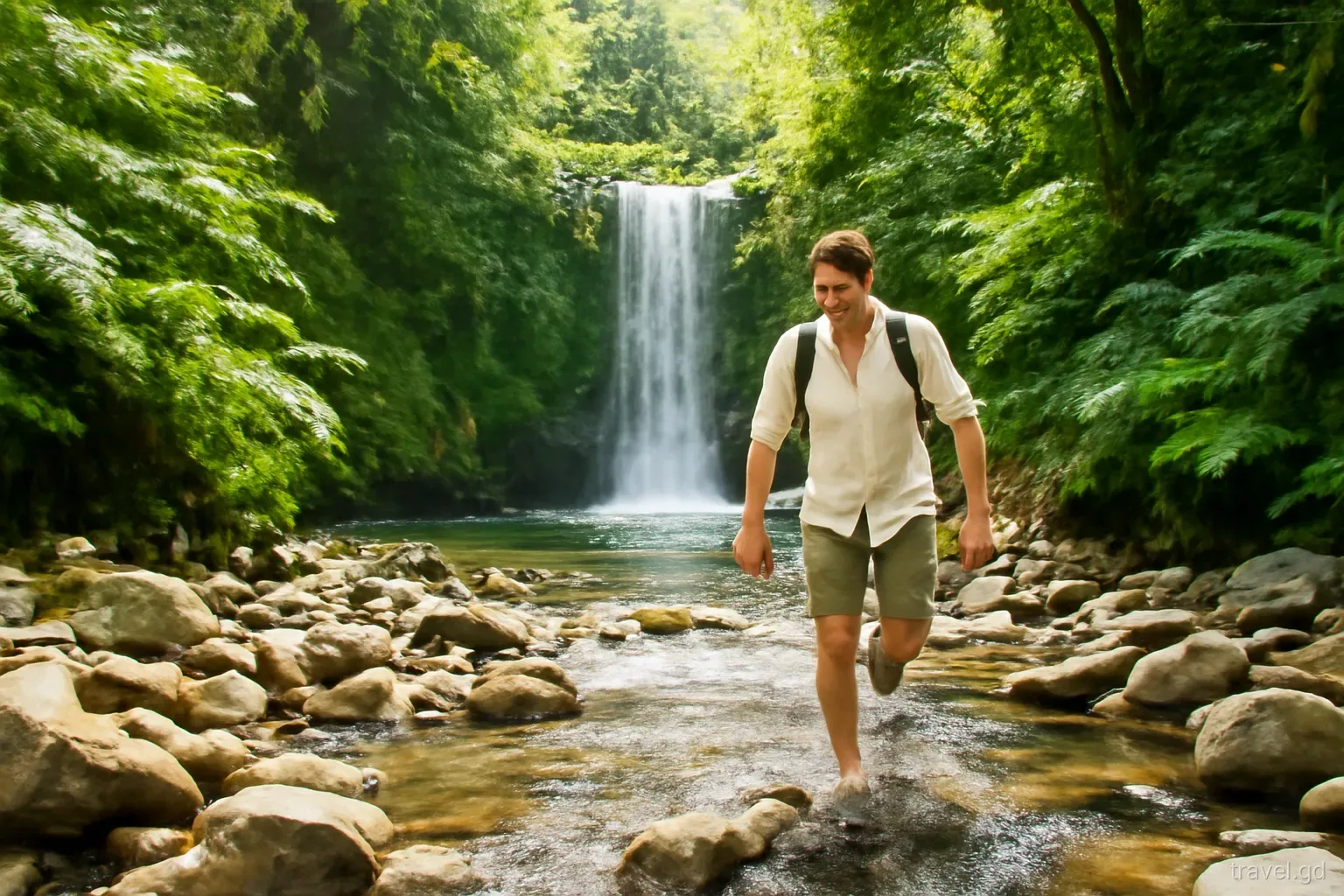
Water shoes. Useful at waterfalls such as Annandale and Concord, where rocks are slippery, and for swimming from beaches with pebbles or rocks at the water's edge.
Hiking shoes for forest trails. If you are doing a guided hike in the Grand Etang forest reserve, wear shoes you do not mind ruining in mud. Guides often say the Seven Sisters trail is muddy year-round.
Socks and plasters. A blister on a hot port day spoils everything. A few plasters weigh nothing.
Something to change into. After a waterfall swim or a boat trip, a dry pair of shorts and light shoes make the ride back far more comfortable, and taxi drivers appreciate passengers who are not dripping on their seats.
Rain, insects and the small things
These are the items people wish they had brought.
- A light rain jacket or poncho. Showers arrive with little warning and are heavy, though usually short.
- A dry bag or zip-lock bags for phone, cash and ship card, especially on boats and water taxis.
- Insect repellent. Mosquitoes are more active at dusk and in damp, shaded places such as forest trails and waterfall pools. Mosquito-borne illnesses such as dengue occur in the Caribbean, so repellent is sensible.
- A small towel or sarong that doubles as a beach towel, seat cover and shade.
- Hand sanitiser and tissues, since public toilets can be scarce and basic.
- Motion sickness tablets if you are prone to it: the roads to Grand Etang are winding, and boat trips can be lively when the swell is up.
- Snorkel and mask from home if you plan to swim; rental gear is not always available on the smaller beaches.
Phones, data and staying in touch
Mobile roaming charges on a cruise day can be steep, especially if your phone connects to the ship's maritime network while still on board. Switch the phone to aeroplane mode before the ship arrives, then enable roaming only once you are ashore and connected to a local network, if your plan allows it. Some home networks offer a daily Caribbean roaming pass that is far cheaper than standard rates.
Grenada's mobile networks, Digicel and Flow, have good coverage in St George's and along the south coast, with weaker signal in parts of the mountainous interior and on remote stretches of coast. Download offline maps of the island before leaving the ship, so that you can follow your route even without data.
Wi-Fi is available in many cafés, bars and restaurants around the Carenage and Grand Anse for customers. Ask for the password when you order. Save the phone number of your driver or tour operator, and share it with someone in your group, so that you can find each other if you separate.
Three bags for three kinds of day
The town walker. Ship card, ID, small cash, card, phone, water, hat, sunscreen, a light rain jacket, comfortable shoes and a cover for shoulders if you plan to look inside churches. Keep it light: the hills are the main challenge.
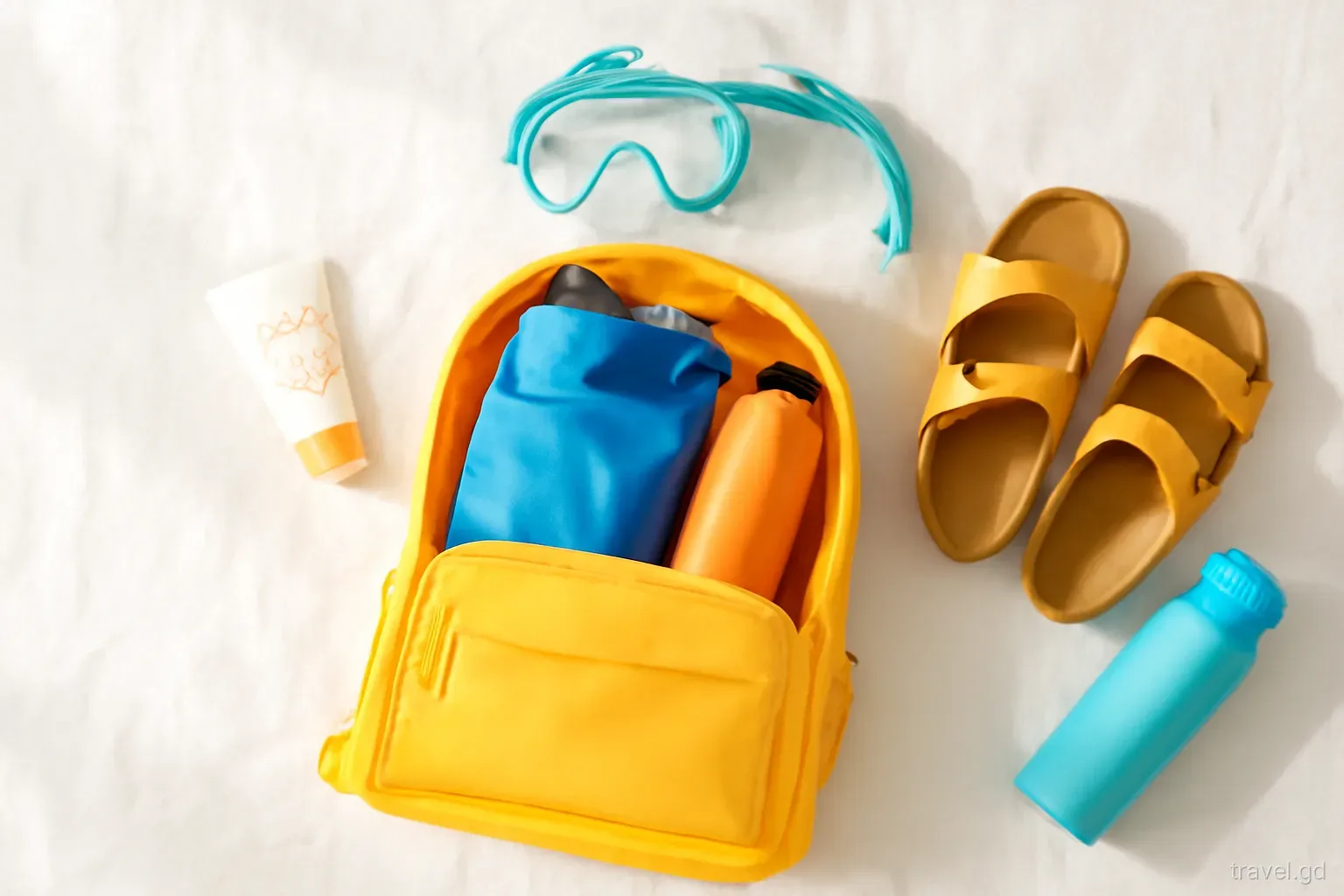
The beach day. Swimwear under your clothes, reef-safe sunscreen, a towel or sarong, mask and snorkel, a dry bag for valuables, cash for chairs and drinks, and a shirt to put on before going back through town.
The island tour or hike. Grippy shoes or water shoes, insect repellent, a rain layer, water, snacks, motion sickness tablets for the winding roads, cash for entry fees at gardens, waterfalls and estates, and a change of top. If you are hiking, a small first-aid kit is worth the space.
For everyone. Know your all-aboard time, have your driver's contact saved, and keep the ship card somewhere you will not lose it when you take off a jacket or go for a swim. Those three habits prevent most cruise-day problems.
What to leave on board
Some things add risk or weight without adding anything to a day ashore.
- Valuables you do not need: expensive jewellery, spare cards and large amounts of cash. Use the cabin safe.
- Camouflage clothing. Several Caribbean countries restrict civilian camouflage wear. Leaving it on board avoids any question.
- A drone, unless you have sought permission from the relevant aviation authorities. Rules on flying drones are strict, and flying near the port or airport is off limits.
- Food from the ship. Fruit and meat taken ashore can conflict with agricultural rules; eat breakfast on board instead.
- Heavy bags. Every extra kilogram feels heavier on Grenada's hills.
- Expensive cameras on a beach day, unless you will watch them constantly; sand and salt are hard on equipment.
- Large US bills, which are hard to change at stalls and on buses; swap them for smaller notes on board if the ship allows.
Frequently asked questions
Do you need your passport to go ashore in Grenada from a cruise?
Cruise lines set their own rules. Most ask passengers to carry their ship card and a photo ID ashore, and some ask for the passport itself. Follow your line's instructions and keep a copy of the photo page on your phone.
What currency should you bring on a Grenada cruise day?
US dollars are widely accepted in places that serve visitors, but change comes in Eastern Caribbean dollars at EC$2.70 to US$1. Small notes make buses, tips and market purchases easier. Cards are accepted in larger shops and restaurants.
Is reef-safe sunscreen required in Grenada?
It is strongly recommended, especially if you swim over reefs or at the Underwater Sculpture Park. Mineral sunscreens based on zinc oxide or titanium dioxide are less harmful to coral than some chemical filters. Check local guidance in case rules have changed.
Does your phone work in Grenada?
Most international phones work on Grenada's networks, Digicel and Flow, if roaming is enabled. Roaming can be expensive, so check your plan, use aeroplane mode near the ship and rely on café Wi-Fi or offline maps where possible.
What shoes are best for St George's?
Walking sandals or light trainers with good grip. The town is very hilly, with stone steps and slippery surfaces after rain. Flip-flops are fine on the beach but uncomfortable and slippery on town streets.