Grenadians dress with care. On weekdays in St George's you will see neat office clothes, ironed school uniforms and shoes that have been polished; on Sunday morning, church clothes, hats and the best outfit in the wardrobe. Visitors are not expected to match that, but the gap between how a holidaymaker dresses at Grand Anse and how locals dress in town is something to keep in mind.
The rules are not complicated. Swimwear belongs on the beach and at the pool. Town calls for shorts and a shirt at minimum. Church and government offices call for covered shoulders and knees. Dinner varies from barefoot beach bar to collared-shirt resort restaurant. And one item, camouflage clothing, is best left out of the suitcase entirely.
On the beach and by the pool
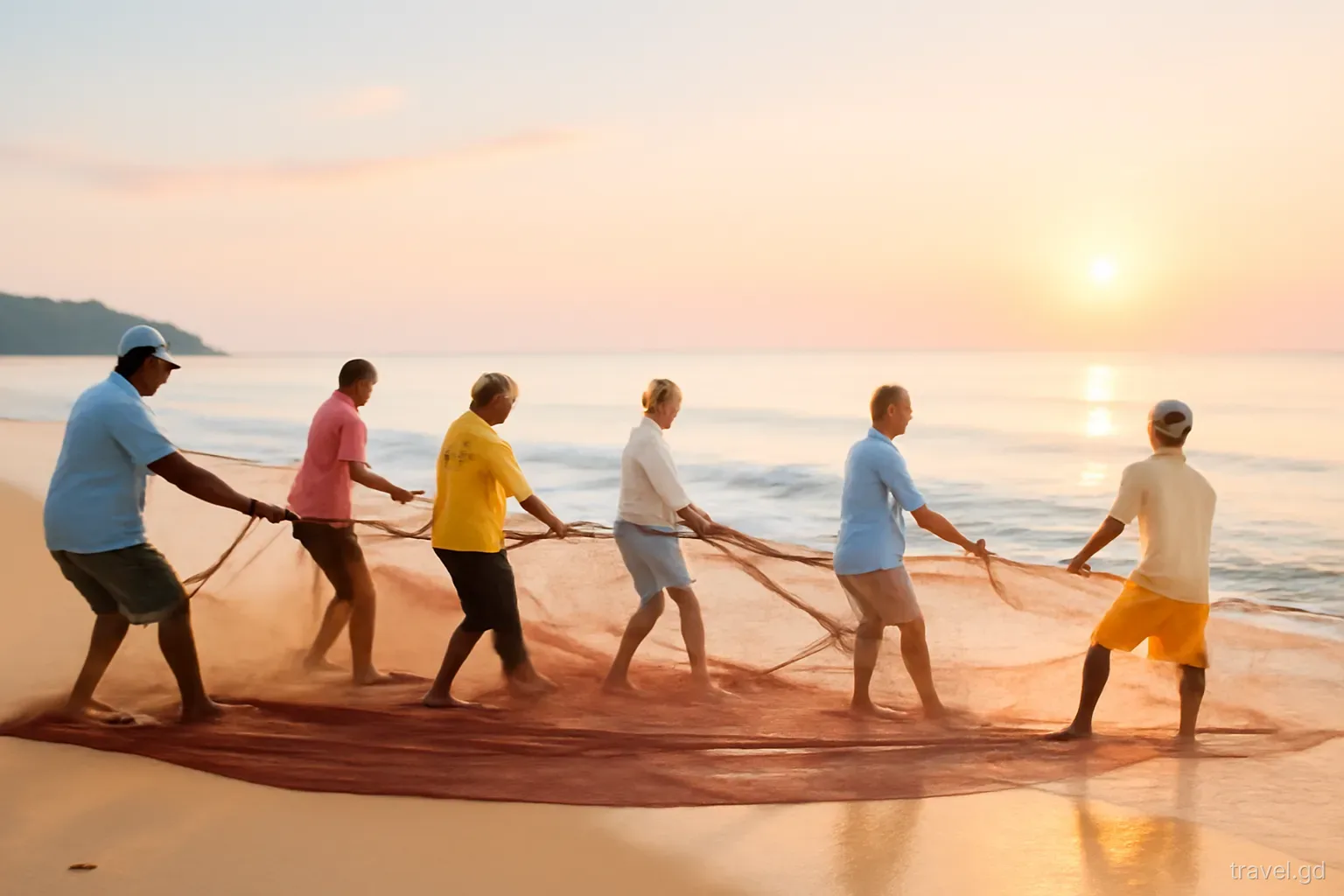
Standard swimwear is fine on every beach in Grenada, from busy Grand Anse to quiet La Sagesse or Paradise Beach on Carriacou. Bikinis, swim shorts and one-pieces are all normal. Beaches in Grenada are open to the public, so you will share the sand with local families, fishermen, vendors and schoolchildren, particularly at weekends and on public holidays.
Nudity and topless sunbathing are not part of local beach culture, and public nudity is an offence. Even at secluded coves, assume someone may walk past. Thong swimwear is legal but draws more attention than it would on a European beach.
The line most visitors cross without noticing is the edge of the sand. Walking from the beach to a roadside shop, a bus stop, a supermarket or a restaurant terrace in swimwear alone is considered disrespectful. Throw on a cover-up, shirt or sarong when you leave the beach, even if the walk is short. Beach bars directly on the sand are relaxed about this; establishments across the road generally are not.
The same applies on route buses and in taxis. Sitting in a bus in a wet swimsuit is uncomfortable for other passengers and drivers may object. Carry a towel to sit on and a dry layer to pull on, and change in the beach facilities or behind a towel rather than in the open.
In St George's and other towns
Daytime basics. Shorts, skirts, sundresses and T-shirts are fine for exploring the Carenage, Market Square, Fort George or Grenville. Light, breathable clothing is sensible given the hills and the heat.
What draws looks. Bare chests on men, bikini tops on women, and very short or see-through outfits stand out in town and may bring comments. Locals rarely say anything directly to visitors, but the disapproval is real.
Supermarkets and banks. Treat them as town, not as an extension of the beach. Cover up, and if you are wearing a hat in a bank, it is polite to remove it. Some banks also ask customers to remove sunglasses and hoods at the door.
Government offices and courts. Anyone visiting an office for a driving permit, immigration matter or similar business should dress smartly: covered shoulders, no beachwear, closed shoes or neat sandals. Some offices refuse entry to people in vests, very short shorts or flip-flops.
Shoes. Sturdy sandals or trainers work best on steep streets and uneven pavements. They also suit the climb to Fort Frederick and the walk through the Sendall Tunnel.
Church, funerals and formal occasions
Most Grenadians are Christian, mainly Roman Catholic, Anglican, Methodist, Pentecostal and Seventh-day Adventist, and church services are well attended. Visitors are welcome at services, and attending one, perhaps at the Anglican or Roman Catholic church in St George's, is a memorable way to spend a Sunday morning.
Dress as you would for a smart event at home. Women typically wear dresses or skirts below the knee, often with covered shoulders; a light shawl or cardigan solves that quickly. Men wear long trousers and a collared shirt; jackets and ties are common among regular churchgoers but not expected from visitors. Shorts, vests and beachwear are not appropriate.
Funerals and weddings follow similar rules. Funerals are large community events, and black, white or dark colours are customary. If you are invited to a wedding or a family celebration, ask what the dress expectation is; it is usually smarter than visitors assume.
Formal national occasions, such as the Independence Day celebrations on 7 February at the National Cricket Stadium, also bring out smart clothes, often in the national colours of red, gold and green. Visitors attending as spectators can dress casually, but neat clothing fits the mood of the day.
Dinner: from beach shack to resort restaurant
Dress codes in restaurants run from none at all to resort-casual. Few places enforce rules strictly, but the following guidance keeps you comfortable:
- Beach bars and rum shops: anything goes, though a shirt over swimwear is polite once the sun goes down.
- Fish Friday in Gouyave and other street food nights: casual clothes and comfortable shoes; you will be standing and walking on the street.
- Mid-range restaurants around Grand Anse, the Lagoon Road and the Carenage: smart casual, meaning shorts and a neat shirt or a sundress.
- Resort and fine-dining restaurants: collared shirts and long trousers or tailored shorts for men; dresses or smart outfits for women. Some ask that men avoid vests and that nobody arrives in swimwear or wet clothing.
- Long trousers or a long skirt have a second advantage: protection from mosquitoes and sandflies on open-air terraces at dusk.
Dressing for tours, hikes, boats and festivals
Activity days have their own practical dress code, set by terrain, sun and water rather than by manners. A few pointers:
- Rainforest and waterfall hikes: quick-dry shorts or light trousers, a T-shirt you do not mind getting muddy, closed shoes with grip, and swimwear underneath if you plan to swim at the falls. Long trousers help against scratches and insects on overgrown trails.
- Island tours by minibus: comfortable town clothes, because tours usually include stops at places such as a nutmeg processing station, a chocolate estate, a rum distillery or a church. Bring a cover-up if the day ends at a beach.
- Catamaran and boat trips: swimwear with a shirt or dress over it, a hat that will not blow away, and a rash vest for long spells in the water at the underwater sculpture park or on a reef.
- Diving: dive centres supply wetsuits on request; water is warm, but a thin suit or rash vest protects against stings, sunburn and scrapes.
- Spicemas in August: for J'Ouvert and Jab Jab, wear old clothes and shoes you are happy to throw away, because oil, paint, mud and molasses end up on everyone nearby. For the Monday and Tuesday parades, light clothes, a hat and closed shoes for long hours on the road.
- Hotel spas and gyms: follow the property's rules; most expect proper workout clothes rather than swimwear in the gym.
Pitfalls to avoid
Camouflage clothing. Several Caribbean countries prohibit civilians from wearing camouflage patterns, which are associated with the security forces, and visitors to the region are routinely warned about it. Do not pack camo trousers, shorts, swimwear, hats or bags; the risk is not worth testing.
Treating hotel grounds as the norm. Resorts tolerate swimwear in lobbies and around bars, so visitors get used to it. Outside the gate, standards change.
Forgetting cover-ups for boat trips. Catamaran tours often stop at a waterfront village or a restaurant. Bring a shirt or dress to slip on.
Overdressing for the heat. Formal does not mean heavy. Linen shirts, cotton dresses and breathable trousers meet every dress code on the island without making you miserable.
Ignoring photography in church. Dressing correctly is half of it. Taking photographs during a service without asking is the other common mistake; ask an usher or simply wait until afterwards.
Frequently asked questions
Can visitors wear a bikini in Grenada?
Yes, on the beach and at the pool. Bikinis are normal on Grenadian beaches. Cover up with a shirt, dress or sarong before walking into town, shops, buses or restaurants away from the sand.
Is topless sunbathing allowed in Grenada?
It is not part of local beach culture, and public nudity is against the law. Even at private hotel beaches, topless sunbathing is unusual. Beaches are public and shared with families, so keep swimwear on.
What should men wear to dinner at a Grenada resort?
Smart casual: a collared shirt or neat polo with long trousers or tailored shorts and closed shoes or smart sandals. Jackets and ties are almost never required. Vests, swim shorts and flip-flops are best kept for daytime.
Why do people say not to wear camouflage in the Caribbean?
Several Caribbean states make it an offence for civilians to wear camouflage, because the pattern is reserved for the military and police. Rules differ by country and enforcement varies, so the simplest approach for any Caribbean trip is to leave camouflage clothing at home.
Do women need to cover their heads in church?
No, head covering is not required, though many local women wear hats to Sunday services as part of dressing up. Men usually remove hats inside. Covered shoulders and knees matter more than headwear.