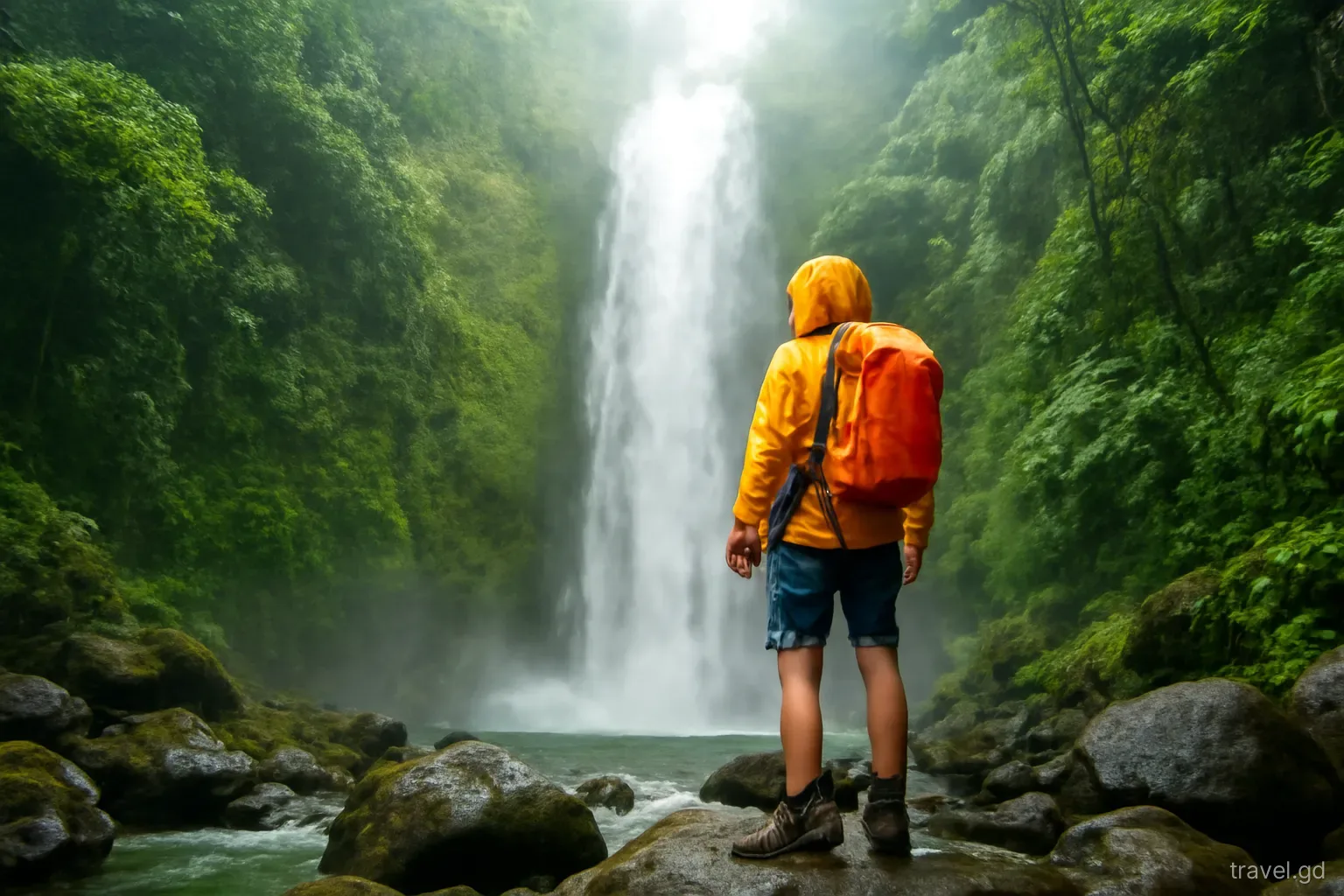
Away from the beaches, Grenada is a mountain island. A spine of forested volcanic peaks runs down its centre, catching rain from the trade winds and feeding dozens of rivers and waterfalls. The Grand Etang Forest Reserve sits in the middle, around a crater lake, with trails reaching out to ridges, falls and the island's highest summit, Mount St Catherine, at roughly 840 metres.
This four-day itinerary is built for active visitors who want to see the best of that interior: easy falls for the first day, then progressively longer walks. It can be done from a base on the south-west coast, though an overnight in the east or north shortens the drives. Trails are often unmarked, muddy and slippery, and rivers rise fast after rain, so use local guides for anything beyond the shortest walks, start early and be ready to change plans on the day.
Before you go: guides, fees and timing
The best season for this itinerary is the dry season, roughly January to May, when trails are firmer and river crossings are lower. Waterfalls are fuller in the wet season, from about August to November, but paths become slippery and rivers can flood suddenly after rain higher in the mountains, even when it is sunny where you are standing. In any season, check the forecast and ask locally before setting out.
Guides are strongly recommended for Seven Sisters, the upper falls at Concord, Mount Qua Qua and Mount St Catherine, and essential for anyone without hiking experience in tropical terrain. Guides can be arranged through tour operators, at some trailheads and through the Grand Etang visitor centre. Agree the price, what it includes and the expected duration in advance. Several falls cross private land or have managed sites with small entrance fees; carry Eastern Caribbean cash.
Pack sturdy shoes with good grip, ideally ones that can get wet, quick-drying clothes, a light rain jacket, plenty of water, snacks, insect repellent and a dry bag for your phone. Start early: the forest is cooler in the morning, and afternoon rain is common in the mountains.
Day 1: Grand Etang and Annandale (easy)
Annandale Falls. Start at Annandale Falls, a short, easy walk from the road on the way up from St George's. The fall drops into a pool surrounded by lush vegetation. It is a good introduction and suitable for all ages.
Grand Etang visitor centre. Continue up to the Grand Etang Forest Reserve, around 30 to 40 minutes from St George's. The visitor centre has information about the reserve, and Mona monkeys are sometimes seen nearby.
Crater lake. Walk the short trail to the lake, or the longer trail around it, which takes a couple of hours and can be muddy. The lake sits in an old volcanic crater, surrounded by forest.
Mount Qua Qua (optional). For fit walkers, the trail to Mount Qua Qua, one of the peaks around the crater, is about 3 kilometres each way from the visitor centre, with steep, slippery sections and views on clear days. Allow around three hours return, go in dry conditions and preferably with a guide.
Day 2: Seven Sisters and Mount Carmel (moderate)
Seven Sisters Falls. From a trailhead on the road beyond Grand Etang towards Grenville, a trail leads through forest and across private land to the Seven Sisters falls, a series of cascades and pools in St Andrew's. The walk is a couple of hours return, with steep, muddy sections and possible river crossings. There is an entrance fee, and local guides are available.
Swimming. The lower pools are popular for swimming in calm conditions. Never swim in rising or muddy water, and stay out of the water after heavy rain.
Lunch in Grenville. Continue down to Grenville for lunch and a look at the market and the waterfront.
Mount Carmel Falls. In the afternoon, visit Mount Carmel Falls, sometimes called Royal Mount Carmel Falls, near Marquis, south of Grenville. A short but steep path descends from the road to a tall fall. Take care on the slippery rocks.
Day 3: Concord Falls and the west (moderate)
Lower Concord. Drive north along the west coast to Concord in St John. The first fall is a short walk from the road, with a pool for swimming.
Upper falls. Concord is really a series of falls on the same river. The upper falls are reached by a longer trail up the valley, with river crossings and slippery rocks. Go with a guide, particularly if it has rained recently.
Gouyave. Continue to Gouyave for lunch, and visit the nutmeg processing station if it is open to visitors.
Alternatives. Experienced hikers can ask guides about longer routes, such as forest traverses between Grand Etang and Concord, or the demanding river hike to Tufton Hall Falls near Victoria in St Mark. These require a guide, a full day and good conditions.
Day 4: Mount St Catherine (challenging) or a gentler alternative
Mount St Catherine. Grenada's highest peak, at roughly 840 metres, rises above the parish of St Mark. The climb is steep, muddy and often in cloud, with limited views, but it is the island's most demanding hike. Routes vary, and the summit trail is poorly marked, so a guide is essential. Allow most of a day, including transport from the south-west coast.
Gentler option. If you prefer something easier, spend the day exploring La Sagesse on the south-east coast, where a nature reserve backs a sheltered beach, or visit Levera in the north-east, with its wetland and beaches.
Rest option. After three days of hiking, a rest day at the beach or a boat trip is a reasonable choice.
Turtles. Between roughly March and August, an evening guided turtle watch at Levera Beach can end the trip on a high note, if arranged through an authorised group.
Safety and etiquette on the trails
Grenada's interior is beautiful but demands respect. Keep these points in mind:
- Flash floods. Rivers can rise in minutes after rain upstream. Leave the riverbed immediately if the water rises, turns brown or carries debris.
- Slippery rocks. Wet rocks near waterfalls cause most injuries. Wear proper shoes and move slowly.
- Jumping. Local divers jump from the rocks at some falls. Do not copy them; depths and hidden rocks are unknown to visitors.
- Getting lost. Trails are often unmarked and can be changed by landslips. Use a guide for longer routes and tell someone your plans.
- Daylight. It gets dark early in the tropics, typically between about 6pm and 6:40pm. Finish hikes with time to spare.
- Respect. Pay entrance fees, stay on paths across private land and carry out all rubbish.
- Emergencies. Dial 911. Mobile coverage is patchy in the mountains, another reason to hike with a guide.
Getting around and where to stay
Most of the trailheads in this itinerary are an hour or less from the south-west coast, but the drives are on steep, winding mountain roads, and after a long hike many people prefer not to drive. A local guide who provides transport, or a taxi driver hired for the day who will wait at the trailhead, solves both problems. Route buses cross the mountains between St George's and Grenville and pass close to Grand Etang, which is useful for independent walkers on a budget, but they are less practical for reaching quieter trailheads or returning late.
A base on the south-west coast works well for days one and three. For days two and four, a night or two in St Andrew's, St Mark's or St Patrick's puts you much closer to Seven Sisters, Mount Carmel, Mount St Catherine and Levera, and lets you start walking while the forest is still cool. Accommodation in these areas is mostly small guesthouses and villas, so book ahead, and expect simpler facilities and fewer restaurants than in the south-west. Wherever you stay, ask for an early breakfast or a packed lunch the night before.
Frequently asked questions
What is the best waterfall in Grenada?
It depends on what you want. Annandale is the easiest to reach; Seven Sisters offers a rewarding forest hike with pools; Concord has a road-accessible lower fall and longer hikes to upper falls; and Mount Carmel is among the tallest. Many visitors do two or three.
Do you need a guide to hike in Grenada?
For short walks such as Annandale or the Grand Etang lake trail, no. For Seven Sisters, Mount Qua Qua, the upper Concord falls and Mount St Catherine, a guide is strongly recommended because trails are poorly marked, slippery and affected by weather and landslips.
Can you swim at Grenada's waterfalls?
Yes, at many falls, including Annandale, the lower Concord fall and the Seven Sisters pools, in calm conditions. Avoid swimming after heavy rain, when rivers can rise quickly and water becomes muddy, and do not jump from rocks.
How hard is Mount St Catherine to climb?
It is Grenada's most demanding hike: steep, muddy and often in cloud, with a poorly marked summit trail. Fit, experienced hikers can manage it in most of a day with a guide. It is not suitable for beginners or after heavy rain.
When is the best time to see Grenada's waterfalls?
For hiking, the dry season from roughly January to May is safest and most comfortable. Waterfalls are fuller in the wet season, around August to November, but paths are muddier and rivers more dangerous. Short, easy falls such as Annandale are good all year.