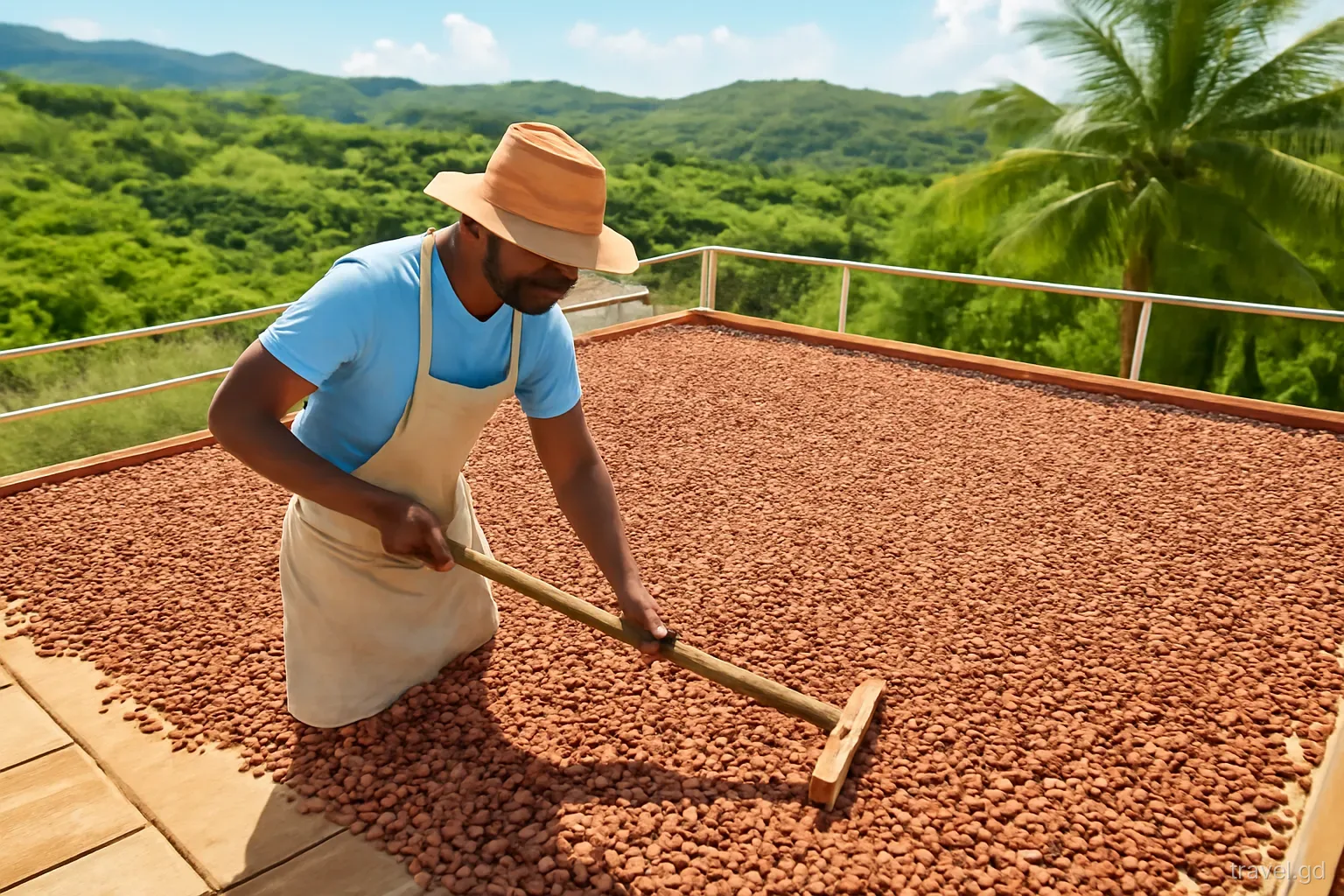
Grenada earned its name as the Spice Isle for good reason. Nutmeg and mace are on the national flag, cocoa has been grown on the hillsides of the north for centuries, and rum is made in distilleries ranging from modern plants to one that still runs on a water wheel. Following those three products is one of the best ways to understand the island, its history and its working landscape.
This route spreads the spice and cocoa country over two days so that each stop gets time. Day one heads up the west coast to Gouyave and on to the cocoa and rum estates of St Patrick; day two returns through the east and south-east to rum and spice sites closer to the south coast. Opening days, tour times and whether places accept walk-in visitors all vary, so check each stop before you set off, and do not drink and drive: choose a designated driver or hire a driver for the day.
Planning the route
The route works best by car with a driver or a confident self-driver who is comfortable with narrow, steep roads on the left. A taxi driver hired for the day is a good alternative, since many know the estates and the staff. Day one involves around three to four hours of driving in total, spread across the day; day two is shorter.
The north is not short of places to stay, but most visitors do the route as two day trips from the south-west coast. An overnight in the north, near Sauteurs or on the east coast, breaks up the driving and allows an evening turtle watch at Levera during the nesting season, roughly March to August. Bring cash in Eastern Caribbean dollars for entrance fees, tastings and purchases, plus a cool bag if you plan to buy chocolate, which melts quickly in a hot car.
Start early. Factories and estates are often busiest with work in the morning, which is when you see the most activity, and some tours finish by mid-afternoon.
Timing within the year matters less for this route than for beaches or hiking, since processing continues through the year. Cocoa harvesting is heavier in some months than others, and nutmeg arrives at the stations steadily, so there is usually something to see. The main seasonal factor is the weather: the north-east roads and estate paths are easier in the dry season, from roughly January to May, and the views from Sauteurs and Belmont are clearer.
Day 1, morning: nutmeg on the west coast
Leave the south-west early. Drive north on the west coast road past St George's, through the fishing villages of St John. The road hugs the coast with views across the Caribbean.
Dougaldston Estate. Near Gouyave, Dougaldston is an old spice estate where cocoa, nutmeg and other spices have traditionally been dried and displayed. Its condition and opening vary, so check before you go; when open, it gives a sense of how estates worked.
Gouyave Nutmeg Processing Station. In the town of Gouyave, the processing station run by the Grenada Cooperative Nutmeg Association is where nutmeg and mace are sorted, graded, dried and bagged, much of it by hand. A short guided visit, for a small fee, shows the whole process; check whether visits are running on your day.
Fish Friday. If your route runs on a Friday, consider returning to Gouyave in the evening for the weekly fish night, if it is running.
Day 1, afternoon: cocoa and rum in St Patrick
Sauteurs. Continue north to Sauteurs and stop at Leapers' Hill for the view and the history of the island's indigenous people.
Belmont Estate. A short drive east, Belmont Estate is a working cocoa estate with centuries of history. Tours have covered cocoa fermentation and drying, the estate's heritage and chocolate, and the restaurant is a popular lunch stop. Book ahead if you want a guided tour.
Grenada Chocolate Company. Nearby, at Hermitage, the Grenada Chocolate Company pioneered tree-to-bar chocolate production on the island from 1999. Ask in advance whether visits are offered.
River Antoine Rum Distillery. Further east, River Antoine produces rum using methods that most distilleries abandoned long ago, with a water wheel crushing the cane. Tours show the whole process, from cane to still. Its rum is very strong, and there are airline limits on high-proof spirits, so check before buying any to take home.
Lake Antoine. Finish at Lake Antoine, a shallow crater lake close to the distillery, before driving back via the east coast and Grenville or retracing the west coast.
Day 2: the east and south-east
Grenville. Drive from the south-west over the mountains or around the coast to Grenville, the main town of St Andrew's. The Grenada Cooperative Nutmeg Association has also processed nutmeg here, and the town market is busy on Saturdays.
Spice gardens. In St David's, spice and herb gardens have offered short walks among nutmeg, cinnamon, clove and bay trees. Check current opening before you go.
Westerhall. In St David's, Westerhall has a long rum-making history, and its heritage site has displayed old equipment. Confirm whether visits and tastings are offered.
Clarke's Court. On the way back, Grenada Distillers, which makes Clarke's Court rum, is at Woodlands near the south coast. Tours have been offered at times; check before arriving.
St George's market. If you finish early, head to the market area in St George's, where vendors sell spices, cocoa balls, nutmeg jam and syrup, and spice baskets.
What to buy and how to bring it home
Spices and chocolate are among the best souvenirs from Grenada. Some guidance:
- Whole nutmeg. Whole nutmeg keeps far longer than ground. Many visitors buy nutmeg still in its shell, with a small grater.
- Mace. The red lacy covering of the nutmeg seed, dried to an orange colour. Lighter and more delicate in flavour.
- Cocoa balls or cocoa sticks. Made from ground cocoa and spices, used to make cocoa tea, a traditional hot drink.
- Chocolate bars. Grenada makes high-quality dark chocolate. Keep it cool in a bag with ice packs and put it in the fridge as soon as possible.
- Rum. Check your airline's limits on spirits and alcohol strength, and your home country's duty-free allowance.
- Rules at home. Some countries restrict bringing in plant products. Packaged, processed spices usually pass, but declare them where required.
Mistakes to avoid on the spice route
The most common mistake is trying to cram the whole route into one day. It is possible to visit Gouyave, Belmont and River Antoine in a single long day, but the second-day stops would have to go, and you spend much of the day in the car. Another is arriving without checking opening: processing stations and distilleries are working sites, and visits depend on production schedules, staffing and holidays.
Drinking at every tasting and then driving is dangerous on these roads. Arrange a driver or limit tastings. Finally, remember that estates are workplaces and private property. Stay with your guide, ask before photographing workers, and buy something if you take a tour, since sales support the people who keep these traditions going.
Why these three crops matter
Nutmeg, cocoa and sugar cane shaped Grenada's history. Sugar dominated the colonial plantation economy, worked by enslaved Africans until emancipation in the 1830s; rum distilleries are its living legacy. Cocoa and nutmeg spread as sugar declined, grown on estates and increasingly by small farmers, and by the twentieth century Grenada was one of the world's leading nutmeg producers. Hurricane Ivan in 2004 destroyed a large share of the nutmeg trees, which take years to bear fruit, and the industry has been rebuilding since.
Seeing the crops and processing sites in person gives context to the souvenirs in the market, to the national flag, and to the landscape of small farms and estate villages you drive through on this route. Guides at the estates and processing stations can usually explain how prices, cooperatives and weather affect the farmers today, which makes the visit more than a tasting.
Frequently asked questions
Can you visit a nutmeg factory in Grenada?
Yes. The Gouyave Nutmeg Processing Station on the west coast has offered short guided visits for a small fee, showing how nutmeg and mace are sorted, graded and dried. Visits depend on the working schedule, so check before you go.
Is Belmont Estate worth visiting?
For anyone interested in cocoa, chocolate or plantation history, yes. Belmont Estate in St Patrick's is a working cocoa estate with tours, a restaurant and chocolate for sale. It combines well with River Antoine and the Grenada Chocolate Company in the same area. Book tours in advance.
Can you tour River Antoine Rum Distillery?
Yes. River Antoine in St Patrick's offers tours showing traditional rum production, including the water wheel used to crush cane. Its rum is very high in alcohol, so check airline rules before buying bottles to take home.
How long does a spice tour of Grenada take?
A guided spice tour usually takes a full day, covering Gouyave, Belmont Estate and River Antoine. Spreading the route over two days, as described here, allows time for the east and south-east, including Westerhall and Grenada Distillers.
What is the best spice souvenir from Grenada?
Whole nutmeg, ideally with a small grater, is the classic choice; it keeps far longer than ground nutmeg. Mace, cocoa balls for cocoa tea and local chocolate are also popular. Check your home country's rules on importing plant products.