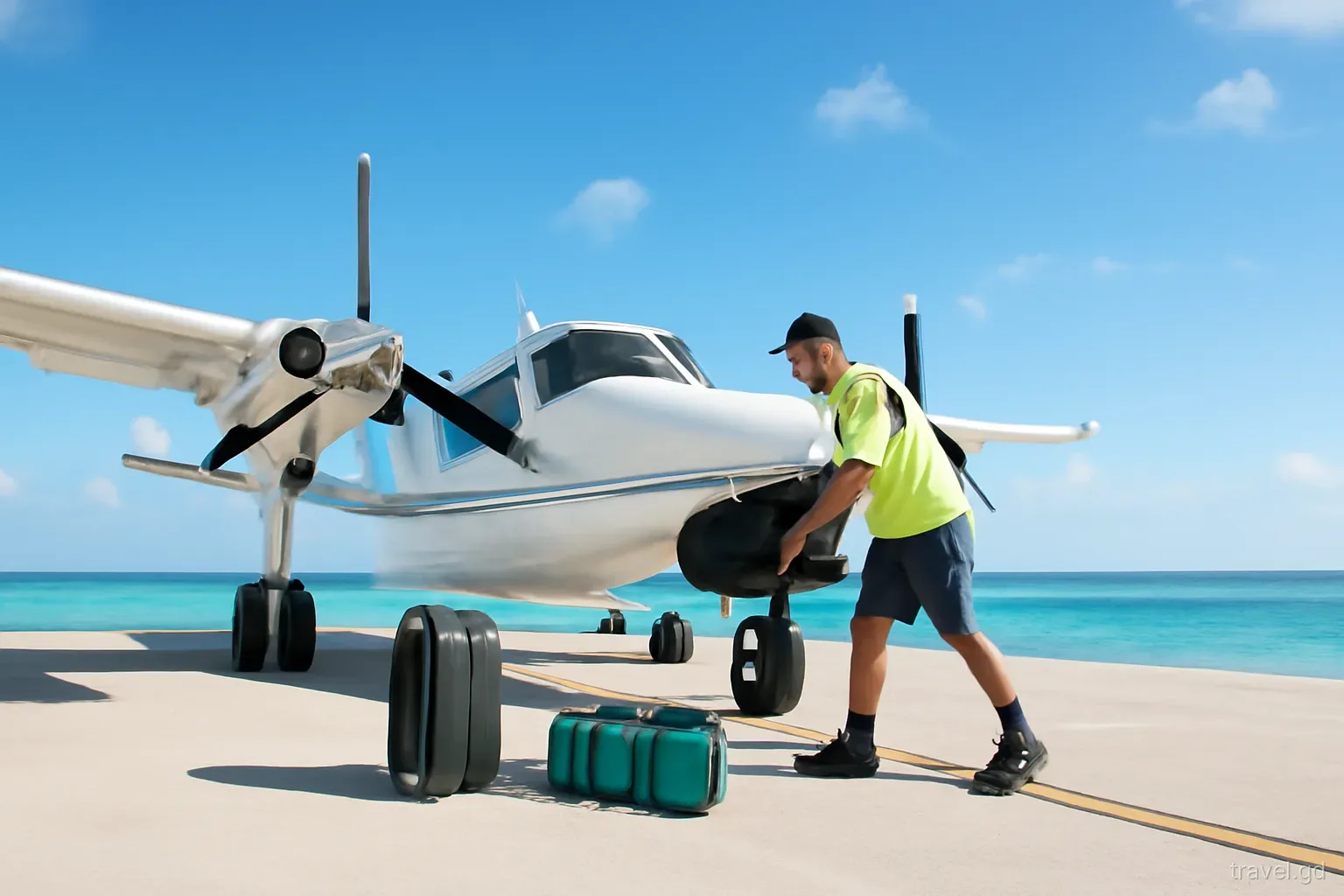
The time your plane touches down at Maurice Bishop International Airport decides more about your first day in Grenada than any itinerary you write at home. Land in late morning and you can be swimming by lunchtime. Land at dusk and the right plan is a short taxi ride, a light dinner and an early night. Trying to force a full day into an evening arrival is how people end up driving unfamiliar mountain roads in the dark.
Grenada sits close to the equator, so day length barely changes through the year. The sun sets roughly between six and half past six in the evening in every month, and it gets dark quickly afterwards. That simple fact shapes everything below. What follows is a first-day plan for each of the three common landing windows, plus the small jobs worth doing on day one whatever time you arrive.
Morning landings: use the day, but keep it local
Morning arrivals usually come from regional connections through Barbados, Trinidad or another island, or from overnight routings. You may have been travelling since the small hours, so the temptation to do too much is the main risk. The good news is that check-in times rarely line up with a morning landing, and Grenada is well set up for filling those hours gently.
Ask your hotel in advance whether early check-in is possible, and if not, whether they will store bags and let you use a changing room. Most places on the south coast will. Then head to the beach. Grand Anse is minutes from most hotels, has public access along its length and plenty of places for a late breakfast or lunch. A swim and a nap under a tree does more for jet lag than any sightseeing.
If you have a hire car, keep the first drive short. A run to a supermarket in the Grand Anse area for water, snacks and breakfast supplies is a good first outing, because it lets you get used to driving on the left in busy but slow traffic before you tackle the hills. Save the rainforest, the waterfalls and the north for day two.
Afternoon landings: the classic arrival, and the tightest window
Most long-haul flights from North America and Europe land in the early or middle afternoon. By the time you have cleared immigration, collected bags and reached a south-coast hotel, it is often four or five o'clock. That leaves one to two hours of daylight, which is enough for exactly one good thing. Choose it in advance.
For most people the best choice is the sunset. The Caribbean side of the island faces west, so Grand Anse, Morne Rouge and the beaches near True Blue get a clear view of the sun dropping into the sea. Check in, change and walk to the water. A drink at a beach bar as the light goes is the easiest possible introduction to the island.
If you are self-catering, swap the sunset for a supermarket run on the way from the airport, and ask the taxi driver to wait while you shop. Arriving at a villa with no water, no coffee and no breakfast is a poor start, and many villas are a drive away from shops that close in the evening. Some villa managers will stock the fridge for you if asked a week ahead.
Night landings: arrive, eat, sleep
Delayed connections and some regional flights land after dark. The plan for a night arrival is deliberately dull: a pre-booked driver or a taxi from the rank, a late meal or a snack, and bed. Do not plan to collect a hire car and drive to the far north or east at night. Roads outside the south-west are often unlit, steep, narrow and lined with deep open drains.
If you are staying somewhere remote, a sensible alternative is to book the first night at a hotel near the airport in Grand Anse, True Blue or Lance aux Epines and travel on the next morning in daylight. The cost of one extra night is often less than the stress of finding an unfamiliar villa at eleven at night. The same logic applies if you are continuing to Carriacou and have missed the last connection.
Hotel restaurants and some bars along the south coast stay open into the evening, but kitchens may close earlier than you expect, especially outside the winter season. Ask your accommodation whether food will be available when you arrive, and carry something to eat in your hand luggage just in case.
Day-one jobs worth doing at any landing time
A few small tasks make the rest of the trip run smoothly. None take long, and some can be done at the airport before you leave.
- Get some EC dollars. The airport has ATMs. Small notes are useful for buses, tips and roadside stalls, where cards are rarely taken.
- Sort your phone. Local SIM cards and eSIM plans from Digicel and Flow are far cheaper than roaming. If no counter is open at the airport, both have stores in the Grand Anse and St George's areas.
- Note your hotel's location. Drop a pin on your phone map and download an offline map of the island. Addresses in Grenada are often described by landmarks rather than street numbers.
- Buy water and sunscreen. Equatorial sun is stronger than most visitors expect, even on cloudy days.
- Ask about the week. Hotel and villa staff know which roads are under repair, which days cruise ships fill St George's, and whether any public holiday or festival will close shops.
- Confirm tomorrow. If you have booked a tour, a dive or a car delivery for day two, reconfirm the time and pick-up point.
What to keep in your hand luggage for arrival day
Whatever time you land, the bag that stays with you on the plane decides how comfortable the first evening is. Checked luggage on connecting itineraries into Grenada is sometimes a day behind its owner, particularly when a connection in Miami, New York or a regional hub was tight. If your suitcase does not appear, you want to be able to swim, sleep and get through the next morning without it.
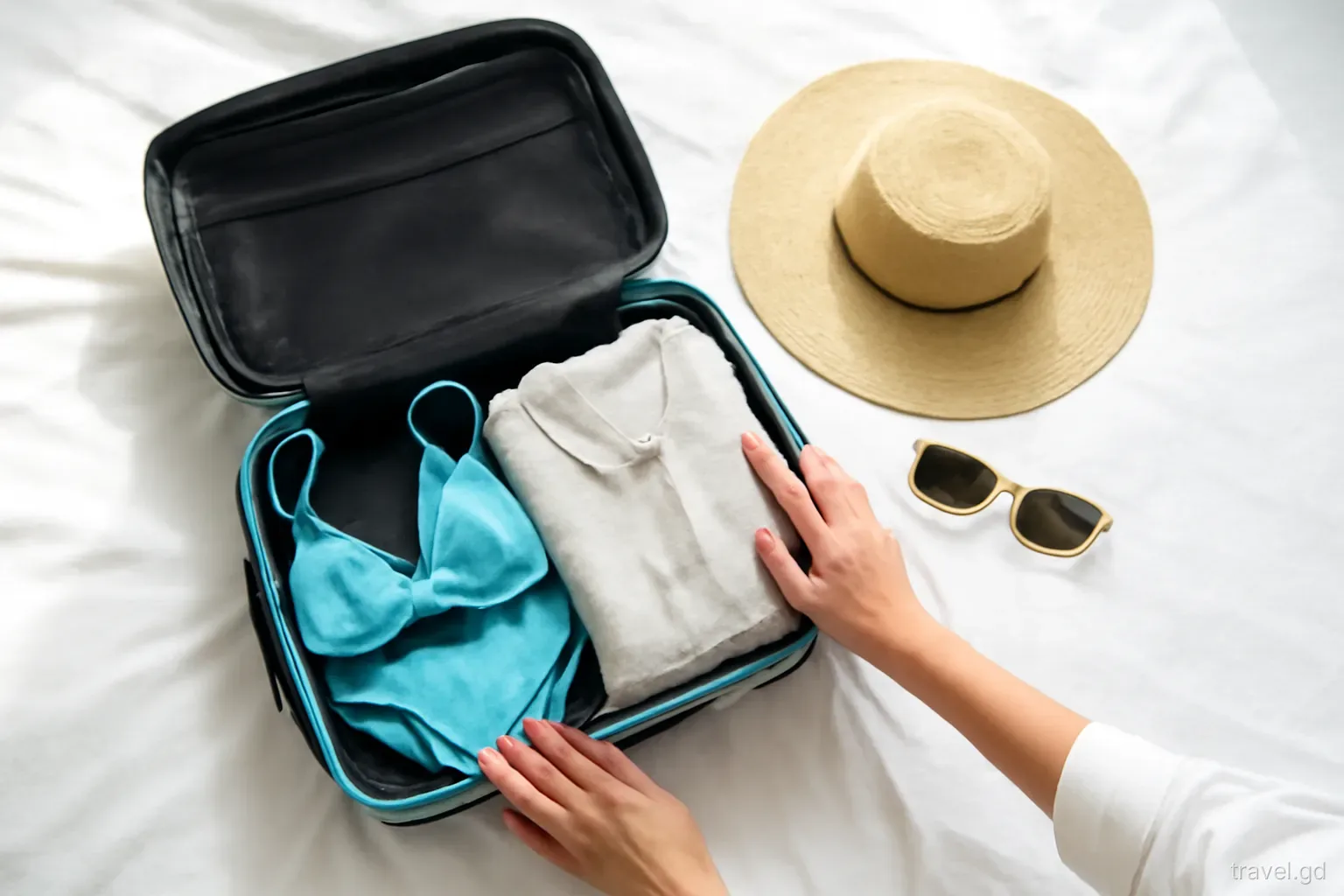
Pack a swimsuit, a light change of clothes, sunscreen, a hat, any prescription medicines with a few days' spare, chargers and a basic toiletry kit in the cabin bag. Families should add a change of clothes for each child and snacks that will survive the heat. If you are driving, keep your home driving licence and the car-hire confirmation in your hand luggage too, because the rental desk will need them before your checked bag reaches the carousel.
Cash matters more on arrival day than later in the trip. A few small US notes or EC dollars cover the taxi tip, a cold drink and a bus fare, and avoid queueing at an ATM while a driver waits. Finally, write your accommodation address on paper as well as saving it on your phone. A flat battery after a long travel day is common, and immigration officers and taxi drivers both need the address.
First-day mistakes to avoid
Booking a tour for arrival day. Flights are delayed often enough that a tour or dive booked for the afternoon you land is a gamble. Keep the first day free and book activities from day two.
Driving into St George's at rush hour. The roads between Grand Anse and the capital, including the Lagoon Road, are congested in the late afternoon. If you must go into town on day one, go in the middle of the day.
Underestimating the sun. After a winter at home, an hour on the beach at midday can burn badly. Swim early or late on the first day and cover up in between.
Forgetting that darkness comes early. Visitors from northern summers expect long evenings. In Grenada it is dark soon after half past six, so plan anything outdoors for before then.
Leaving food until late. Outside the main resort strip, small restaurants and shops close early. Eat at or near your hotel on the first night unless you know what is open.
Frequently asked questions
What time does it get dark in Grenada?
Because Grenada is close to the equator, sunset falls roughly between six and half past six in the evening throughout the year, and twilight is short. Plan beach time, drives and walks so that you are settled before dark on your first day.
Can you check in early if your flight lands in the morning?
It depends on occupancy. Ask the hotel in advance; many will store luggage and offer a changing room if the room is not ready. Paying for the previous night guarantees an early room if arriving rested matters to you.
Is it safe to drive from the airport at night?
The short drive to the south-coast hotels is straightforward, but roads in the north, east and interior are often unlit, steep and narrow with deep drains. For a night arrival, take a taxi or pre-booked driver and collect any hire car in daylight.
Where can you buy groceries on arrival day?
The Grand Anse area, close to the airport, has several supermarkets and shopping plazas. Ask your taxi driver to stop on the way to your accommodation, and agree any waiting charge first. Villa managers can sometimes pre-stock basics if asked ahead.
Does Grenada change its clocks?
No. Grenada stays on Atlantic Standard Time, four hours behind GMT, all year. When the US, Canada, the UK or Europe switch to or from daylight saving, the time difference changes, which matters when arranging airport pickups and calls home.